Gallego: Congress boosting Iran war funding ‘like giving a drunk more money and hoping that they’ll stop drinking’

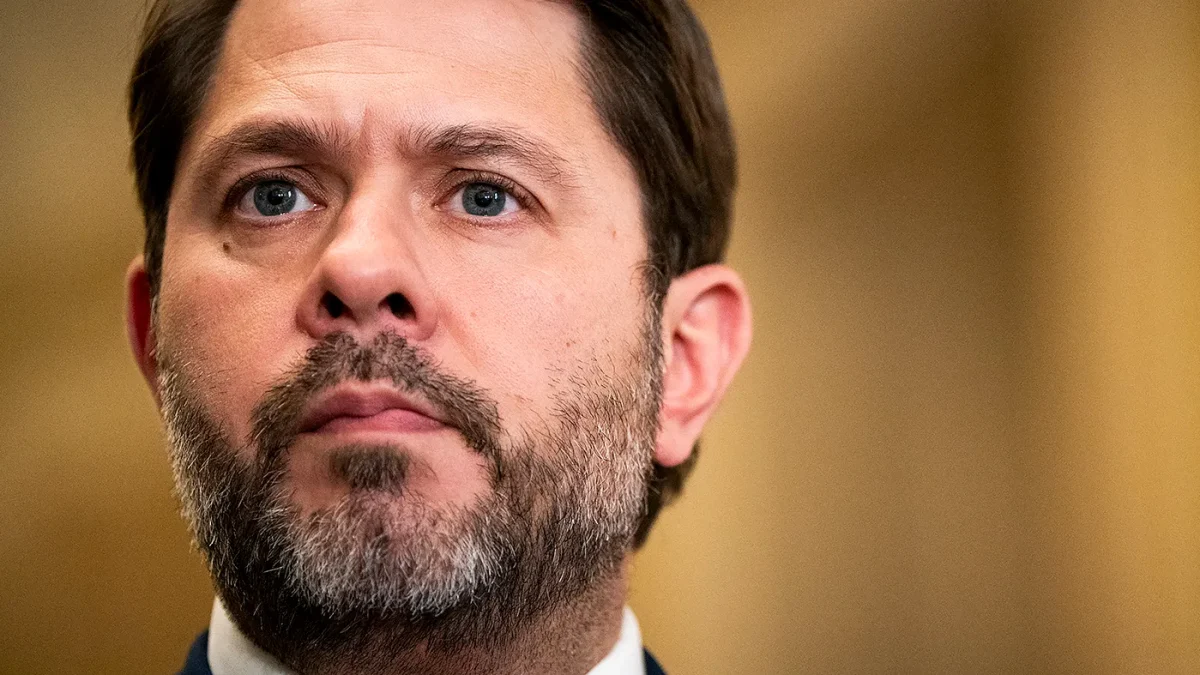
Table of Contents
Senate Democrat Slams Pentagon Funding Push as Iran Conflict Nears Six-Month Mark
Provpnadvice.com – The question of whether Congress should hand the Department of Defense another tranche of billions to sustain operations against Iran has become one of the sharpest fault lines in Washington. On Sunday, Arizona Democrat Ruben Gallego — a Marine veteran who fought in Iraq and now serves on the Senate Veterans’ Affairs Committee — delivered what amounted to a blunt rebuke of the administration’s latest funding ask, comparing it to pouring more cash into the hands of someone already deep in a bottle.
The remark came during an appearance on ABC News’s “This Week,” where host Martha Raddatz pressed Gallego on the Trump administration’s request for $17 billion to cover ongoing military operation costs. Rather than engage with the dollar figure directly, the senator redirected the conversation toward what he sees as a fundamental absence of strategic clarity.
“We are more focused on making sure that we are supporting the American warfighter and trying to … get us out of this war,” Gallego told Raddatz.
The Scale of the Ask
To understand why the funding debate has grown so heated, it helps to look at the broader numbers. In June, Russell Vought, director of the White House Office of Management and Budget, formally requested $87.6 billion from Congress. That package included $21 billion earmarked for the Defense Department to sustain critical capabilities, procure munitions, and shore up the American industrial base, alongside $17.3 billion designated specifically for operational costs tied to the Iran campaign.
The timing of that request was not arbitrary. By the time Vought’s numbers landed on Capitol Hill desks, the Pentagon had already drawn down significant portions of its stockpile of precision-guided munitions — long-range strike missiles and air-interceptor systems in particular — assets that take years to replenish and whose production lines are constrained by a domestic industrial base still rebuilding from decades of drawdown.
A Senator’s Drunk Analogy
Gallego, speaking for what he characterized as the position of a vast majority of Senate Democrats, argued that approving additional money without a defined exit strategy would be reckless. His language was deliberately vivid:
“So, for us to actually give more money to something like this is extremely dangerous. It’s like giving a drunk more money and hoping that they’ll stop drinking.”
The senator went further, asserting that President Trump “planned nothing” when it came to the war, including any coherent endgame. He pressed the point repeatedly throughout the interview:
“What is our mission? We still don’t quite understand why we went to Iran. We don’t know exactly how we’re going to get out of Iran.”
Gallego’s frustration was sharpened by his own service record. Having worn a Marine uniform during the Iraq War, he framed the current conflict in terms that resonated with veterans’ groups and their families: Americans should not be dragged into “another 20-year war.” He went on to label the Iran campaign outright “illegal,” a characterization that tracks the legal arguments made by those who contend the administration lacked either a congressional authorization or a valid self-defense justification under international law.
The War Powers Standoff
The dispute over funding is inseparable from a deeper constitutional clash. Both chambers of Congress have passed war powers resolutions ordering the president to wind down hostilities against Iran. The administration, however, has pushed back, with senior officials arguing that the War Powers Act itself is unconstitutional — a position that, if accepted, would effectively nullify every congressional attempt since 1973 to constrain presidential initiation of armed conflict.
That standoff means Congress’s primary leverage over the war’s duration rests on the purse strings. Deny the money and operations slow; approve it and the political signal is one of continuation. Gallego made that dynamic explicit, telling Raddatz that until the president articulates a clear “end goal” for the conflict, he will not support additional appropriations.
“How are we going to get out of this quagmire? What is actually the mission? Because so far the mission has changed and the objective has changed so many times. And then we could potentially talk about the funding.”
A Strategy That Keeps Shifting
The senator’s complaint about moving targets is not without factual basis. Over the course of more than five months of hostilities, the administration’s public posture has swung widely: from threats to inflict severe damage on Iranian civilian infrastructure, to declarations that both sides stood on the verge of a lasting peace, to campaigns of economic pressure aimed at squeezing the Islamic Republic’s currency and trade channels. Each pivot has altered the operational calculus for commanders in theater and, by extension, the munitions requirements that drive the Pentagon’s budget requests.
For lawmakers watching the conflict approach its six-month anniversary, the central anxiety is straightforward: without a fixed objective, every additional billion spent buys time rather than progress. Gallego’s position — shared across most of his party in the Senate — is that Congress should withhold further operational funding until the White House answers, in plain language, what victory looks like and when it will be achieved. Until then, the drunk analogy, however colorful, captures a genuine institutional worry: money flowing into an open-ended conflict with no defined endpoint simply extends the exposure of American service members without advancing any measurable goal.
Related Reading
Frequently Asked Questions
What is Gallego?
Gallego is the main topic of this guide. The article explains the context, practical details, and next steps readers should understand.
Why does Gallego matter?
Gallego matters because readers are looking for a useful answer, not just a short summary. Good content should match search intent and help them decide what to do next.