Artemis II showed the world what American excellence looks like

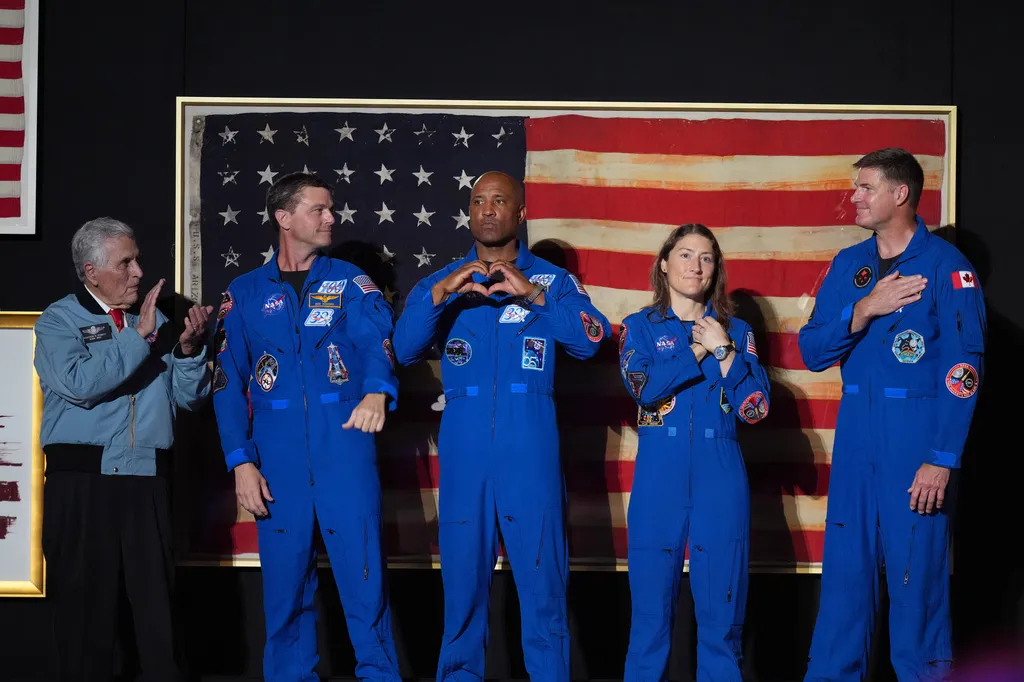
Table of Contents
Artemis II Marks a New Chapter in American Space Leadership
Provpnadvice.com – When the Artemis II spacecraft returned to Earth after its historic journey, it carried more than just four astronauts—it brought home a testament to American ingenuity and global cooperation. The mission, which concluded on April 10 after a nine-day voyage, traveled 252,756 miles from our planet, setting a new benchmark for human spaceflight. This achievement represents the first time since 1972 that a crewed mission has traveled beyond low Earth orbit and circled the Moon.
A Mission of Historic Proportions
Launched from Kennedy Space Center on April 1, Artemis II demonstrated what happens when visionary thinking meets relentless execution. The spacecraft carried Commander Reid Wiseman, Pilot Victor Glover, and Mission Specialists Christina Koch and Jeremy Hansen on their unprecedented journey. Each crew member brought unique distinctions to this milestone mission.
Victor Glover made history as the first Black astronaut and the first person of color to travel beyond low Earth orbit and around the Moon. Christina Koch joined him in making history as the first woman to accomplish this feat. Jeremy Hansen, representing the Canadian Space Agency, became the first Canadian and first non-American to complete this journey. Meanwhile, Commander Wiseman, who has now accumulated 175 days in space across two separate missions, led the record-setting expedition.
Legislative Recognition for Space Pioneers
The significance of Artemis II extends beyond the spacecraft itself. In recognition of this achievement, legislation has been introduced to honor the crew with the Congressional Gold Medal, Congress’s highest civilian distinction. The bipartisan Artemis II Congressional Gold Medal Act was championed by Senator Mark Kelly of Arizona alongside Representatives George Whitesides of California, Gabe Evans of Colorado, and Glenn Ivey of Maryland.
These medals would recognize the crew’s achievement and the extraordinary national effort behind it. Thousands of scientists, engineers, technicians, manufacturers and military personnel helped send these astronauts around the Moon and bring them safely home.
This legislative effort echoes a previous recognition in 2009, when Congress last awarded Gold Medals to astronauts, honoring the Apollo 11 crew and John Glenn. The Artemis II crew now stands alongside those legendary pioneers who first demonstrated humanity’s ability to reach beyond our world.
Broader Implications for American Strength
The Artemis program connects to something larger than space exploration alone. On July 29, 1958, President Dwight D. Eisenhower signed the National Aeronautics and Space Act, establishing NASA and setting America on a path that would define leadership for generations. As the nation approaches its 250th anniversary, this moment offers reflection on how American progress has consistently relied on ambition, perseverance, and the courage to venture into the unknown.
The benefits of space exploration reach far beyond orbit. GPS technology, weather satellites, and global connectivity enable American farmers to operate with greater efficiency and productivity. Discoveries made through space research strengthen domestic industries and improve quality of life on Earth. These everyday applications demonstrate that investment in space yields tangible returns for American communities.
Regional and Strategic Significance
For Nebraska, the Artemis program represents meaningful economic engagement. Four Nebraska suppliers contributed to the program, including work supporting Exploration Ground Systems at Kennedy Space Center. Students from the University of Nebraska-Lincoln’s Big Red Satellite team achieved another milestone by building the first CubeSat produced by a Nebraska team, which was sent to the International Space Station in 2024. Clayton C. Anderson, Nebraska’s only astronaut, completed three spacewalks during his 152-day stay aboard the space station.
From a strategic perspective, the space environment has grown increasingly contested. China continues expanding its satellite capabilities while developing counterspace weapons. Russia simultaneously advances methods to threaten orbital systems. America’s dependence on satellites for GPS, banking, communications, weather forecasting, and power grid operations means that maintaining an advantage in this domain is essential for both economic prosperity and national security.
A Legacy of Bipartisan Achievement
Artemis II also illustrated how space exploration unites Americans across political divides. Senator Kelly, who completed four space missions, and the bill’s sponsors found immediate agreement that this crew deserved congressional recognition. Republicans and Democrats in both chambers have rallied behind the legislation, recognizing that American achievement in space transcends partisan boundaries.
The scientific talent, industrial strength, and operational precision demonstrated by Artemis II position the United States for continued leadership in space exploration. Congress’s passage of the Artemis II Congressional Gold Medal Act would formally acknowledge the crew that carried humanity farther than ever before, advancing our return to the Moon and reminding the world of American excellence in action.
Related Reading
Frequently Asked Questions
What is Artemis II showed the world what?
Artemis II showed the world what is the main topic of this guide. The article explains the context, practical details, and next steps readers should understand.
Why does Artemis II showed the world what matter?
Artemis II showed the world what matters because readers are looking for a useful answer, not just a short summary. Good content should match search intent and help them decide what to do next.