Tucker Carlson says he won’t support Republican Party

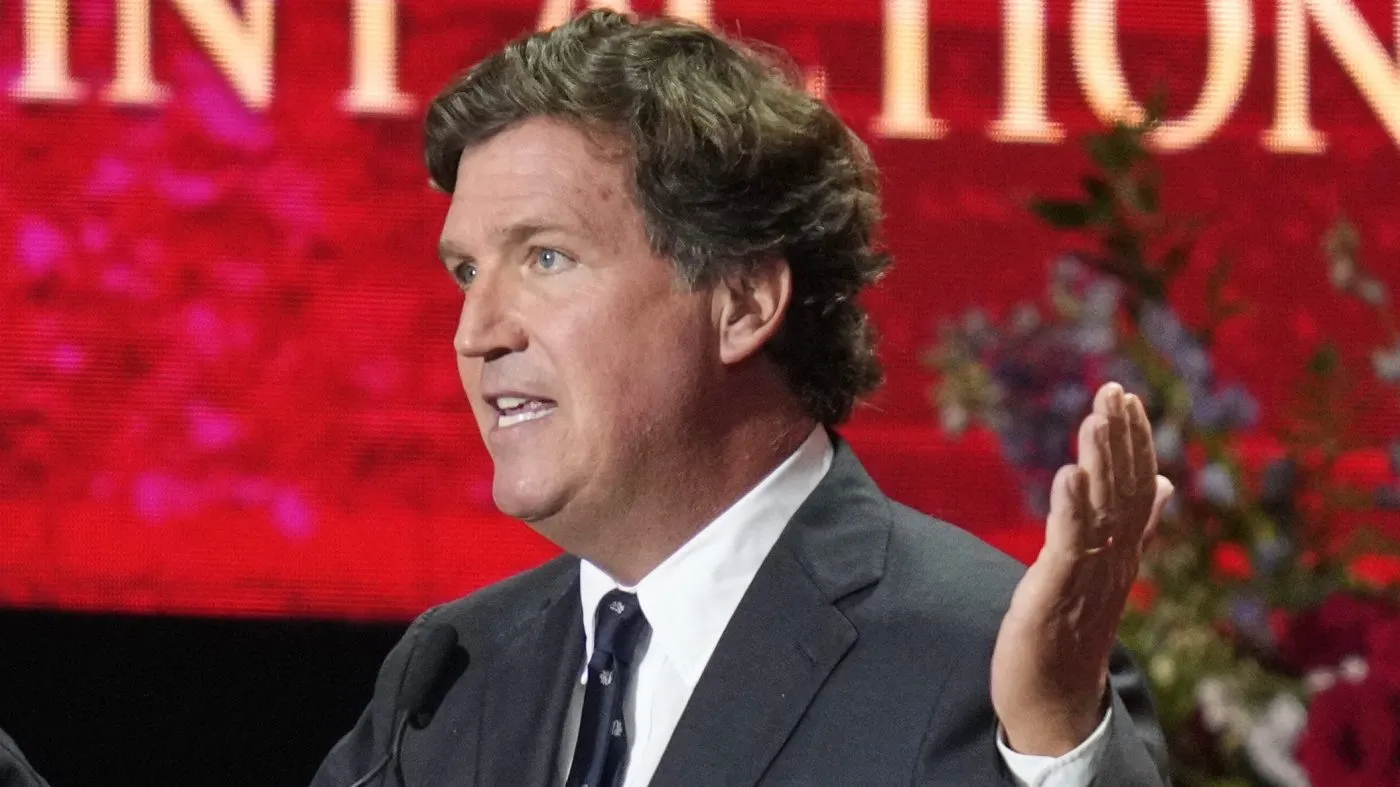
Tucker Carlson Announces Break from Republican Party
Provpnadvice.com – Tucker Carlson, the prominent conservative commentator and former Fox News host, has declared his decision to no longer support the Republican Party. Known for his fiery rhetoric and influential presence in American media, Carlson’s departure marks a significant shift in his political allegiance. His comments, delivered during a recent episode of the “Can’t Be Censored” podcast, have sparked discussions about the future of the GOP and its ability to retain key supporters amid growing internal divisions.
A Defiant Stand Against the GOP
Carlson’s remarks were centered on his belief that the Republican Party has lost its moral compass. “The poll numbers now tell a pretty clear story about it. I would not support the Republican Party, there’s no chance,” he stated, emphasizing his resolve to distance himself from the party. While he did not explicitly endorse the Democratic Party, his frustration with the GOP’s direction is evident. “I don’t know what I’m going to do,” he added, hinting at the possibility of aligning with alternative political movements or independent candidacies.
“Any American who still supports a political party that’s not loyal to the United States is either ignorant or in denial,” Carlson asserted. His critique underscores a growing concern among some conservatives about the party’s adherence to core values, particularly in its approach to foreign policy and domestic issues. This sentiment reflects a broader disillusionment with the GOP’s strategies, which Carlson believes have prioritized short-term gains over long-term principles.
Carlson’s criticism extends beyond mere policy disagreements. He accused the party of moral compromise, arguing that its current trajectory is “immoral” and irredeemable. “I’ve been a consistent defender of the Republican Party for 35 years,” he noted, a nod to his decades-long career as a staunch conservative voice. Yet, he said, the recent actions of the party have rendered his support impossible. “There’s no defending this because it’s immoral,” he declared, signaling a dramatic turn from his previous loyalty.
A Split with Trump and the Iran Conflict
Carlson’s break with the Republican Party is closely tied to his falling out with former President Donald Trump. The split became public earlier this year, following the U.S. military campaign against Iran and its regional allies. Carlson argued that the Trump administration’s decision to escalate tensions with Iran was driven by external influences, particularly Israeli interests. “The war in the Middle East wasn’t about national security; it was about aligning with Israel’s agenda,” he contended, highlighting what he sees as a betrayal of American interests.
“Why would anyone vote for a party that sacrifices the country’s interests for the sake of foreign allies?” Carlson questioned. His frustration stems from the belief that the administration’s actions in the region have jeopardized U.S. credibility and strained diplomatic relations. This critique aligns with his broader skepticism of Trump’s foreign policy, which he has consistently challenged in his media appearances.
Carlson’s stance has drawn criticism from some within the GOP, who view his comments as a reflection of ideological differences rather than outright disloyalty. However, he maintains that the party’s current leadership has strayed too far from its foundational values. “I’ve always believed in the Republican Party’s mission, but now I see it as a hollow shell,” he said, a sentiment that resonates with many who feel the party has lost its way. His decision to sever ties with the GOP comes after years of working alongside Trump, including his time as a co-host on “Tucker Carlson Tonight,” where he played a key role in shaping conservative narratives.
Implications for the Party’s Future
Carlson’s departure has raised questions about the stability of the Republican Party’s coalition. As a long-time Republican, his influence in media and public opinion cannot be overstated. His bold criticism of the party’s current direction could encourage other prominent figures to reconsider their loyalty, potentially weakening the GOP’s base. Analysts suggest that this split may reflect a larger trend of conservatives rebelling against the party’s evolving platform, which some feel has prioritized populism over principled governance.
“I’m not going back, and I don’t think many others will either,” Carlson said, a statement that carries weight in an era of political polarization. His words suggest a possible realignment of conservative voices, with some advocating for a more centrist approach or even a new political entity. The GOP’s ability to adapt to such changes will be crucial in maintaining its relevance in the upcoming election cycle.
The controversy over the Iran conflict has been a focal point of Carlson’s criticism. He argued that the military campaign, launched earlier this year, was a calculated move to bolster Israel’s position in the region. “The decision to go to war was influenced by Israeli pressure, not by a comprehensive strategy,” he said, a claim that has sparked debate among political commentators. While some support his view, others counter that the administration’s actions were necessary to counter Iranian aggression and protect U.S. interests.
A Pundit’s New Political Path
Carlson’s announcement signals a new chapter in his political career. Although he has not yet committed to a specific alternative, his comments imply a willingness to explore other options. “I’ve always been a defender of the Republican Party, but not anymore,” he stated, a sentiment that highlights the depth of his dissatisfaction. His move may also reflect a broader trend of media personalities leveraging their platforms to challenge party orthodoxy, a phenomenon that has gained momentum in recent years.
“I’m out of the Republican Party, and I think a lot of others are joining me,” Carlson said, a declaration that could inspire a wave of defections. His words suggest that the party’s internal conflicts, particularly over foreign policy and immigration, have created a rift that is difficult to bridge. This shift may also impact the GOP’s messaging, as key figures like Carlson are no longer able to unify their base under a single narrative.
As the political landscape continues to evolve, Carlson’s decision to leave the Republican Party serves as a reminder of the challenges facing the party. His influence as a commentator has long shaped public opinion, and his absence may signal a new era of debate within conservative circles. While the GOP remains a dominant force, the loss of a prominent figure like Carlson could lead to a reevaluation of its strategies and priorities. The coming months will be critical in determining whether the party can recover from this defection or face further fragmentation.
Carlson’s comments also prompt a reflection on the role of media in shaping political discourse. As a former Fox News host, he has played a pivotal role in amplifying conservative voices. His split from the GOP may encourage other media figures to adopt a more independent stance, potentially reshaping the way political news is presented. The broader implications of his decision extend beyond the party itself, influencing the national conversation on loyalty, ideology, and the future of American conservatism.
With the 2024 elections approaching, the Republican Party faces a pivotal moment. Carlson’s defection could either galvanize the party’s base or serve as a warning of its internal challenges. As he prepares to chart a new course, his influence on the political landscape remains significant, regardless of his current affiliation. The question now is whether his decision will inspire others to follow or signal a deeper crisis within the GOP’s leadership and values.