Netanyahu’s fortunes improve but without clear path to outright victory

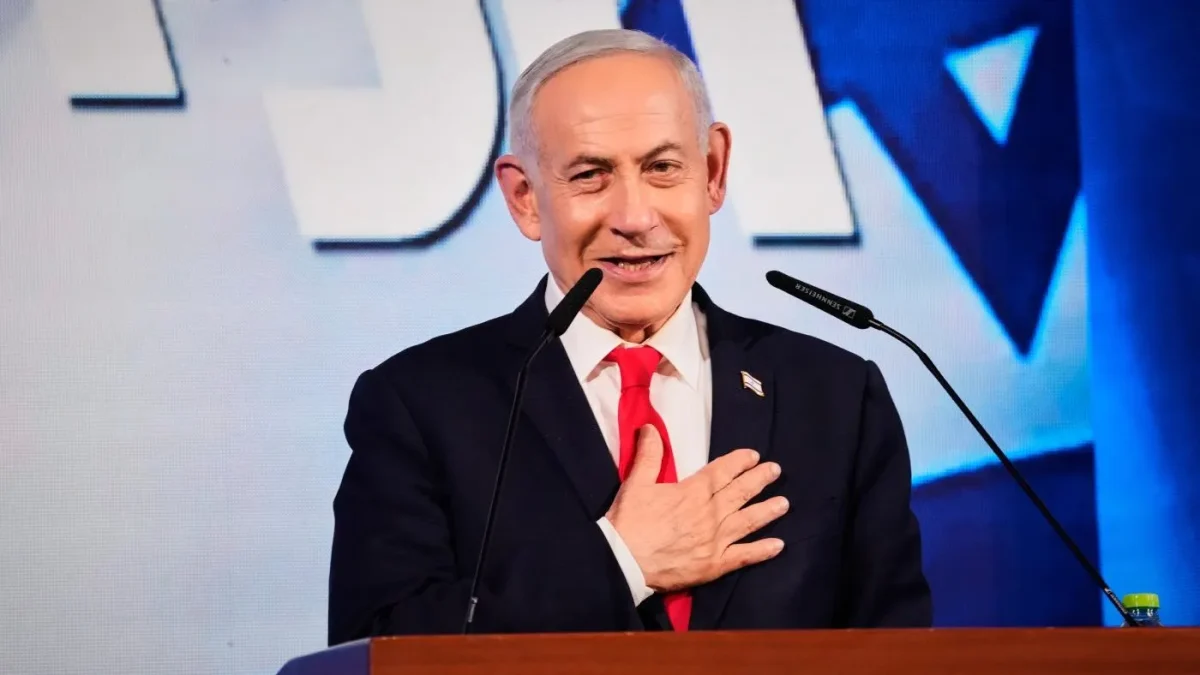
Table of Contents
Netanyahu Leads in Party Vote but Coalition Math Remains Unsettled
Provpnadvice.com – Israeli Prime Minister Benjamin Netanyahu moved into a stronger position as vote counting continued Wednesday, with his Likud party projected to finish ahead of retired Gen. Gadi Eisenkot’s Yashar party. Yet the result did not provide Netanyahu with a straightforward route to remaining in power, leaving Israel facing difficult coalition negotiations and renewed concern about another election.
With more than 80 percent of ballots counted by Wednesday afternoon, Likud was projected to win 26 seats in the 120-member Knesset. Eisenkot’s Yashar party was expected to secure 21 seats. Finishing first gives Likud significant political weight, but it does not by itself determine who will be able to form a government.
Any prospective prime minister needs the backing of at least 61 lawmakers to command a majority. Netanyahu’s broader political bloc appeared to be on track for about 54 seats, well below that threshold and substantially fewer than the 68 seats held by his outgoing governing coalition.
Largest Party, Uncertain Governing Majority
The gap between party strength and coalition strength is central to the uncertainty surrounding the election. Netanyahu may hold the largest single party in parliament, but he would need to persuade at least one likely Eisenkot ally to join him if he is to assemble a majority.
Udi Tenne, a strategic adviser, political analyst and campaign strategist who has worked across Israel’s ideological spectrum, said the alternatives could be limited if neither side can build a workable governing bloc.
“What will be the other way? A second election,” Tenne said.
He argued that a repeat vote could benefit Netanyahu, particularly if voters who supported small conservative or right-wing parties that failed to meet the electoral threshold decide to consolidate behind Likud next time.
“It’s very important to understand, the biggest party is the Likud party,” Tenne said.
Still, the prospect of another national contest is not necessarily unwelcome among voters. Polling by the Israel Democracy Institute found that more than one-third of respondents preferred holding another election if the result produced a deadlock. A unity government featuring a rotating premiership ranked as the next most favored option.
The same polling showed that 61 percent of Israelis supported giving the premiership to the leader of the party with the highest vote total if that arrangement would make the political system more stable. The finding highlights the public pressure for a clear governing outcome after a closely divided election.
Herzog Urges Parties to Keep Options Open
President Isaac Herzog is expected to play an important role once official results are finalized. Under Israel’s political system, the president meets party leaders, assesses which candidate is most likely to build a governing coalition and assigns that person the opportunity to do so. The president can also encourage negotiations aimed at a broad unity arrangement.
Herzog said Wednesday that political leaders should avoid sending the country back to the polls and urged them to approach the coming consultations with flexibility. He expects to receive the official result next week before beginning formal meetings with party representatives.
“We must do everything we can, certainly after yesterday, to avoid another round of elections,” Herzog said during a gathering at the President’s House in Jerusalem.
A unity government involving Netanyahu and Eisenkot has emerged as one possible way to avoid a prolonged impasse. Such an arrangement could offer a wider parliamentary base, though it would require major political compromises from figures who have campaigned against one another.
Eisenkot Signals Resistance to a Netanyahu Partnership
Eisenkot has not indicated that he is ready to join Netanyahu. Instead, he and his supporters have portrayed the early result as evidence that many voters want a different direction after Netanyahu’s current government, often identified with the events of Oct. 7.
When initial counts briefly showed his side ahead, Eisenkot wrote on X that the early results reflected public distrust of Netanyahu and his government.
“The preliminary poll results point to complete distrust in Netanyahu and the government of October 7, of the Zionist majority and of the majority of Israeli citizens,” Eisenkot wrote.
His eventual coalition choices may also be shaped by the strong performance of Arab political parties, including Ra’am and The Joint List. Israel’s Arab citizens make up 21 percent of the population, and increased turnout among Arab voters helped strengthen those parties’ standing.
That participation was driven in part by opposition to Itamar Ben-Gvir, the national security minister in Netanyahu’s current government. In the predominantly Arab village of Abu Ghosh, a young Muslim voter said she wanted Ben-Gvir and Netanyahu removed from power.
“I think that Ben-Gvir will go out of the government this time, he’s a racist, he wants to kill as many Arabs as possible,” she said after voting.
“Bibi also, he killed people in Gaza, and here. Outside of that I don’t mind to vote for anyone else, Jewish, Muslim – what’s important is that it’s not Ben-Gvir and not Netanyahu.”
The result could force Eisenkot to reconsider his earlier pledge against partnering with an Arab coalition. Such a move would carry political consequences, but the arithmetic of the Knesset may leave few easy alternatives.
Minority Government Offers Little Relief
A minority government is another theoretical option, but it is widely viewed as a weak and unstable solution. Such a coalition would hold fewer than 61 seats and would need outside lawmakers either to support legislation or abstain so that bills can survive parliamentary votes.
Both Netanyahu and Eisenkot therefore face a difficult choice: make concessions to rivals, seek an unusual governing partnership, or risk another election. Netanyahu has gained momentum by placing Likud first, but the key question is no longer which party won the most seats. It is whether either leader can turn that result into a durable majority.
Related Reading
Frequently Asked Questions
What is Netanyahu s fortunes improve but without?
Netanyahu s fortunes improve but without is the main topic of this guide. The article explains the context, practical details, and next steps readers should understand.
Why does Netanyahu s fortunes improve but without matter?
Netanyahu s fortunes improve but without matters because readers are looking for a useful answer, not just a short summary. Good content should match search intent and help them decide what to do next.