Outbreaks threaten HHS ‘real food’ agenda

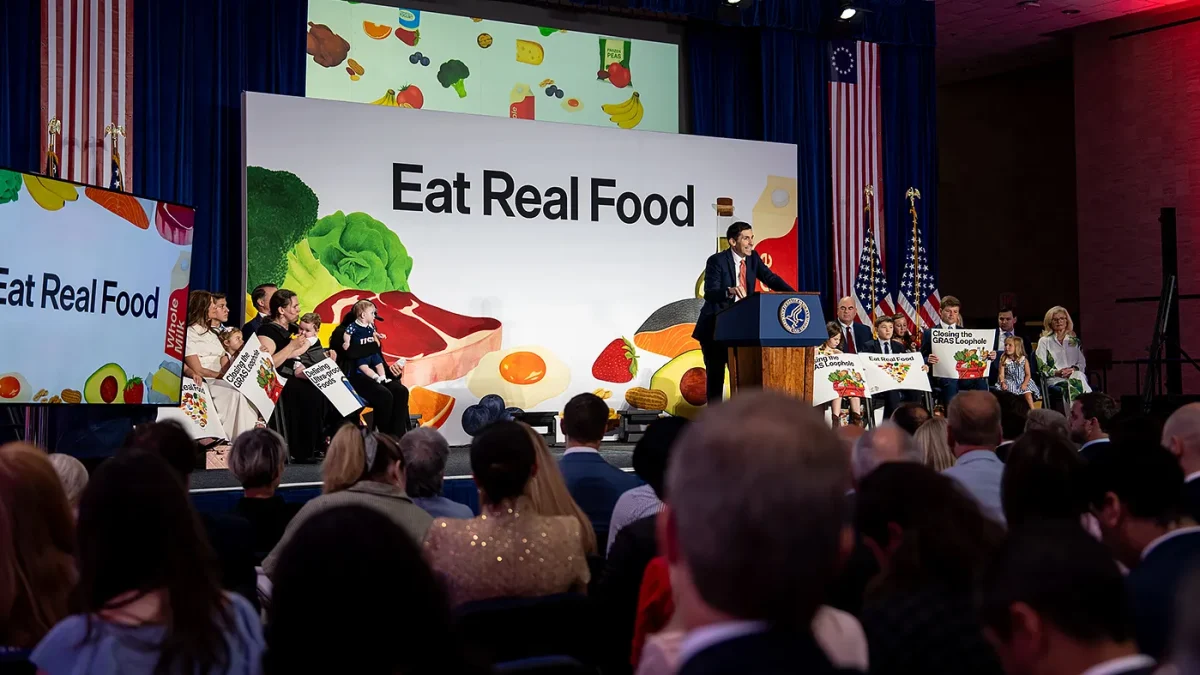
Table of Contents
Food Safety Failures Collide With Washington’s Push for Fresh Diets
Provpnadvice.com – Americans standing in grocery aisles this summer face an uncomfortable paradox: the federal government is urging them to fill their plates with fresh vegetables and minimally processed foods, while simultaneously warning that some of those very items may carry parasites capable of weeks-long illness. The collision between public-health messaging and food-safety execution has produced a measurable erosion of consumer trust at precisely the moment the administration most needs it.
The Scale of This Summer’s Outbreaks
Cyclosporiasis, an intestinal infection caused by the single-celled parasite Cyclospora cayetanensis, has struck with unusual force in 2025. Nearly 30,000 illnesses and two deaths have been tallied so far this season — figures that represent a record for the pathogen in recent years. The parasite thrives in warm, moist conditions and is transmitted through contaminated water or produce, making imported leafy greens from subtropical growing regions a particular vector.
Beyond cyclospora, additional foodborne events have surfaced over recent months, targeting fresh produce categories. Taylor Farms, the U.S. produce company at the center of the cyclospora cluster, has issued recalls covering prepared salsa, guacamole, and other items containing jalapeños tied to a multistate salmonella outbreak — compounding public anxiety about whether any shelf product is truly safe.
A Trust Deficit Measured in Percentages
The human consequence of these outbreaks extends beyond individual illness. A recent consumer survey found that 40 percent of shoppers altered their purchasing behavior in direct response to the cyclospora wave, while 47 percent said they do not trust the Food and Drug Administration to manage the crisis competently. Those numbers translate into a quiet but consequential shift: households gravitating toward canned goods, frozen meals, and other shelf-stable products that carry lower microbial risk.
The behavioral pivot matters because it runs directly counter to the dietary guidance now being promoted at the highest levels of government. When consumers retreat from fresh produce out of fear, the policy architecture built around encouraging its consumption loses practical force regardless of how well-intentioned the messaging is.
Experts Point to a Messaging and Prioritization Failure
Susan Mayne, former director of the FDA’s Center for Food Safety and Applied Nutrition, framed the problem as both factual and perceptual:
“I think what we’re seeing is both the reality that we’ve got more outbreaks, and you’ve got the perceptual problem, and so that’s translating into consumers being increasingly concerned about fresh produce.”
Mayne added that the consumer retreat from fresh items directly undermines the stated goal of steering diets back toward whole foods.
Jerome Adams, who served as U.S. surgeon general during President Trump’s first term, described the situation in an email as a “messaging and prioritization problem layered on top of real gaps in control.” His central observation: telling the public to eat more salads while simultaneously warning that much of the same produce can cause severe, prolonged illness — without being able to specify which sources are safe — produces a mixed signal that actively repels people from the foods the campaign promotes.
Michael Osterholm, director of the Center for Infectious Disease Research and Policy at the University of Minnesota, stressed that trust is rebuilt through transparent root-cause identification:
“You need to solve these outbreaks” to gain people’s trust. “You need to be able to go back and say with certainty, this is how the contamination occurred. It happened obviously in Mexico. Is it contaminated irrigation water? What was it? Because only with knowing what it was can you then say, this is what steps we’re taking so it won’t happen again.”
FDA’s Response: Inspection Without Closure
The agency has linked iceberg lettuce imported from central Mexico by Taylor Farms to roughly 10,000 illnesses across 17 states. Nearly a month after that connection was drawn, FDA announced on Friday that investigators were conducting an onsite inspection and sampling operation at Taylor Farms de Mexico in coordination with Mexican regulatory officials.
Yet the cyclospora picture is broader than any single supplier. Thousands of additional cases nationwide suggest multiple contamination pathways, meaning the Taylor Farms lettuce stream is likely not the sole source of the parasite circulating this season. Until investigators isolate every vector, consumers lack the granular information needed to make confident choices at the produce section.
The “Real Food” Agenda Under Pressure
The dietary framework now championed by Health and Human Services Secretary Robert F. Kennedy Jr. rests on a newly revamped food pyramid that foregrounds animal and plant proteins, fresh minimally processed fruits and vegetables, and whole grains as the structural antidote to chronic disease — cardiovascular illness, type 2 diabetes, obesity-related conditions. The campaign’s slogan urges Americans to “eat real food” as a public-health strategy.
That strategy depends on two things working in concert: accurate dietary guidance and a food-supply system that reliably delivers safe produce. This summer has exposed strain in the second pillar. When the agency responsible for tracking contamination sources struggles with timely detection, transparent communication, and rapid corrective action, the first pillar loses its credibility by association.
What Comes Next
Acting FDA Commissioner Kyle Diamantas appeared on CNBC recently to reassure the public that Americans should feel confident eating fresh produce, including leafy greens:
“We have the safest food supply in the world. Full stop.”
He acknowledged a “heightened narrative” around foodborne illness driven by the cyclospora scale but did not specify concrete steps the agency was taking to ensure current shipments were safe before they reached store shelves.
The coming weeks will test whether Washington can convert inspection findings into actionable consumer guidance — naming specific lots, regions, or irrigation practices as cleared or flagged. Without that specificity, the gap between dietary policy and food-safety execution will widen, and the “real food” message will continue to drown in a sea of recall notices and outbreak alerts. The stakes are not merely rhetorical: every household that swaps fresh vegetables for processed alternatives is a small step away from the chronic-disease prevention goals the administration has set for itself.
Related Reading
Frequently Asked Questions
What is Outbreaks threaten HHS real food agenda?
Outbreaks threaten HHS real food agenda is the main topic of this guide. The article explains the context, practical details, and next steps readers should understand.
Why does Outbreaks threaten HHS real food agenda matter?
Outbreaks threaten HHS real food agenda matters because readers are looking for a useful answer, not just a short summary. Good content should match search intent and help them decide what to do next.