Zeldin warns against banning data centers in US, citing China

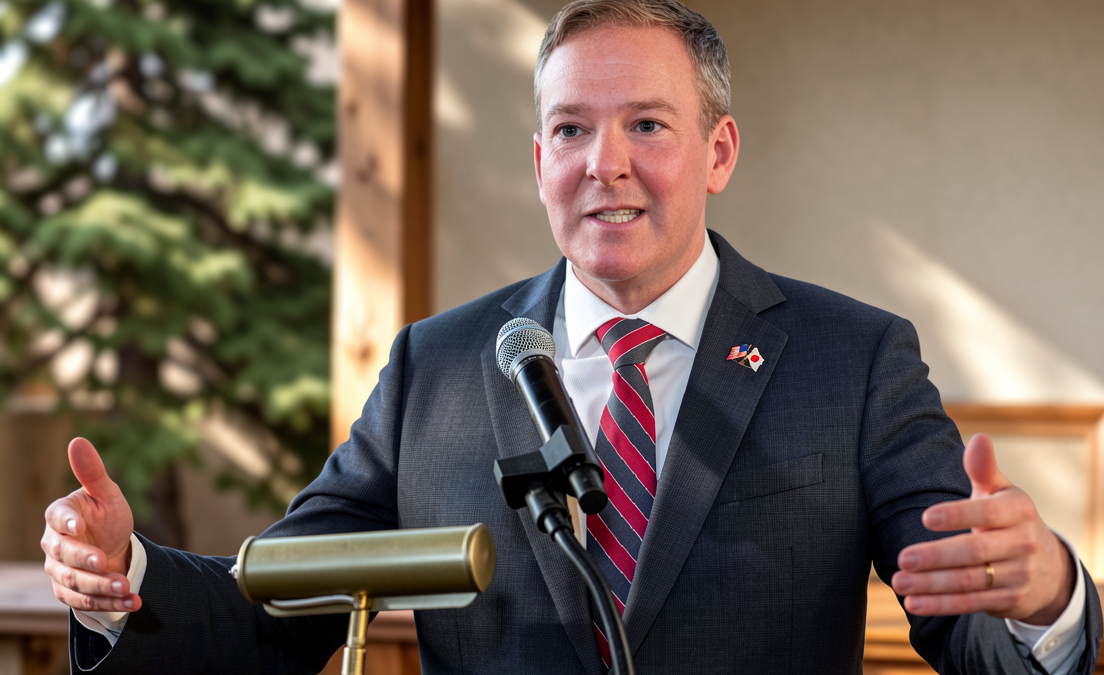
Table of Contents
EPA Chief Pushes Back Against State-Level Data Center Moratoriums, Frames Debate as National Security Question
Provpnadvice.com – The question of whether American communities should be allowed to halt new data center construction has moved sharply into the political spotlight, and the Environmental Protection Agency’s top official has entered the fray with a blunt warning: do not hand China the advantage in the global artificial intelligence race by freezing the infrastructure that powers it.
Speaking on Sunday on John Catsimatidis’s radio program “The Cats Roundtable” on 77 WABC, EPA Administrator Lee Zeldin pushed back against a growing chorus of state legislators and local officials who have floated statewide moratoriums on new data center projects. His argument is straightforward in its framing — the United States needs these facilities to remain competitive in AI development, and blanket bans would cede that ground to Beijing.
“There’s been a push from some states where they’re talking about a statewide moratorium and what I’ve found is that most of this country wants to make sure the United States wins this race to be the AI capital of the world, that we do not relinquish this to China,” Zeldin said.
He acknowledged, however, that public unease is legitimate and that the questions residents raise about energy costs, water consumption, and neighborhood disruption deserve serious answers rather than dismissal.
“At the same time, they have important questions about how data centers get built,” he added.
Community Backlash and the Numbers Behind It
The friction between federal AI ambitions and local quality-of-life concerns is not hypothetical. Across the country, homeowners and municipal boards have filed complaints, attended public hearings, and in several cases voted to delay or block permits for new facilities. The grievances center on two axes: rising electricity bills passed through to ratepayers, and the environmental footprint of cooling systems that draw heavily on municipal water supplies.
A Fox News poll released in late July quantified the tension. Seventy percent of surveyed voters said they oppose the construction of a data center in their own neighborhood to support AI development. An even broader majority — 78 percent — expressed support for slowing the pace of construction so that environmental and community concerns could be addressed before projects move forward. Those figures suggest that opposition is not a fringe position but a mainstream sentiment, at least at the hyperlocal level.
The Midterm Stakes and the Ratepayer Pledge
The issue has become a campaign talking point heading into the midterm elections. President Trump has publicly urged companies to build more data centers while simultaneously pressing them to absorb the cost increases themselves rather than passing them to residential ratepayers. Under the administration’s voluntary ratepayer protection pledge, major technology firms have committed to covering the incremental energy costs their facilities impose on local grids.
As of the most recent disclosures, Meta, Amazon, Google, and roughly 100 other companies have signed on to the pledge, agreeing to pay for the increased energy costs associated with their operations. The pledge is voluntary and not backed by statutory enforcement, which leaves open questions about compliance and enforcement in states where utility rate structures differ.
Zeldin’s Design Criteria: Net-Positive Grid and Water Stewardship
Rather than advocating a blanket ban, Zeldin outlined what he considers the minimum engineering and environmental standards new facilities should meet. His remarks pointed toward a regulatory posture that favors performance-based requirements over categorical prohibitions.
“We have to make sure that these projects are a net provider onto the grid, not a net taker. And we have to make sure that they are making important reuse 100 percent recyclable water … or better if they don’t need water at all. They need to be responsible users of water,” Zeldin said.
The “net provider” language implies that data centers should generate or store more electricity than they consume over a given period, effectively acting as grid stabilizers rather than pure loads. The water language echoes existing EPA guidance on cooling-loop efficiency and points toward closed-loop or evaporative-free designs that minimize municipal water draw.
The China Framing and What It Means for Policy
Zeldin returned repeatedly to the competitive dimension, arguing that the debate should not be framed as a local land-use dispute but as a question of national technological sovereignty.
“But what we can’t do is just say, well, let’s not have any data centers built all across the entire country and let’s just let China win,” he added.
He urged listeners to recognize how deeply everyday digital life — from navigation apps to medical imaging to financial transactions — already depends on the data center network that exists today, and how much more dependent it will become as generative AI models scale.
“So let’s ask the questions, let’s be responsible, let’s do it right. But let’s make sure that we win this race in the United States,” he added.
What Comes Next
The practical upshot of Zeldin’s remarks is a call for a middle path: neither unchecked construction that externalizes costs onto neighbors, nor categorical moratoriums that would slow the buildout of compute capacity the administration views as strategically essential. Whether state legislatures respond with targeted environmental review standards, grid-impact fees, or water-use caps — or simply maintain their moratorium language — will determine how quickly the next generation of AI training clusters comes online in American jurisdictions. The EPA’s role in that negotiation, as Zeldin’s comments make clear, is to set the environmental floor while leaving the competitive question to the market and to federal policy.
Related Reading
Frequently Asked Questions
What is Zeldin warns against banning data centers?
Zeldin warns against banning data centers is the main topic of this guide. The article explains the context, practical details, and next steps readers should understand.
Why does Zeldin warns against banning data centers matter?
Zeldin warns against banning data centers matters because readers are looking for a useful answer, not just a short summary. Good content should match search intent and help them decide what to do next.