Trump warns North Korea has ’57 very powerful nuclear weapons’

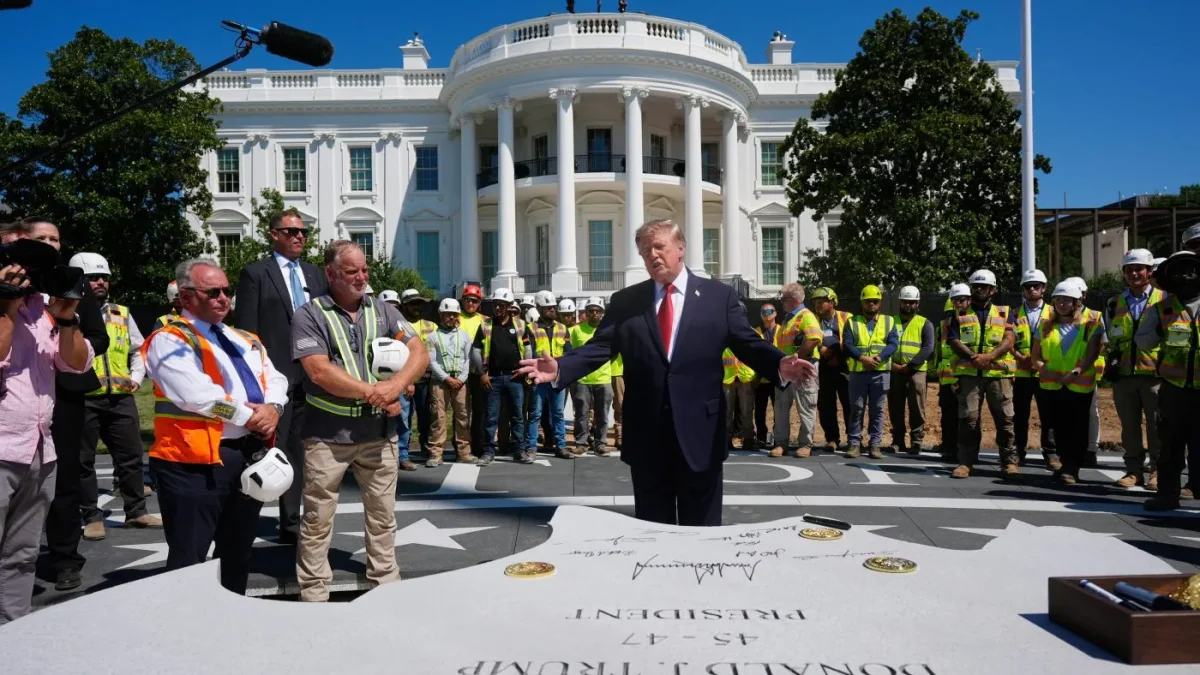
Table of Contents
Trump Cites Pyongyang’s Arsenal of 57 Nuclear Weapons in Sharp Turn on North Korea
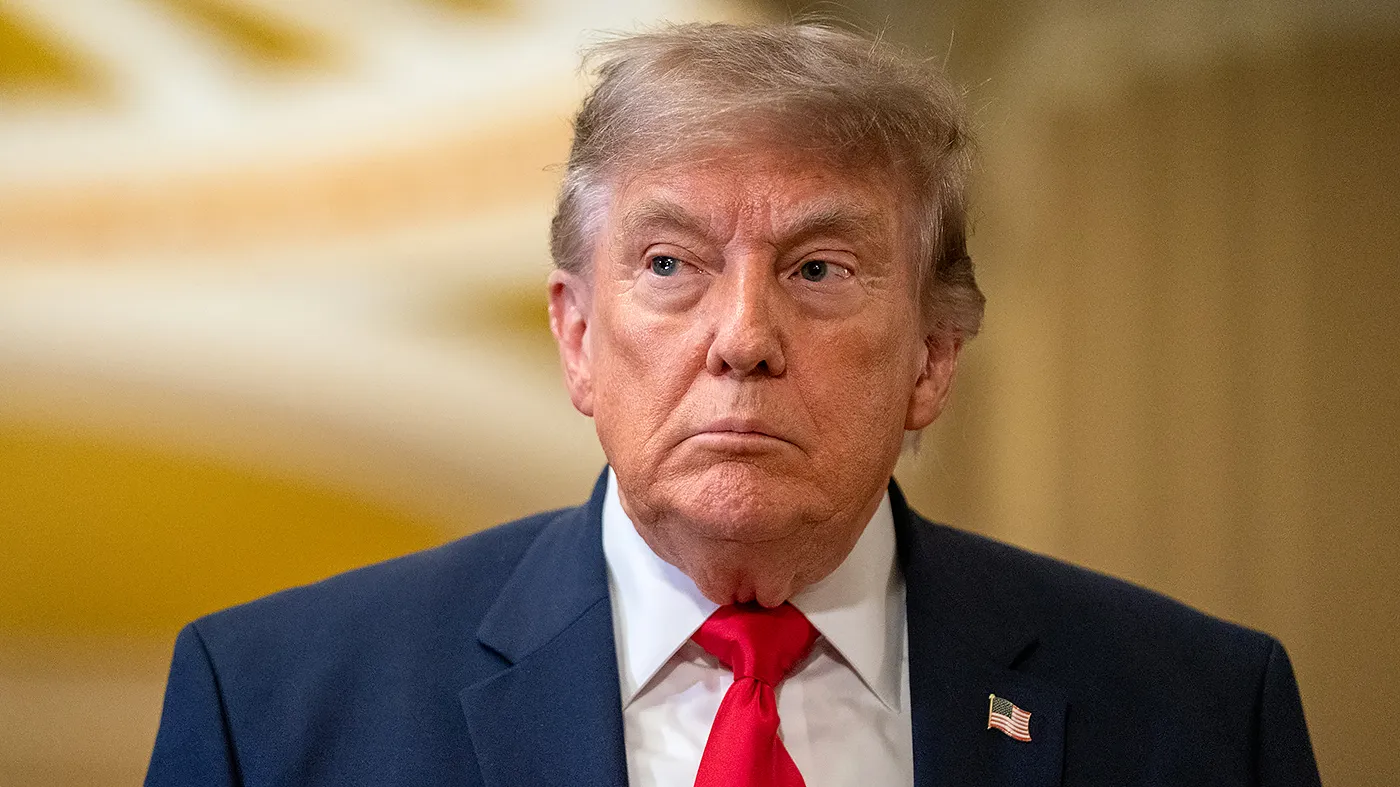
Provpnadvice.com – Days after offering praise to North Korea’s leadership, President Donald Trump pivoted on Wednesday to a pointed reminder that the country now fields what he called “57 very powerful nuclear weapons,” a remark that underscored the volatile and unpredictable tone of his administration’s approach to the Korean Peninsula.
The comments, delivered during a White House event, marked a noticeable shift from the conciliatory language Trump had used just days earlier when discussing his personal rapport with Kim Jong Un. The president framed the nuclear buildup as something that should have been prevented under different leadership, while simultaneously insisting that his own relationship with the North Korean leader remains cordial.
“The fact that I get along with him, that’s a good thing, not a bad thing. He has 57 very powerful nuclear weapons,” Trump said, referring to Kim Jong Un.
“Should’ve never allowed it to happen. They should’ve never allowed it, if I were president, I wouldn’t have allowed it. But he’s got them. I get along with him very well,” the president added.
A Sunday Post Widens the Scope
The Wednesday remarks did not arrive in isolation. Earlier that week, on a Sunday post to Truth Social, Trump revealed that he had instructed Defense Secretary Pete Hegseth to “substantially reduce” the annual joint military exercises conducted alongside South Korea. The president expressed displeasure with what he characterized as a long-standing U.S. commitment to participate in those drills, framing the arrangement as one entered into by predecessors rather than by his own administration.
The annual U.S.-South Korea exercises are among the largest combined military operations in the Asia-Pacific region. Typically conducted across spring and summer months, they involve tens of thousands of troops from both nations and are designed to maintain alliance cohesion, test combined readiness, and signal deterrence against regional threats — most notably North Korea’s growing missile and nuclear capabilities. For decades, Seoul and Washington have treated the drills as a cornerstone of the bilateral security architecture on the peninsula.
Trump’s call to scale them back introduces a new variable into an already complex security equation. South Korea, which hosts roughly 28,500 U.S. troops and relies heavily on the alliance for deterrence against Pyongyang, has historically viewed the exercises as essential to maintaining a credible threat posture. A significant reduction could reshape force-posturing calculations on both sides of the 38th parallel and alter the calculus for North Korean planners who have long cited the drills as justification for their own military spending.
Seoul’s Refusal on Iran Operations
In the same Truth Social post, Trump highlighted what he described as South Korea’s decision not to join U.S. military operations in Iran. He characterized the exchange as a straightforward request met with a blunt refusal, and he paired that anecdote with his claim of a warm personal relationship with Kim — a juxtaposition that drew attention for its implied contrast between an allied partner and a rival state’s leader.
“While somewhat unrelated (?), I recently asked the President of South Korea if they would like to join us in the Denuclearization of the Islamic Republic of Iran, and they said, ‘No thanks!'” the president wrote.
The parenthetical question mark in the post itself signaled that Trump was aware of how tangential the Iran matter appeared beside the North Korea discussion, yet he wove the two threads together to reinforce a broader narrative: that traditional alliance obligations are being tested, and that his personal diplomacy with Kim offers a more productive path.
Cost, Signal, and the “Hostile” Framing
Trump went further in the Sunday post, arguing that the joint exercises impose heavy financial burdens largely borne by Washington and that they transmit a message he deemed counterproductive.
“These exercises are not only costly, with much of these costs paid for by the United States of America (as usual!), but send a signal that is totally inappropriate and hostile, to a Country that, as long as Donald J. Trump has been President, has been unthreatening and respectful,” the president wrote.
The characterization of North Korea as “unthreatening and respectful” during his tenure is a pointed departure from the conventional security assessment. Pyongyang has continued to test intercontinental ballistic missiles, expand its nuclear warhead inventory, and conduct large-scale artillery drills along the demilitarized zone. Whether those activities qualify as “unthreatening” is a matter of considerable debate among defense analysts, but Trump’s framing positions his administration’s posture as fundamentally different from that of prior administrations.
What the Numbers Mean
The figure of 57 nuclear weapons sits within a range that most independent estimates place between roughly 50 and 60 warheads, with some assessments suggesting the true count could be higher once accounting for warheads in storage or under refurbishment. North Korea’s arsenal includes hydrogen bombs, thermonuclear devices, and what it describes as tactical nuclear weapons designed for battlefield use. The country has also demonstrated the ability to miniaturize warheads for mounting on short- and medium-range ballistic missiles, a capability that gives it options beyond a single intercontinental strike.
By naming the number explicitly, Trump accomplished two things simultaneously: he acknowledged the scale of the threat while implying that his personal channel with Kim makes the threat manageable. The rhetorical structure — “he’s got them, but I get along with him” — positions diplomacy over deterrence, a choice that carries significant implications for how South Korea, Japan, and other regional partners plan their own defense postures.
Broader Implications for the Peninsula
The combination of reduced exercises, a personal-relationship framing of North Korea relations, and the explicit citation of Pyongyang’s nuclear count places the administration in a distinctive posture. Allies in Seoul and Tokyo, which have invested heavily in extended-deterrence guarantees and integrated air-defense systems, will be watching closely to determine whether the scaling back of drills is a temporary recalibration or a structural shift in how Washington approaches the Korean Peninsula. For now, the message from Washington is clear: the president believes his own relationship with Kim is the primary instrument of stability, and that traditional alliance mechanisms, while costly, may be sending the wrong signal to a neighbor he considers cooperative.
Related Reading
Frequently Asked Questions
What is Trump warns North Korea has 57 very?
Trump warns North Korea has 57 very is the main topic of this guide. The article explains the context, practical details, and next steps readers should understand.
Why does Trump warns North Korea has 57 very matter?
Trump warns North Korea has 57 very matters because readers are looking for a useful answer, not just a short summary. Good content should match search intent and help them decide what to do next.