Trump’s aircraft carrier demands may lead to waiting game for Navy

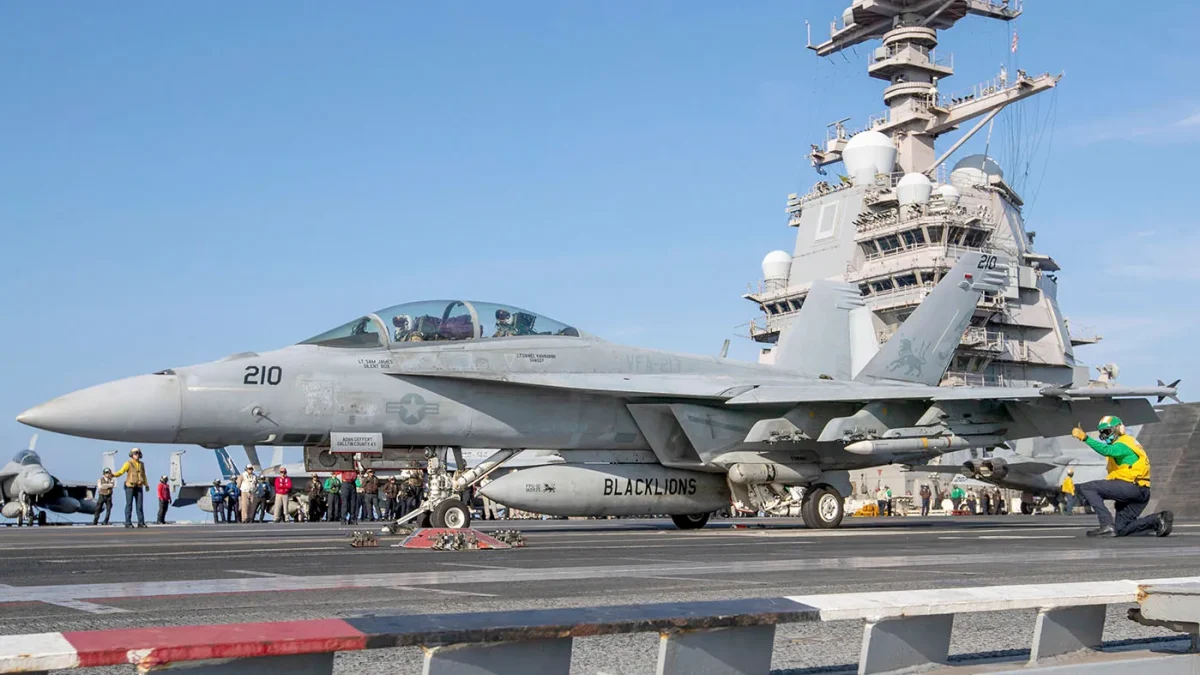
Table of Contents
White House Pressure on Carrier Design Puts Navy in an Awkward Waiting Game
Provpnadvice.com – The Ford-class aircraft carrier program, already one of the most expensive and technically ambitious shipbuilding efforts in American history, now faces an additional variable that no engineer can fully model: the personal aesthetic preferences of the sitting president. President Trump has pushed for sweeping alterations to the design of America’s newest supercarriers, including a reversal back to steam-powered catapults and a relocation of the ship’s command tower, moves that industry analysts say could inflate construction costs by hundreds of millions of dollars and throw multi-year build schedules into disarray.
The Island Question
At the heart of the controversy sits what sailors simply call “the island” — the multistory superstructure that rises above the flight deck on the starboard side of every modern carrier. It houses the bridge, tactical command centers, and flight-deck control stations, making it the operational nerve center of a vessel that carries roughly 90 aircraft and 5,000 crew members. On earlier carrier classes, the island sat closer to the centerline of the ship. Designers of the Nimiti-class successors and the Ford-class vessels deliberately shifted it aft, carving out additional open deck space so that fighter jets could taxi, turn, and launch with fewer bottlenecks. That extra room translates directly into sortie rate — the number of aircraft launches a carrier can generate per hour — which is the single most important metric in carrier aviation.
Trump, who has expressed a longstanding fondness for the silhouette of older warships, has asked the Navy to examine whether the island could be moved back toward the middle of the Ford-class hull. The service branch has opened an internal review to evaluate the engineering, weight, and structural consequences of such a shift. The study is expected to be delivered within roughly 60 days, though the scope and depth of the analysis remain unclear.
Steam Catapults vs. Electromagnetic Launch
Beyond the island, the president has ordered a return to conventional steam catapults for launching aircraft, replacing the electromagnetic aircraft launch system (EMALS) that debuted on the USS Gerald R. Ford. EMALS uses linear motors to accelerate aircraft to flight speed with finer control over launch energy, reducing structural stress on airframes and allowing lighter, shorter aircraft to be launched. Paired with it are advanced weapons elevators (AWE) that move munitions vertically through the deck with greater speed and payload capacity than older hydraulic systems, and advanced arresting gear (AAG) that decelerates landing jets more smoothly.
Reverting to steam catapults would mean discarding a technology package that required decades of development and billions in investment, and it would introduce a different maintenance and safety profile into a fleet already stretched thin by operational tempo.
Industry and Veteran Voices
Defense analysts and former sailors interviewed this week were broadly skeptical that the changes will survive contact with the realities of shipbuilding. Bryan Clark, a senior fellow at the Hudson Institute, argued that the Navy’s most rational course is to complete the requested studies, file them, and simply not incorporate the modifications into ships whose construction timelines are already years away.
“I think the idea with this and with the electromagnetic catapult is to do the studies and maybe do some of the redesign work, but not actually incorporate it into the ships, because the actual construction part of those ships is far enough in the future that they could wait it out, right, and wait until the president’s out of office and then just not implement the change.”
Brent Sadler, a Navy veteran of 26 years who served multiple operational tours aboard submarines and now holds a senior research fellowship in naval warfare and advanced technology at the Allison Center for National Security at the Heritage Foundation, offered a more nuanced read. He expected that engineers and carrier pilots would ultimately present the operational math to the White House and make the case for retaining the current island placement, EMALS, AWE, and AAG.
“It’s all part of the same review. So, the president has a view. He … wants things to be more grand.”
Sadler acknowledged, however, that a favorable study report might not end the matter. He described a president with a long memory and a deep personal interest in naval affairs — an interest that, while ultimately beneficial for the service, can feel uncomfortable for those on the receiving end of the directive.
“I think when he gets the math back, the engineers give him back the study in 60 days. I think you’ll see things moderate, but I don’t think he’s going to let up.”
What the Review Must Weigh
Navy Adm. Gary Roughead, who served as chief of naval operations from 2007 to 2011, cautioned that the internal study will not simply be a formality placed at the bottom of the president’s priority list. The real questions, he said, concern how thoroughly the Navy examines the change, which operational factors it folds into the analysis, and how it balances the impact on sortie generation against the president’s stated preferences.
“I think they also will have to look at what are the engineering changes that are required, the amount of effort and man hours that will go into making that design change if, in fact, the decision is made to change the design, and the effort and the engineering effort and design effort obviously will detract from other shipbuilding design initiatives that are in play and engineering issues that are in play.”
Roughead added that any aft-to-midship relocation of the island would ripple through the ship’s weight distribution, structural load paths, and the placement of every other system aboard. Because the Navy designs the carrier as an integrated physical structure, altering one major component forces re-evaluation of dozens of others, from hangar bay geometry to catapult track alignment.
Why the Aft Placement Exists
Former defense officials and carrier-aviation experts explained that the original decision to push the island toward the stern was driven by a simple operational calculation: more open flight-deck area means fewer taxi conflicts, faster turnarounds, and a higher sustainable sortie rate. The analogy they drew was airport traffic management — a congested taxiway throttles throughput, and the same principle applies to a 1,000-foot flight deck crowded with F/A-18s, F-35s, and support aircraft.
For a Navy already managing a fleet of aging Nimiti-class carriers while trying to keep the Ford-class pipeline on schedule, the prospect of mid-build design revisions carries costs that extend well beyond the shipyard. Every engineering hour diverted to a cosmetic or aesthetic redesign is an hour not spent resolving the genuine technical challenges that keep the current carriers flying safely and efficiently.
The 60-day clock on the Navy’s review is now ticking. Whether its conclusions will be implemented, shelved, or subjected to a second round of presidential review remains, for now, an open question that no one in the shipbuilding industry particularly enjoys answering.
Related Reading
Frequently Asked Questions
What is Trump s aircraft carrier demands may lead?
Trump s aircraft carrier demands may lead is the main topic of this guide. The article explains the context, practical details, and next steps readers should understand.
Why does Trump s aircraft carrier demands may lead matter?
Trump s aircraft carrier demands may lead matters because readers are looking for a useful answer, not just a short summary. Good content should match search intent and help them decide what to do next.