Top Army general reassures defense industry after Driscoll, George exits

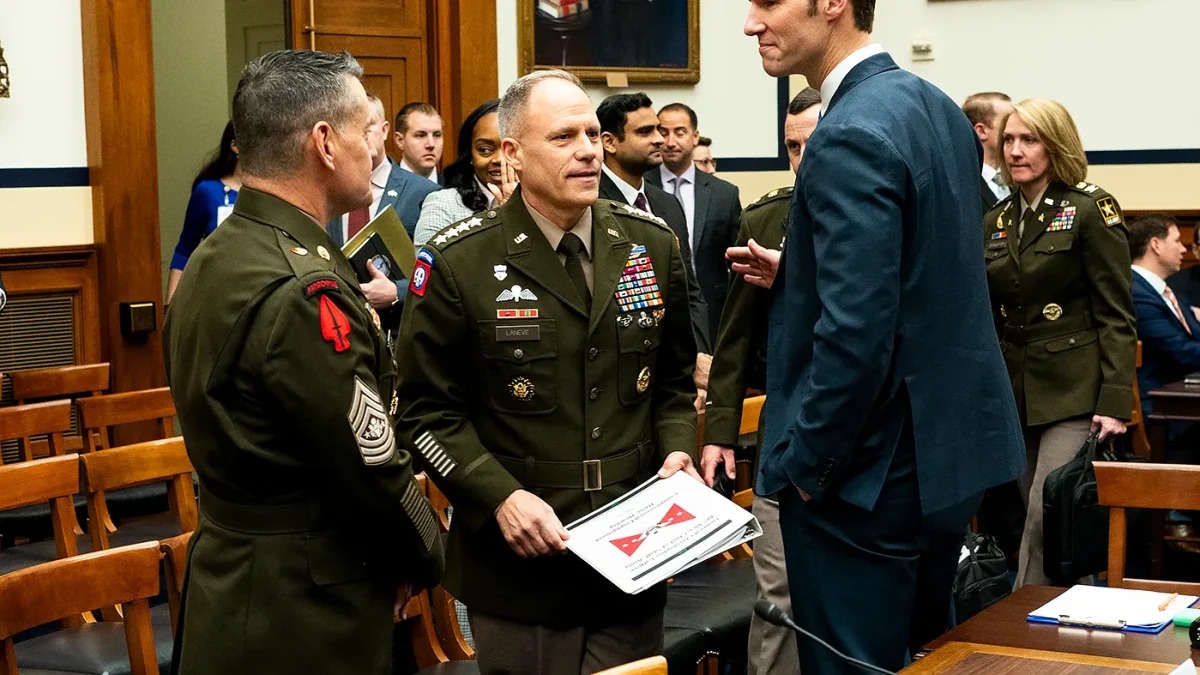
Table of Contents
Army Leadership Tells Defense Industry Modernization Remains a Core Priority
Provpnadvice.com – The Army’s acting chief of staff, Gen. Christopher LaNeve, sought to reassure defense companies that leadership changes have not weakened the service’s commitment to modernization. Speaking Tuesday at the Dwight D. Eisenhower luncheon during the Association of the United States Army conference in Washington, D.C., LaNeve said the service is accelerating its modernization agenda rather than retreating from it.
“No, the Army’s not turning its back on modernization. In fact, quite the opposite. We are sprinting towards it,” LaNeve said.
LaNeve, who also serves as Army vice chief of staff, stepped into the acting chief role after Defense Secretary Pete Hegseth removed Army Chief of Staff Gen. Randy George. The transition followed the late-August resignation of former Army Secretary Dan Driscoll after months of disputes with Hegseth.
Those departures raised questions for companies that develop weapons, vehicles, communications systems, software and other military technologies. LaNeve’s message was aimed directly at those partners: the Army still needs private-sector innovation, but it intends to be more selective in deciding which projects deserve long-term investment.
Modernization Will Be More Focused
LaNeve pointed to the Army Azimuth as a guide for the service’s effort to stay ahead of potential adversaries. He said the Army secretary and its senior uniformed leadership remain committed to working with industry, particularly where American companies can provide useful ideas and technology.
“And to our industry partners in this room, we need you to hear this: the secretary and I are not walking away from modernization,” LaNeve said. “This is clearly captured in the Army Azimuth, where I lay forth the requirements to outpace our adversaries.”
The central message from the Army’s new leadership is not that every existing system will receive an upgrade. Instead, the service is moving toward a narrower approach that emphasizes the capabilities considered most important for future combat operations.
That approach is detailed in “How the Army Fights,” a 46-page framework signed by LaNeve and released last week. The document says investments should improve the Army’s overall ability to fight as an integrated force, rather than trying to make each platform the most technologically advanced option available or giving every unit every possible capability.
The framework places priority on four areas: Convergence, Strike, Close Battle and Endurance. Together, those concepts reflect an Army effort to connect forces and information, deliver effects against adversaries, succeed in close fighting and sustain operations over time.
“The Army cannot and should not modernize everything at once,” the service stated in the framework. “The answer is focused modernization.”
For defense companies, that distinction matters. A modern system may still be valuable, but the Army is signaling that funding decisions will be judged against operational priorities, affordability and the technology’s ability to fit within a broader fighting force.
From Broad Experimentation to Threat-Informed Choices
The current effort builds on the Army Transformation Initiative, announced last April. That initiative encouraged experimentation with technology across the force, sought to reduce bureaucracy and redirected resources toward the operational capabilities seen as most urgent.
Army leaders have argued that changing the service’s procurement and innovation culture is necessary if it is to avoid falling behind faster-moving threats and commercial technology. But LaNeve said that enthusiasm for innovation must be matched by hard choices about where finite resources can have the greatest effect.
He described the next stage as a push for “threat-informed investments,” meaning the Army will decide which technologies require funding and which formations should receive them based on military needs rather than a desire to spread new equipment everywhere.
“This means making thoughtful decisions over where investments are made,” LaNeve said. “And when I think of Army capabilities, I bend them into three categories, and I’ve talked to you a lot about this on the floor: legacy, enduring, and modern.”
LaNeve said the Army’s resources are not unlimited, making prioritization unavoidable. The service plans to retire legacy equipment more quickly when older systems burden units, fail to perform reliably or pull attention away from training that has greater military value.
“We’re going to divest legacy equipment with the intention to unburden our units as fast as we can from the old and failing equipment that distracts us from meaningful training,” he said.
At the same time, he said the Army will continue backing enduring capabilities that can shorten the time required to bring modern equipment into operational units. The service also plans deliberate investments in newer systems that can grow at scale and directly support how the Army operates alongside the rest of the joint force.
“We will purposely invest in our enduring capabilities that halve the bridge time for us to get the modern equipment into the force,” LaNeve said. “But we will also make intentional investments for modern capabilities that can be scaled and directly contribute to how the Army fights within the joint force.”
Acting Secretary Calls for Faster Procurement
Acting Army Secretary Adam Telle delivered a similar message a day earlier at the AUSA gathering. Telle said the service must operate at the pace of business rather than the slower tempo often associated with government processes.
His criticism focused on an acquisition culture that he said has sometimes favored firms capable of navigating large bureaucracies over smaller, more agile businesses with useful ideas. For a military seeking to adopt innovation more quickly, that pattern can leave potentially valuable technologies waiting for too long before receiving serious consideration.
“We were taking too long to find and fund good ideas,” Telle said. “That’s because we based who we did business with not on how well they could deliver equipment or innovation to our soldiers, but based on whether their bureaucracy was big enough to interface with our big bureaucracy.”
“Agile, hungry companies with brilliant ideas were starved while we forced them to wait,” he added.
The combined remarks from Telle and LaNeve offer a message of continuity alongside change. The Army is still looking for innovation from established defense contractors and newer companies, but it wants investments tied more closely to battlefield requirements. Industry partners are being asked to demonstrate not only technological promise, but also practical value, scalability and a clear contribution to the Army’s future operating concepts.
Related Reading
Frequently Asked Questions
What is Top Army general reassures defense industry?
Top Army general reassures defense industry is the main topic of this guide. The article explains the context, practical details, and next steps readers should understand.
Why does Top Army general reassures defense industry matter?
Top Army general reassures defense industry matters because readers are looking for a useful answer, not just a short summary. Good content should match search intent and help them decide what to do next.