Strait of Hormuz reopening likely to be delayed to sweep Iranian mines

Strait of Hormuz Reopening Likely to Be Delayed Amid Iranian Mine Threat
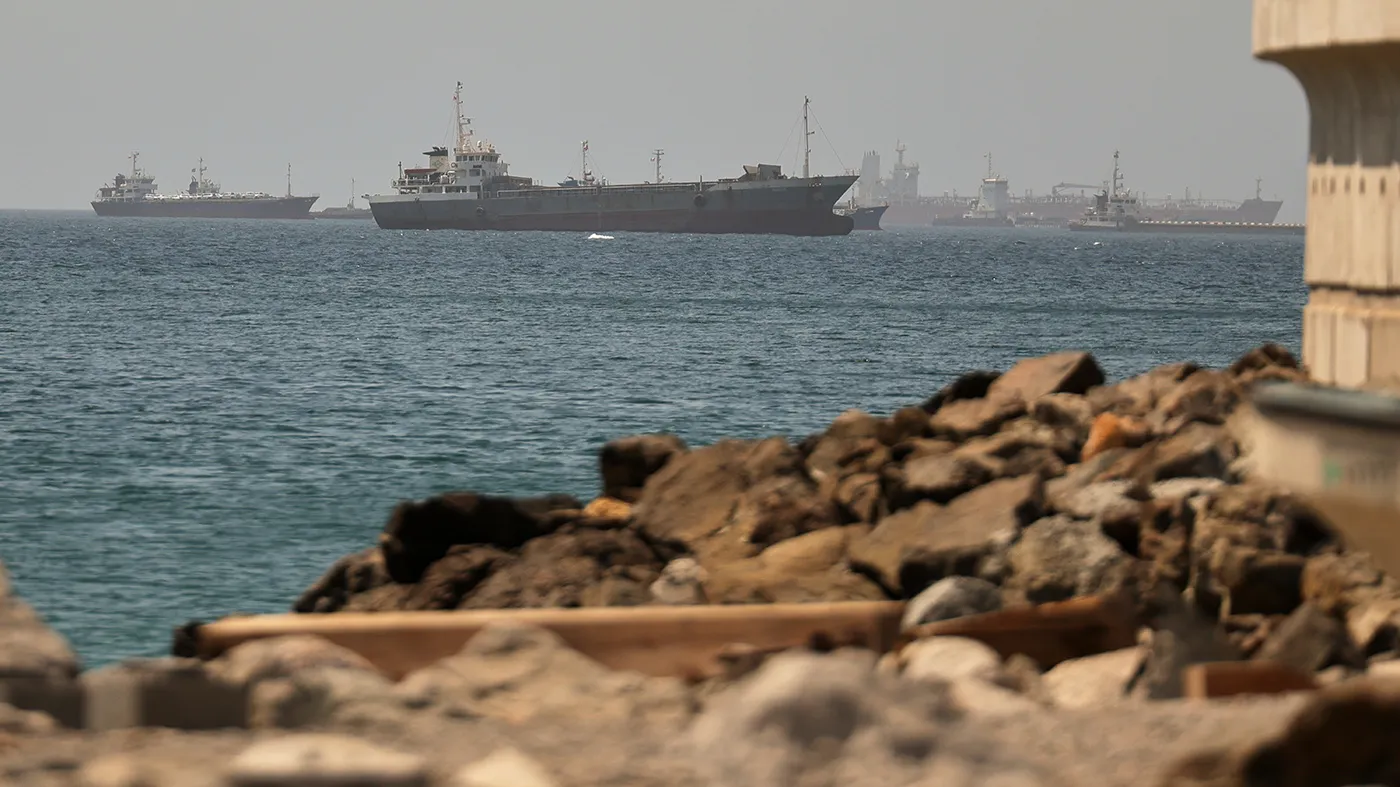
Provpnadvice.com – The Strait of Hormuz, a critical maritime corridor for global oil transportation, may see a prolonged delay in resuming normal shipping operations. Mines deployed by Iran during recent hostilities are complicating the process of restoring traffic, as outlined in a memorandum of understanding signed this week. Experts suggest that clearing these hidden threats could take several months, prompting hesitation among shipping companies until the risks are fully mitigated.
U.S. Military Operations in Response to Mine Dangers
President Trump highlighted the U.S. military’s efforts to address the mine threat, stating that forces were already “doing a little hunting for a couple of mines.” With estimates suggesting Iran had access to around 5,000 such devices at the onset of the conflict in late February, the potential for mine deployment in the strait’s waters remains significant. The operation to locate and neutralize these mines requires a combination of conventional minesweepers, advanced underwater drones, and likely collaboration with international allies.
According to Steven Wills, a naval strategist at the Navy League’s Center for Maritime Strategy, the presence of mines introduces a unique challenge. “They’re an unknown, they’re hard to find, and they create a sense of fear that other weapons don’t,” he noted. Wills emphasized that mines can be deployed covertly, emerging unpredictably from their resting places if positioned strategically. This uncertainty could prolong the timeline for safe passage through the strait.
“They can just come out of nowhere if they’ve been laid in the right place at the right time,” Wills added. “I think it’ll take some time to figure this out.”
The potential mine count ranges from dozens to hundreds, as per Wills’ analysis. These devices vary in design, with some floating just below the surface while others lie dormant on the seabed, activated by sensors. Wills estimated the lower end of the spectrum, suggesting that Iranian Revolutionary Guard Corps vessels, which operate small boats, likely carried only one or two mines each during initial deployments.
“I don’t think they laid a huge number, but it’s hard to tell until you get people in there and start looking and start generating some reports,” Wills explained. Bryan Clark, a naval operations expert at the Hudson Institute, echoed similar concerns. He speculated that Iran might have placed “maybe a few dozen mines” early in the conflict, primarily targeting U.S. vessels suspected of mine-laying activities.
“Even a few of the floating bombs would be more than enough to deter vessels from traversing the strait,” Clark told The Hill. “You can create the perception of a minefield.”
Clark stressed that the psychological impact of mines is as significant as their physical danger. “It serves its purpose, even at that kind of scale,” he said. The process of identifying and removing these mines is expected to unfold in stages. Initial efforts would focus on mapping the strait’s waters, followed by systematic clearing. U.S. officials reported that Iran deployed a few dozen mines in early March, setting the stage for a multi-step operation to secure the route.
Strategic Implications of Mine Deployment
The Strait of Hormuz, known as the world’s most vital oil passage, connects the Gulf of Oman to the Arabian Sea. Its strategic importance means that any disruption could have far-reaching economic consequences. Mines, though seemingly small in number, pose a substantial risk due to their ability to disable large vessels with a single detonation. This capability makes them a formidable tool in maritime warfare.
Following the initial mine placements, the U.S. military launched a targeted response. Defense Secretary Pete Hegseth announced on March 10 that Trump had ordered forces to eliminate inactive mine-laying vessels, describing the effort as “wiping them out with ruthless precision.” U.S. Central Command later confirmed that 16 Iranian boats had been attacked in the region, but the effectiveness of these strikes in neutralizing Iran’s mine capabilities remains uncertain.
The ongoing conflict has shifted focus from direct confrontations to the more insidious threat of mines. While the U.S. has taken steps to counter this, the process of fully clearing the strait is expected to be complex. The initial phase involves reconnaissance, using both manned and unmanned systems to locate mines. This is followed by clearance operations, which could take weeks or months depending on the scale and distribution of the threat.
Operational Steps for Mine Clearance
According to Wills, the first step in addressing the mine threat is mine hunting. “You use a ship, a helicopter towed sled, an unmanned vehicle towing a sled, or an unmanned underwater vehicle to basically map a route,” he said. This method, likened to clearing weeds from a yard, allows for the identification of safe paths through the strait. Once a viable route is established, the next phase involves dismantling the mines.
“Minesweeping, on the other hand, is usually done in the wake of a conflict and more akin to mowing the grass,” Wills remarked. In this approach, unmanned surface vehicles tow influence mine sweeps, emitting electromagnetic signals to trigger detonation in magnetic or acoustic mines. Traditional methods, such as deploying physical minesweepers, involve releasing cables equipped with sound devices to snag and neutralize the threats.
Experts predict that the entire process could take one to two weeks for reconnaissance, followed by a couple of months of intensive clearing. This timeline, however, is contingent on the number of mines and their locations. The uncertainty surrounding the exact quantity and distribution of mines underscores the need for thorough assessment before resuming full traffic.
With the upcoming agreement to reopen the strait—set to be signed by Washington and Tehran on Friday—the Navy faces the challenge of addressing both immediate and long-term mine threats. The agreement aims to reassure shipping companies of the area’s safety, but the process of clearing mines will be critical to achieving this goal. As the operation progresses, the strategic and economic implications of the Strait’s reopening will be closely watched by global stakeholders.
The situation highlights the evolving nature of maritime warfare, where mines are not only a tactical tool but also a psychological weapon. Their ability to disrupt commerce and create uncertainty underscores the importance of swift and effective countermeasures. As the U.S. and Iran work to resolve the issue, the international community will await the results of these efforts, with the hope that the strait can soon resume its role as a vital lifeline for global trade.