‘Shocking’ fake poll firm puts industry under the microscope: ‘Unfortunately not surprising’

Table of Contents
A 21-Year-Old’s “Social Experiment” Exposes How Easily Fake Polls Can Poison Public Trust
Provpnadvice.com – The American polling industry has spent years trying to rebuild credibility after a string of high-profile misses, yet the latest blow to its reputation did not come from a methodological error or a badly timed sample. It came from a fabricated product — two entirely invented surveys released under the banner of a company called Median Strategies, which later admitted the numbers were never collected from a single voter.
The disclosure, made earlier this week, revealed that Median had published results for both the Wisconsin Democratic gubernatorial primary and the Los Angeles mayoral contest. The firm told the public the figures should not be cited, shared, or treated as legitimate data. Instead, the company framed the exercise as a short-term social experiment designed to test how quickly purported polling information could move through the political information ecosystem without anyone independently verifying its origin.
The Two Fabricated Numbers
The first fake survey concerned the race for mayor of Los Angeles, a contest in which no major public polling had been conducted since the June primary. Median’s invented result placed incumbent Mayor Karen Bass (D) ahead of progressive City Council member Nithya Raman (D) by 12 points. Bass subsequently promoted the figure in a post on the social platform X, a post that was later deleted once the fabrication became public knowledge.
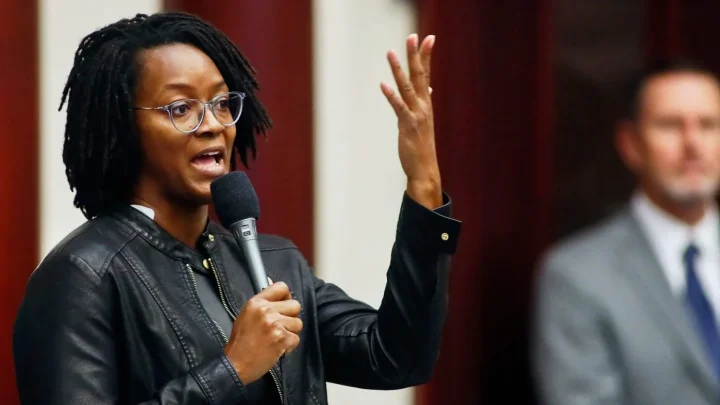
The second fabricated poll showed Wisconsin state Rep. Francesca Hong leading the state’s Democratic primary for governor by 20 points. Hong, a democratic socialist, ultimately lost that primary earlier this month in a significant upset. Notably, the invented number tracked closely with what several legitimate polling firms had already indicated, though survey activity in the final weeks of that race had been limited.
Reactions From Inside the Industry
Industry leaders were quick to separate Median’s stunt from the genuine methodological challenges pollsters face. Ben Leff, chief executive of the survey research firm Verasight, struck a tone that blended alarm with weary familiarity.
“It was very shocking, but unfortunately not surprising,” Leff said. “I think the industry and media are used to probably polls that aren’t conducted very well in terms of rigorous methods or how they’re verifying respondents, but this was sort of the extreme of that, where everything was completely fake.”
Geoffrey Skelley, chief elections analyst at Decision Desk HQ, drew a distinction between a major pollster falsifying data and a small operation running an experiment. Still, he acknowledged the optics problem in a political climate already primed to dismiss survey research.
“I understand why, say in the aftermath of 2016, people have that attitude,” Skelley said. “That is concerning, that it sort of adds fuel to the fire of ‘The polls are worthless,’ ‘The polls are meaningless,’ ‘They’re not even real’-kind of conversation.”
The Person Behind the Ploy
The Guardian newspaper identified the individual operating Median Strategies as Rahil Prakash, a 21-year-old recent college graduate. Prakash told reporters he was inspired by the widely discussed polling miss in the Michigan Democratic Senate primary to test whether fabricated survey results could “penetrate the ecosystem” with minimal resistance.
“I was a bit shocked, perhaps at how fast this sort of information can spread,” Prakash said.
He expressed a desire to apologize to the campaigns of Bass, Raman, and Hong, and offered a broader cautionary thought about the vulnerability of the information environment.
“And I hope it gives a really good lesson going forward in that we need to be very serious about these things and very serious in how, if one person can do this, what can a serious operation do in the future,” Prakash said.
Campaign Fallout in Los Angeles
The mayoral race became a brief flashpoint of partisan blame. Bass’s campaign, through a spokesperson, demanded that any “bad faith attempts to influence elections” be “investigated and prosecuted to the fullest extent of the law.” Raman’s campaign, meanwhile, turned the incident into an attack on Bass for amplifying a number without properly vetting its source, calling it a “fake poll without properly vetting the source.”
Why the Timing Matters
The disclosure landed in the immediate aftermath of two well-publicized polling failures: the Michigan Democratic Senate primary and the Wisconsin gubernatorial primary. In both contests, surveys had underestimated the eventual winners, feeding a narrative that pollsters cannot be trusted to model electoral outcomes. Layering a completely fabricated survey on top of those genuine misses made the industry’s credibility problem look far worse than a sampling or weighting error would.
The broader backdrop is a public whose confidence in polling has been eroded over multiple election cycles. President Trump’s repeated outperformances of survey expectations in 2016, 2020, and 2024 — each to a different degree — gave skeptics a durable talking point. Pollsters have argued that those misses, however frustrating, reflected good-faith modeling attempts constrained by imperfect data. A fabricated survey, by contrast, offered no such defense.
Implications Ahead of November
The country is now gearing up for the November midterm elections, a contest in which polling will play a central role in shaping expectations, media coverage, and potentially voter turnout. The extent to which Median’s two fake numbers influenced expectations in Wisconsin or Los Angeles is impossible to quantify. What is measurable is the perceptual damage: every future survey will carry a slightly heavier burden of proof, and every headline number will invite the question of whether the source has been independently verified.
For an industry already navigating shrinking response rates, partisan skepticism, and the difficulty of reaching hard-to-poll populations, the episode underscores a simple operational truth. Media outlets and the public alike must treat every released number as a claim requiring verification of methodology, sample size, field dates, and sponsorship — not as a ready-made fact. One person with a website and a willingness to publish was enough to inject false data into the political conversation. The lesson, as Prakash himself framed it, is about what a more resourced operation could accomplish in the future.
Related Reading
Frequently Asked Questions
What is Shocking fake poll firm puts industry?
Shocking fake poll firm puts industry is the main topic of this guide. The article explains the context, practical details, and next steps readers should understand.
Why does Shocking fake poll firm puts industry matter?
Shocking fake poll firm puts industry matters because readers are looking for a useful answer, not just a short summary. Good content should match search intent and help them decide what to do next.