Collins, Jackson trade jabs in final Maine Senate debate: 3 takeaways

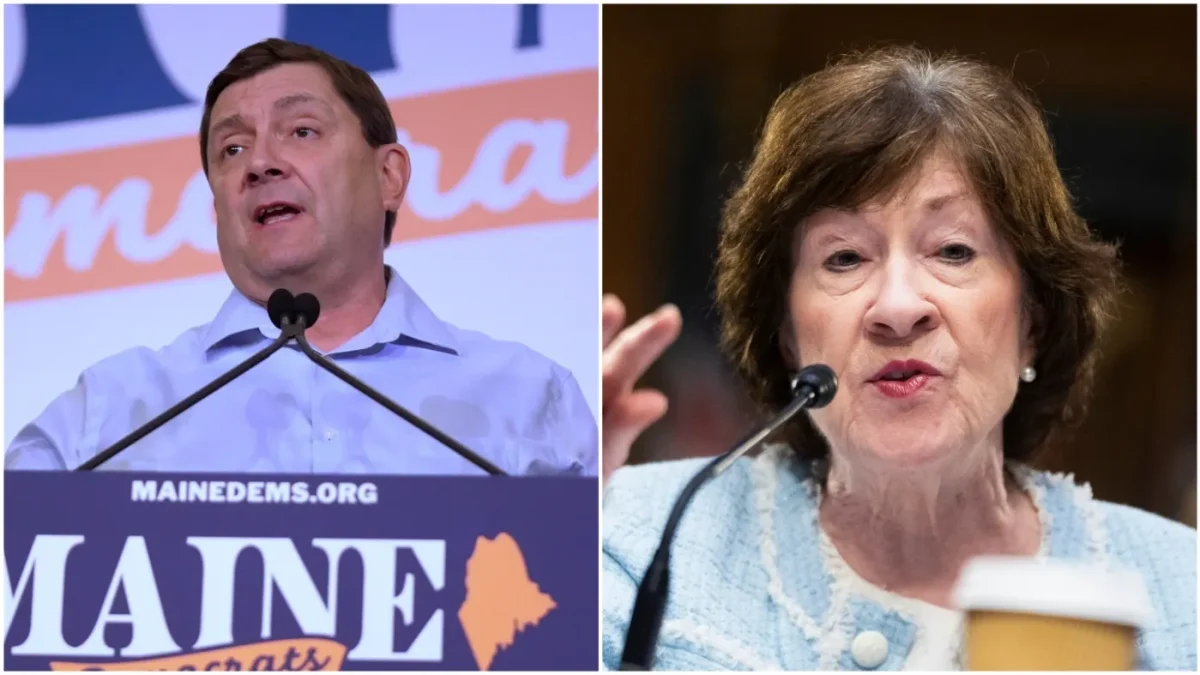
Table of Contents
Collins and Jackson Clash Over Independence, Money and Washington’s Direction
Provpnadvice.com – Maine’s Senate campaign grew more confrontational Thursday as Republican Sen. Susan Collins and Democratic challenger Troy Jackson met for their final debate before voters cast ballots. The hour-long event put the five-term incumbent’s record of crossing party lines at the center of the race, while Jackson argued that Collins has ultimately supported President Trump when it mattered most.
The candidates also sparred over campaign fundraising, immigration, the war in Iran and the economic pressures facing Maine businesses. A protester briefly interrupted the discussion from off camera, shouting that artificial intelligence data centers were harming the climate.
“This is obviously one of Troy’s supporters,” Collins said.
Jackson quickly rejected that suggestion.
Collins is seeking to keep her seat in a state that has often leaned Democratic in federal elections. Jackson, a former president of the Maine Senate, became his party’s nominee after Graham Platner exited the contest amid sexual assault allegations and controversy involving text messages.
Debate centers on Trump and Collins’s voting record
Jackson repeatedly sought to link Collins to Trump’s agenda, while Collins emphasized that she does not vote in lockstep with either her party or the president. The Republican senator argued that her record reflects an independent approach rather than automatic support for GOP priorities.
When pressed for an example of opposing Trump in a way that changed the result of a major vote, Collins cited her effort to stop Pete Hegseth from becoming Defense secretary. She said she had helped organize Republican resistance to his confirmation, but acknowledged that a GOP senator reversed course at the last moment. Hegseth was confirmed and now leads the Pentagon.
Collins said an analysis identified 56 occasions when her vote had altered an outcome, though she did not list the votes during the debate.
Jackson seized on the exchange, arguing that Collins breaks with Trump only when her support is unnecessary to the outcome.
“The reality is that 100 percent of the time, when Donald Trump needs her, Susan Collins is going to be there,” Jackson said.
He highlighted Collins’s vote to advance Trump’s broad tax-and-spending measure, even though she later opposed the final bill. Collins responded that a fuller assessment of her voting history put her alignment with Trump at 72 percent, not the 90 percent to 100 percent figure raised by her critics.
She also pointed to her votes supporting the confirmations of three liberal Supreme Court justices: Sonia Sotomayor, Elena Kagan and Ketanji Brown Jackson. Those nominees were put forward by different Democratic presidents, and Collins presented those votes as evidence that her decisions are not defined solely by partisan loyalty.
Fundraising pledge draws scrutiny
Campaign finance became another heated subject. Collins accused Jackson of departing from his promise not to accept money from billionaires or corporate political action committees.
Jackson acknowledged that billionaires had contributed to his Senate campaign, prompting an audible audience response. He maintained that donations would not change how he would serve in Washington.
“As far as the billionaires that I might have on my campaign, that is accurate,” Jackson said.
He argued that accepting such contributions would not prevent him from pursuing higher taxes on wealthy donors if elected.
“I’m going to tax those billionaires when I get to the U.S. Senate,” he continued. “So, if they want to give me money during this campaign, I guess that’s up to them.”
Jackson also said his campaign had received $15,000 connected to the oil and pharmaceutical industries. He said that money was donated to charities in an effort to honor his campaign commitment.
Collins further criticized Jackson for releasing a campaign finance report one day after a deadline he had set for himself. Jackson said the delay resulted from the high volume of recent campaign contributions.
Iran conflict and Maine’s economy emerge as major issues
The conflict involving Iran provided one of the evening’s sharpest policy disagreements. Jackson said Collins had not used her position as chair of the Senate Appropriations Committee forcefully enough to help end the war. He argued that Congress could exert leverage by cutting off money for continued military operations.
“The way to block it now would be to shut off funding,” he said.
Collins has repeatedly criticized Trump’s management of the conflict and cited several votes in which she opposed extending military operations. The exchange underscored a broader argument in the campaign: whether a senator’s objections and votes are sufficient when Congress and the White House are divided over military action.
Jackson connected the conflict to everyday economic concerns in Maine, noting that higher fuel prices have placed added strain on industries including fishing and logging. For communities dependent on those sectors, fuel costs can affect transportation, equipment and the ability to maintain operations.
The debate offered voters a final view of two competing cases. Collins asked Maine residents to judge her on a long record that includes bipartisan votes and occasional breaks with Republican leadership. Jackson argued that the state needs a senator who would provide a more consistent challenge to Trump and pursue a different approach to campaign money, federal spending and foreign policy.
With the race entering its final stretch, the candidates left little doubt about the central question facing Maine voters: whether Collins’s version of independence remains persuasive, or whether Jackson’s call for a sharper break from Washington’s current direction will carry the day.
Related Reading
Frequently Asked Questions
What is Collins Jackson trade jabs in final?
Collins Jackson trade jabs in final is the main topic of this guide. The article explains the context, practical details, and next steps readers should understand.
Why does Collins Jackson trade jabs in final matter?
Collins Jackson trade jabs in final matters because readers are looking for a useful answer, not just a short summary. Good content should match search intent and help them decide what to do next.