Trump’s DC makeover: What to know

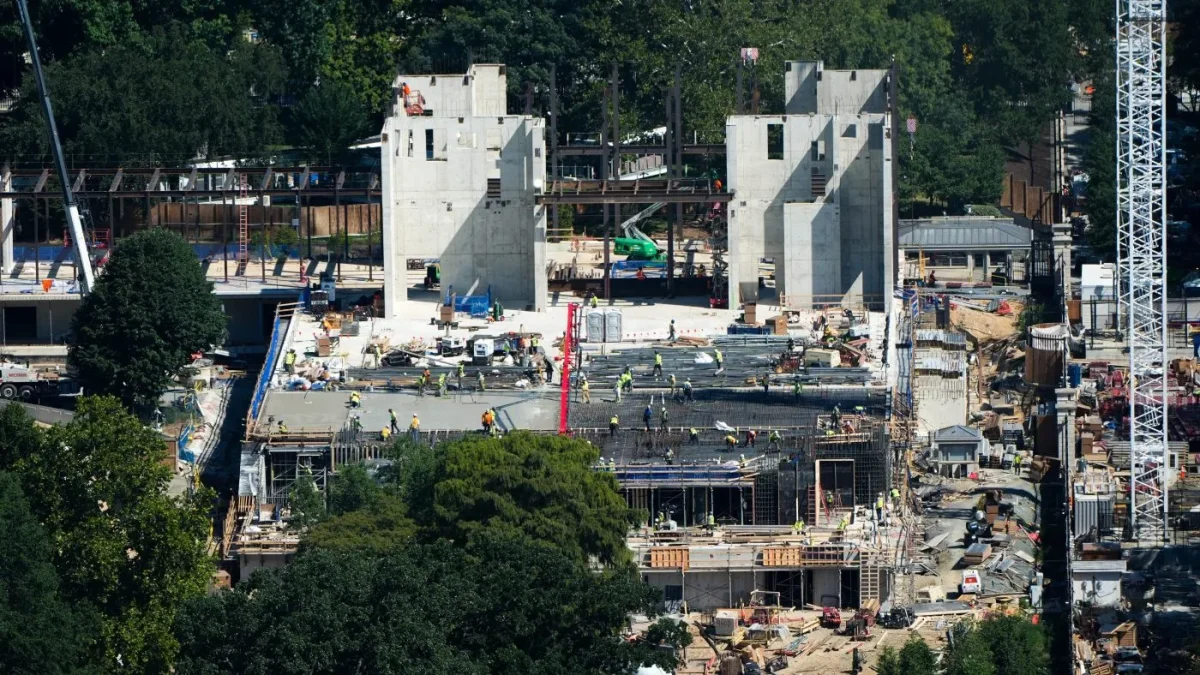
Table of Contents
White House Ballroom Construction Resumes After Supreme Court Clears Legal Path
Provpnadvice.com – The highest court in the land removed the last significant judicial obstacle standing between President Trump and completion of a sprawling new ballroom that will replace the White House’s East Wing. With that ruling, a 250-person construction crew can keep working around the clock — 20 hours daily, seven days a week — on what the president calls a national-security necessity and a venue upgrade for state dinners.
The decision does not settle the underlying question of whether the project was lawfully authorized. A final determination on legality remains pending. What it does do is let the physical work proceed while courts continue to deliberate. For preservation advocates who have spent months litigating the issue, that distinction matters little: concrete is being poured, steel is being raised, and the East Wing’s historic footprint is being erased in real time.
The Ballroom: Scale, Funding, and Controversy
The planned structure spans roughly 90,000 square feet and incorporates a drone-launching pad along with an underground military complex beneath the main event space. Trump has framed the project as indispensable to national security while simultaneously touting its capacity to host far larger diplomatic gatherings than the existing East Wing ever allowed.
Cost estimates place the build at approximately $400 million. A portion of that sum is being supplied through private donations from corporations and wealthy individuals — a funding arrangement that has raised questions about potential conflicts of interest between donors and the administration.
In June, the watchdog organization Public Citizen released an analysis showing that 14 of the ballroom’s 27 identified corporate donors received new or expanded federal contracts totaling more than $50 billion within the first six months of the current year. The finding intensified scrutiny over whether the donation pipeline functions as a quid pro quo channel.
The National Trust for Historic Preservation had prevailed in lower courts, arguing that Trump never obtained the requisite approvals to proceed. The Supreme Court’s intervention last week effectively paused that victory long enough for construction to continue.
“We have hundreds of happy construction workers in D.C. busily doing their job building the finest Ballroom/Military complex anywhere in the World,” Trump wrote in a Truth Social post on Wednesday.
He added: “It is important to remember, the Ballroom is a 400 Million Dollar gift to America!”
A 250-Foot Arch at the City’s Threshold
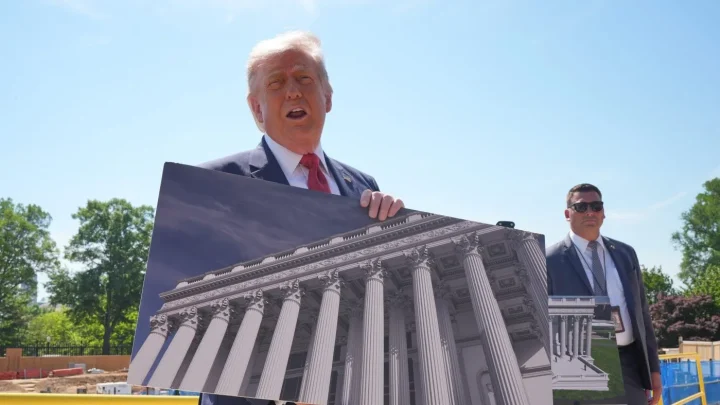
Meanwhile, a second megaproject is accelerating toward ground-breaking. The Interior Department announced Thursday that excavation at the site of a proposed 250-foot triumphal arch will commence within two weeks. The structure — envisioned in white and gold — would rise at an entrance to Washington and, by Trump’s own description, become the largest such monument in the world, modeled loosely on Paris’s Arc de Triomphe.
A recent federal environmental and historic-preservation assessment concluded that the arch would adversely affect dozens of historic sites throughout the capital. Specifically, it would obstruct sightlines to the Washington Monument, the Lincoln Memorial, and the U.S. Capitol — landmarks whose visual corridors have been protected under various statutes and executive orders since the mid-twentieth century.
Three Vietnam War veterans filed suit earlier this year seeking to halt construction, citing both the absence of congressional authorization and the projected obstruction of views toward the Lincoln Memorial and Arlington National Cemetery. Democrats in Congress have echoed those arguments, contending that a monument of this scale cannot be erected without explicit legislative approval.
Rep. Don Beyer (D-Va.), whose district encompasses Arlington National Cemetery, called the arch “plainly illegal” on Thursday and said it was not ready to be built.
“Burgum and the Trump Administration are disregarding the risks and rushing this towering monument to Trump’s vanity because they believe Republicans will get crushed in November,” Beyer said in a statement, referring to Interior Secretary Doug Burgum.
The Mural That Could Not Survive
Among the smaller-scale changes already completed since Trump’s return to office is the removal of the large yellow “Black Lives Matter” mural that had stood near the White House. The installation was commissioned in 2020 by then-Mayor Muriel Bowser (D) at the height of nationwide protests following George Floyd’s murder in Minneapolis. It had been conceived, in part, as a rebuke to Trump’s first-term deployment of federal law-enforcement assets against demonstrators.
The $4.8 million piece came down under pressure from Republican members of Congress who threatened to withhold transportation funding unless the city removed the mural and renamed the two-block stretch “Liberty Plaza.” The episode illustrated how the beautification agenda operates not only through new construction but through the selective erasure of existing public art.
The Lincoln Memorial Pool: Algae, Peeling Paint, and Ongoing Repairs
Renovations at the Lincoln Memorial Reflecting Pool continue after an algae bloom turned the water a vivid green and the pool’s newly applied “American flag blue” coating began to peel. The administration has framed the intervention as necessary maintenance, though critics note the pool’s original design and materials were themselves products of a 1940s federal beautification program.
Why the Broader Campaign Matters
Taken together, the ballroom, the arch, the mural’s removal, and the pool repairs represent a coordinated effort to reshape the physical landscape of the capital within a single presidential term. Preservationists argue that the speed and scale of these changes — many proceeding without the congressional approvals or environmental reviews that long-standing statutes require — set precedents that could make future alterations far harder to contest. For now, at least, the Supreme Court has told the ballroom crews to keep working while the legal questions remain unresolved.
Related Reading
Frequently Asked Questions
What is Trump s DC makeover?
Trump s DC makeover is the main topic of this guide. The article explains the context, practical details, and next steps readers should understand.
Why does Trump s DC makeover matter?
Trump s DC makeover matters because readers are looking for a useful answer, not just a short summary. Good content should match search intent and help them decide what to do next.