Trump defends beef import plan after GOP blowback

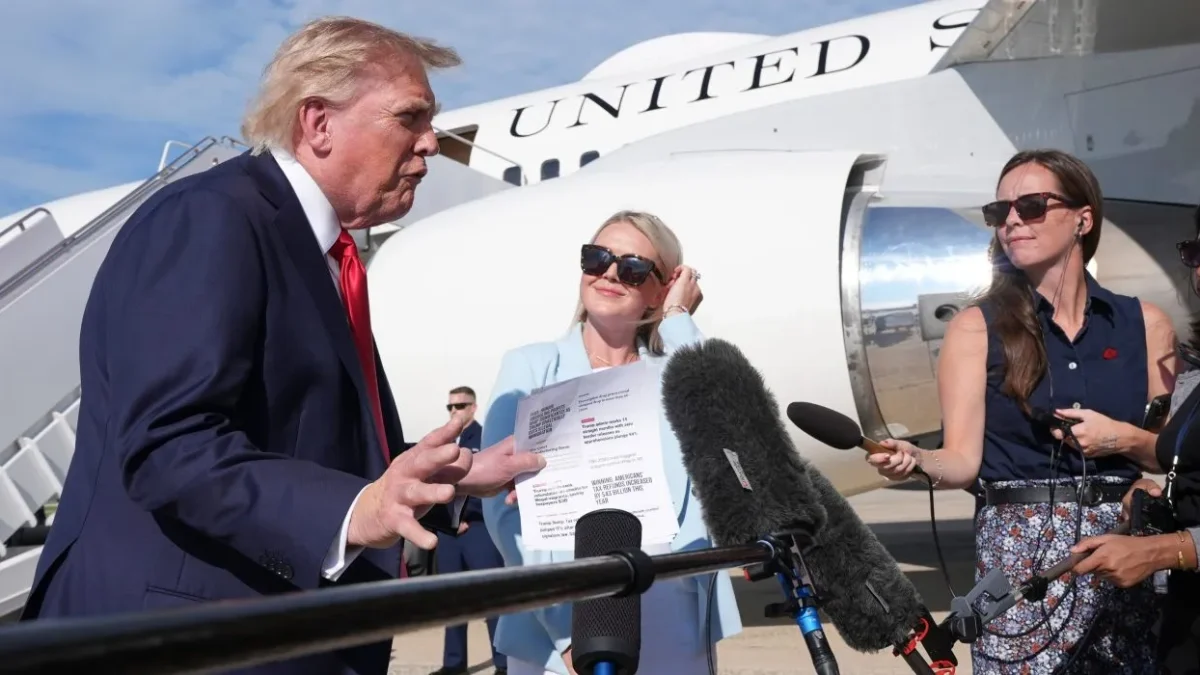
Table of Contents
Beef Tariff Pause Sparks Immediate Backlash From Ranchers and Republican Lawmakers
Provpnadvice.com – The White House moved Friday to hit the pause button on elevated tariffs targeting imported ground beef, a decision that instantly ignited friction between the president and the agricultural sector he has long courted. The temporary suspension, announced via a social media post before Trump boarded Air Force One at Joint Base Andrews for a trip to South Carolina, opens the door for up to 300,000 metric tons of foreign ground beef to enter the U.S. market over a 90-day window. The stated aim: bring grocery-store beef prices down quickly enough to quiet voter frustration over rising food costs.
The President’s Justification
Trump framed the move as a direct response to consumer pressure, telling reporters before departure that the action reflected what ordinary Americans were asking for at the ballot box.
“We want to get the beef prices down, so we will get them down a little bit. That’s what people want, that’s what the voters want, and that’s what I want.”
He went on to praise the ranching community, insisting the sector had performed admirably under difficult conditions.
“The ranchers are great. They are my people. I love the ranchers; they’ve done a fantastic job. But they admit that we need a little help in order to get the prices down, so that is what we’re doing.”
Beyond the 90-day tariff pause, Trump teased an additional arrangement he said would push ground beef prices to 25 percent below prevailing market levels. Pressed at Andrews about which nations would supply the product, he declined to name them.
“There are a few countries, but they’re going to be sending in the highest quality beef, and it’s something that we need.”
The ambiguity surrounding sourcing left analysts and industry observers speculating about which trade partners might be involved, particularly given the broader tariff architecture the administration has layered onto agricultural imports over the past year.
Industry Pushback Arrives Within Hours
The cattle industry reacted swiftly and sharply. Colin Woodall, chief executive of the National Cattlemen’s Beef Association, issued a statement describing the organization as “disappointed” by the decision. His remarks underscored a central tension in American beef policy: the gap between short-term price relief for shoppers and the long-term economics of herd rebuilding.
“While America’s cattle producers share the goal of keeping groceries affordable for consumers, flooding the market with government-subsidized, below-market beef is not the way to rebuild the American cattle herd. Cattle markets have already turned sharply lower this morning, to the detriment of farmers and ranchers.”
Woodall emphasized the timing problem. The announcement landed as producers were making critical herd-management decisions for the coming season, a period when cattle numbers are already constrained by years of drought, elevated feed and input costs, and chronic underinvestment in breeding stock.
“This is a critical time of year for cattle producers, as we approach the season where they are making decisions regarding their herds. Cattle farmers and ranchers are responding to strong market signals and historically high demand, and we are already working to rebuild after years of ongoing drought, high input costs and other challenges that have reduced U.S. cattle numbers.”
He characterized the tariff pause as pouring “cold water” on expansion plans that ranchers had been formulating in response to tight supply conditions.
On social media, Meriwether Farms, a Wyoming-based farm-to-table cattle operation, used the word “betrayal” to describe the president’s action, capturing the emotional register many small-scale producers brought to the debate.
Republican Lawmakers Join the Critique
The political fallout extended beyond trade desks into congressional offices. Senator Deb Fischer of Nebraska, a Republican who represents one of the nation’s largest cattle states, posted on X that she was “extremely disappointed” with the decision.
“We all want lower grocery prices, but as I’ve said for months, we cannot do it at the expense of American producers. Flooding the market with foreign beef hurts our livestock industry and undermines the long-term solution: growing the U.S. cattle herd to meet demand.”
Fischer’s intervention is notable because it came from within the president’s own party, suggesting the tariff pause may complicate the administration’s already-fragile relationship with rural Republican constituencies heading into the next electoral cycle.
Market and Policy Context
The episode lands against a backdrop of historically tight U.S. beef supply. Domestic cattle inventories remain well below their long-run averages after a prolonged drought cycle that reduced forage availability across the West and South. With supply constrained and consumer demand steady, retail beef prices have climbed for several consecutive quarters, making the product a recurring flashpoint in household-budget surveys and a recurring talking point in campaign rhetoric.
The 90-day window and the 300,000-metric-ton ceiling give the administration a narrow, reversible lever: enough volume to nudge retail prices downward without permanently displacing domestic supply. Yet the industry’s concern is that even a temporary influx of cheaper imported product can depress cattle prices at the farm gate, discouraging the very herd expansion that would ultimately restore domestic supply and ease price pressure organically.
The unnamed sourcing deal Trump referenced adds another layer of uncertainty. Without knowing which countries will participate, producers cannot model the competitive impact, and trade partners face an opaque signal about whether the arrangement is a one-off concession or the first step toward a broader agricultural trade reset.
For now, the pause is in effect, the market has already reacted, and the political arithmetic between consumer price relief and producer economics remains unresolved.
Related Reading
Frequently Asked Questions
What is Trump defends beef import plan after?
Trump defends beef import plan after is the main topic of this guide. The article explains the context, practical details, and next steps readers should understand.
Why does Trump defends beef import plan after matter?
Trump defends beef import plan after matters because readers are looking for a useful answer, not just a short summary. Good content should match search intent and help them decide what to do next.