Tetris suggests White House ‘Build the Wall’ game infringes copyright

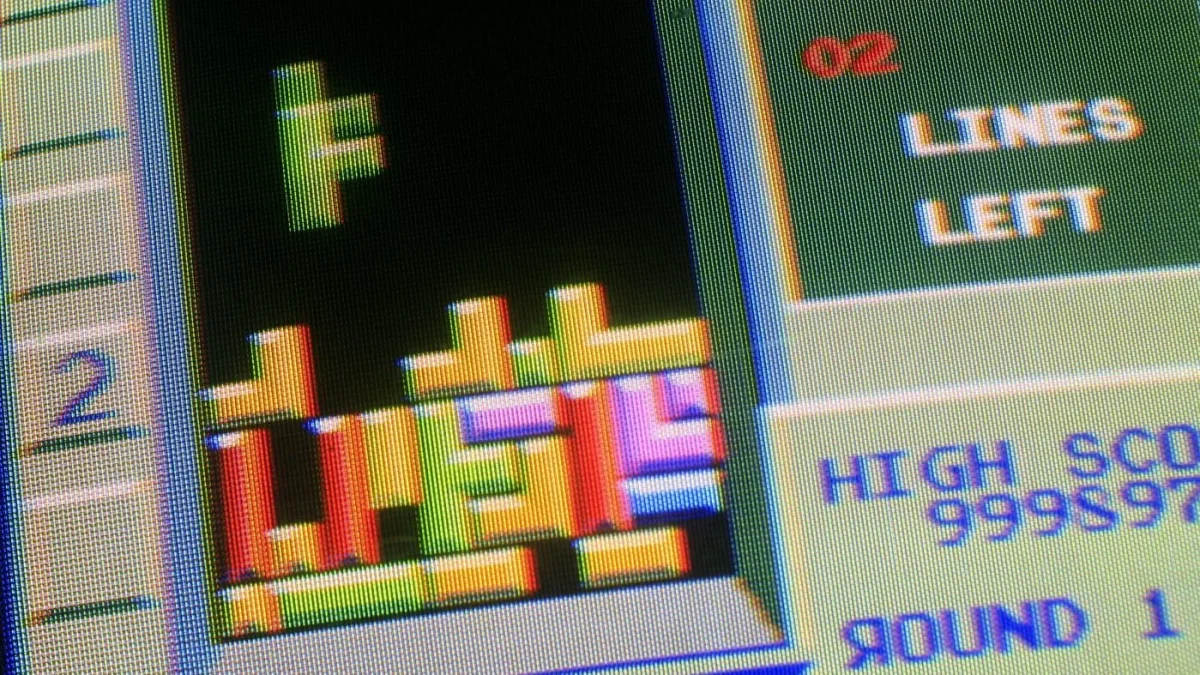
Table of Contents
Tetris Company Issues Copyright Warning Over White House Arcade Game
Provpnadvice.com – The White House’s newly launched online arcade collection, debuting Thursday as a digital showcase of President Trump’s policy agenda, has drawn an unexpected challenge from one of the most recognizable names in video game history. On Friday, the Tetris Company publicly signaled that at least one title in the government’s game lineup may violate its intellectual property rights, setting the stage for what could become an unusual legal confrontation between a federal institution and a global entertainment brand.
The Game at the Center of the Dispute
Among the five titles currently live on the White House’s arcade platform sits “Build the Wall,” subtitled “Zombie Border Siege.” The game tasks players with stacking falling geometric blocks to form barriers that stop waves of zombies and other fictional creatures from breaching the southern border and entering the United States. If blocks accumulate to the top of the playfield, the run ends — a failure condition nearly identical to the one that has defined Tetris gameplay since the late 1980s. Upon losing, players see the on-screen message “BORDER BREACHED,” a thematic twist on the classic “Game Over” prompt.
The game’s instructions direct players to “protect the border from the coming horde,” framing the familiar block-stacking mechanic as a metaphor for immigration enforcement. The visual language, the core loop of rotating and placing tetromino-shaped pieces, and the progressive difficulty curve all track closely with the mechanics that made Tetris a household staple across four decades.
The Company’s Response
In a statement posted to social media on Friday, the Tetris Company made its position explicit:
“The Tetris Company was not involved in the creation of ‘Build the Wall,'” the company said, adding, “We take copyright infringement very seriously.”
A spokesperson elaborated to Variety, confirming that the White House “did not authorize or license the Tetris brand or intellectual property for the game.” When pressed on whether formal legal proceedings were being contemplated, the spokesperson indicated the company was “reviewing the matter,” leaving open the possibility of a lawsuit or a demand for licensing fees.
The company’s social media post closed with a pointed editorial aside:
“At Tetris, we believe in the power of connection and bringing people together, not dividing them.”
That final line carried obvious political resonance, contrasting the game’s original spirit of universal accessibility with the administration’s framing of border policy as a binary contest between inclusion and exclusion.
The Broader Arcade and Its Political Messaging
“Build the Wall” is not the only title in the White House’s five-game collection. Another immigration-themed entry, “Rio Run,” borrows the lane-switching format of the classic “snake” arcade genre. In that game, an agent conducts what the description calls “border patrol along the Rio Grande,” weaving between obstacles in a manner reminiscent of navigating a river corridor.
The remaining three titles map onto other pillars of the administration’s agenda. “Trump Savings Tycoon” has players collecting currency for so-called Trump Accounts, a financial product tied to the president’s name. “Supply Line” centers on the administration’s “Make America Healthy Again” public-health initiative, casting the player as a logistics coordinator. Finally, “Flappy Bill” adapts the tap-to-flap mechanic of Flappy Bird, substituting a bald eagle that carries a bundle of legislation while threading through obstacles above the National Mall in Washington, D.C.
Together, the collection functions as a gamified policy primer, translating executive-branch priorities into bite-sized interactive experiences aimed at a broad online audience.
Why the Copyright Question Matters
Tetris occupies a peculiar position in intellectual-property law. The game’s visual identity — the specific tetromino shapes, the color palette, the cascading animation of falling blocks — has been the subject of multiple high-profile disputes over the years, including litigation between competing mobile developers. The underlying mathematical concept of fitting geometric pieces into a grid is not itself protectable, but the particular expression of that concept, including the aesthetic presentation and the specific rule set, generally falls within copyright and trade-dress protections.
A government entity producing a game that replicates those expressive elements without a licensing agreement would face the same questions any commercial developer would: Did the new work copy protectable expression, or did it independently arrive at a similar mechanic? The answer often turns on the degree of visual and mechanical overlap, which in this case appears substantial given the shared block shapes, the stacking failure condition, and the overall presentation.
The White House has not yet responded publicly to the Tetris Company’s statement. Whether the administration opts to seek a retroactive license, redesign the game’s visuals and mechanics, or contest the claim remains to be seen. For now, the arcade site continues to operate, and “Build the Wall” remains available to anyone who visits the platform.
The episode underscores a broader tension: as governments increasingly adopt the visual and interactive grammar of consumer entertainment to communicate policy, they enter a space governed by the same commercial IP rules that apply to any other content creator. A presidential administration, it turns out, is not exempt from the licensing agreements that keep the arcade industry running.
Related Reading
Frequently Asked Questions
What is Tetris suggests White House Build the Wall?
Tetris suggests White House Build the Wall is the main topic of this guide. The article explains the context, practical details, and next steps readers should understand.
Why does Tetris suggests White House Build the Wall matter?
Tetris suggests White House Build the Wall matters because readers are looking for a useful answer, not just a short summary. Good content should match search intent and help them decide what to do next.