Lutnick ‘misspoke’ when he said no US soldiers have died in Iran war

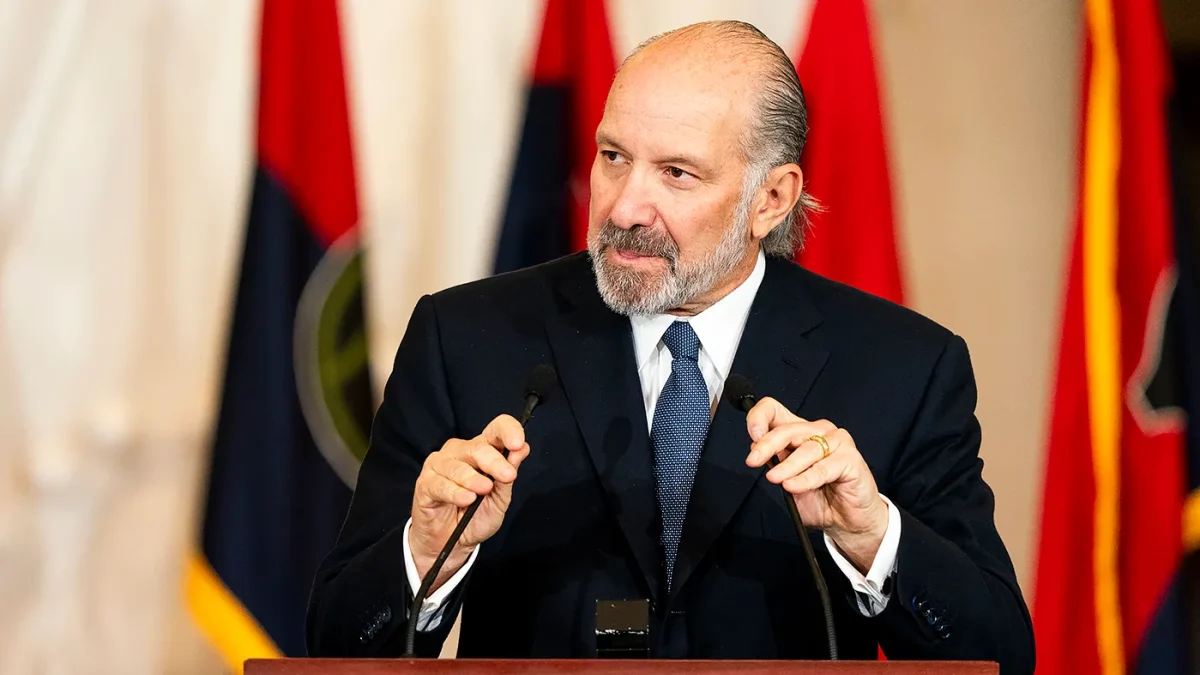
Table of Contents
Commerce Secretary Apologizes After Claiming Zero American Deaths in Iran Conflict
Provpnadvice.com – Howard Lutnick, who serves as the nation’s top trade official, issued a public apology on Thursday after a televised remark suggesting that no U.S. service members had been killed in the ongoing military confrontation with Iran. The correction came after the statement drew immediate scrutiny, and Lutnick explained that his mind had been elsewhere at the moment he spoke — specifically on a separate operation involving Venezuela.
The Original Remark and Its Context
The comments surfaced during a Wednesday appearance on CNBC, where Lutnick was participating in coverage tied to the Group of 20 finance ministers’ summit taking place in North Carolina. He was discussing bond-market dynamics when the topic shifted to the broader economic implications of the Iran situation. In that exchange, he characterized the conflict as primarily a financial pressure campaign rather than a kinetic one with American casualties.
“The way the president is playing Iran — there haven’t been American deaths, it’s really just an economic choke-out.”
That framing quickly drew criticism, given that the Department of Defense had already confirmed fatalities among troops stationed at Middle East installations. The discrepancy between the secretary’s characterization and the verified casualty record prompted calls for clarification within hours.
The Apology and the Venezuela Explanation
By Thursday, Lutnick had taken to the social platform X to address the gaffe directly. He acknowledged the error plainly and offered what he described as the reason for the mix-up: his thoughts had been occupied with a parallel military operation in Venezuela, where, he noted, no service members lost their lives.
“I misspoke. 18 members of our military have died, and to those families my heart breaks and I am so very sorry for their loss. I was thinking about the Venezuelan military operation where no service members died.”
The explanation positioned the slip as a case of cognitive cross-contamination between two simultaneous operations rather than a deliberate minimization of American losses. Still, the episode raised questions about how senior economic officials frame wartime realities when speaking to financial audiences, particularly when their remarks are broadcast to a general television audience.
Trump Defends His Commerce Secretary
President Donald Trump weighed in before Lutnick’s own corrective post appeared, using his Truth Social account to shield the secretary from sustained criticism. The president framed the incident as a simple case of divided attention.
“Sec. Lutnick had Venezuela on his mind when he said nobody was killed. 18 people were killed in Iran!”
The presidential intervention effectively capped the political fallout, signaling that the administration regarded the remark as a momentary lapse rather than a policy position. The Commerce Department itself did not issue a separate statement or respond to media inquiries seeking further explanation on Wednesday.
The Casualty Record Behind the Numbers
The figure of 18 deaths refers to service members who have been killed since March while assigned to U.S. military bases across the Middle East region. In addition to those fatalities, more than 750 other personnel have sustained wounds, underscoring that the conflict has carried significant human cost even as it has been characterized in economic terms by some officials. The scale of injuries relative to deaths highlights the sustained pressure on forward-deployed units and the logistical burden placed on medical and support infrastructure in theater.
For readers tracking the broader picture, the distinction between kinetic losses and economic coercion matters. Lutnick’s original framing — that the Iran situation amounts to an “economic choke-out” — was not entirely divorced from reality. Sanctions pressure, currency manipulation, and bond-market volatility have indeed been central tools in the confrontation. What made the remark problematic was the categorical assertion that no Americans had died, a claim flatly contradicted by the confirmed casualty tally.
A Personal Dimension: The 9/11 Anniversary
In the same X post where he issued his apology, Lutnick drew a parallel to the approaching 25th anniversary of the September 11, 2001, terrorist attacks on New York City. He was serving as head of the financial firm Cantor Fitzgerald when those attacks struck, and the losses he sustained were personal and severe.
“As the 25th anniversary of 9/11 approaches, I am deeply thankful for our military and the sacrifices the men and women who serve our great country make, so such an attack, where I lost my brother Gary (36), my best friend Doug (39) and 656 other close friends and colleagues in the attacks on the World Trade Center, never happens again. Never!”
That passage added a layer of personal grief to an otherwise procedural correction. It also contextualized why the initial slip carried particular weight: for someone who lost a brother and close colleagues in a single morning of terror, the casual erasure of 18 military deaths — however unintentional — would have resonated sharply with his own history. The juxtaposition of the apology and the 9/11 remembrance in a single post suggested that Lutnick was attempting to restore his credibility not merely through institutional correction but through a reminder of his own stake in the cost of war.
What the Episode Reveals
The incident, while ultimately contained by a swift apology and presidential backing, illustrates the difficulty senior officials face when translating wartime realities into language suited to financial markets. Bond traders and investors need clean, actionable narratives about economic exposure; families of fallen soldiers need acknowledgment that their losses are seen and named. When those two registers collide in a single television sentence, the result can be both technically understandable and publicly painful. The administration’s rapid containment of the story — through both the secretary’s own words and the president’s public defense — suggests that the political calculus favored speed over silence, and that the Venezuela explanation, however imperfect, was judged sufficient to close the episode without further institutional damage.
Related Reading
Frequently Asked Questions
What is Lutnick misspoke when he said no US?
Lutnick misspoke when he said no US is the main topic of this guide. The article explains the context, practical details, and next steps readers should understand.
Why does Lutnick misspoke when he said no US matter?
Lutnick misspoke when he said no US matters because readers are looking for a useful answer, not just a short summary. Good content should match search intent and help them decide what to do next.