Navy reportedly weighs renaming aircraft carrier for Trump

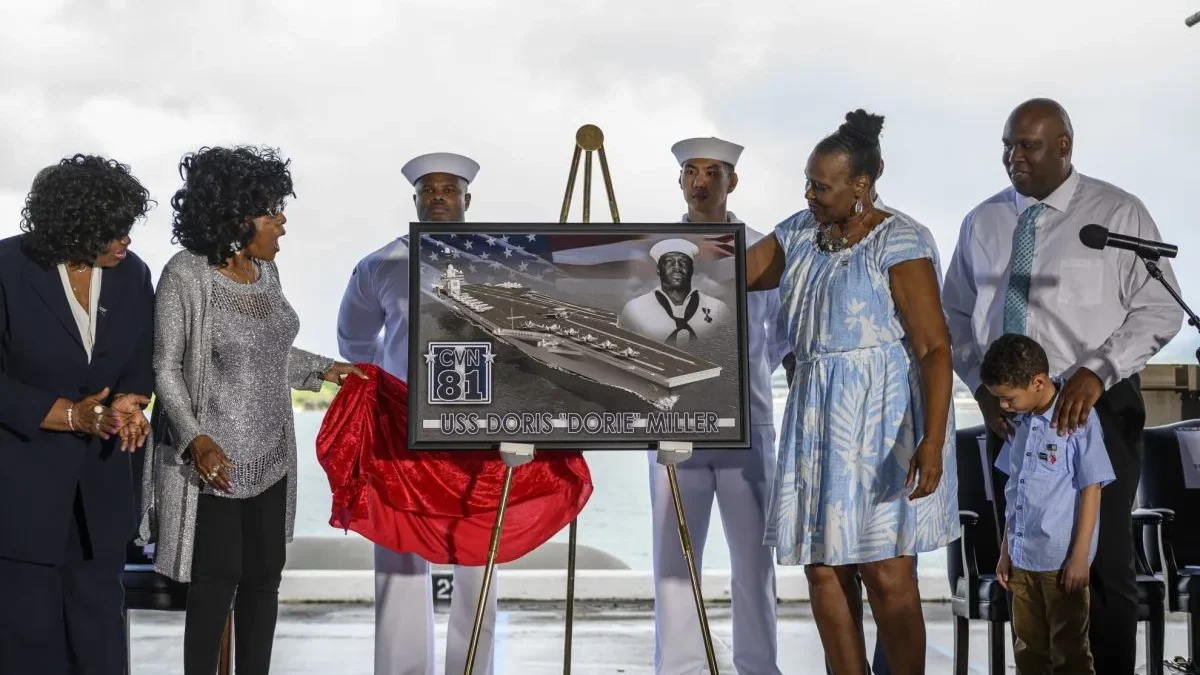
Table of Contents
CVN-81 Faces Potential Name Change as Navy Weighs Replacing Doris Miller’s Legacy
Provpnadvice.com – The Gerald R. Ford-class aircraft carrier currently designated CVN-81 — long known to the public as the future USS Doris Miller — is at the center of a quiet but consequential debate inside the Department of the Navy. For months, internal discussions have examined whether the ship’s name, bestowed in a ceremony at Pearl Harbor in January 2020, should be replaced. Among the candidates reportedly under review is the name of President Donald Trump. No formal decision has been announced, and official Navy historical records still list the vessel as the future USS Doris Miller, but those close to the process describe the ship as increasingly identified internally by its hull number rather than by the name it carried for more than four years.
Why the Original Naming Mattered
The selection of Miller’s name in 2020 was not a routine administrative act. It marked the first time a U.S. aircraft carrier would bear the name of a Black American, and the first time such a vessel would honor a sailor specifically for deeds performed while serving in the enlisted ranks. Acting Secretary of the Navy Thomas Modly framed the choice as a tribute extending far beyond one individual:
“In selecting this name, we honor the contributions of all our enlisted ranks, past and present, men and women, of every race, religion and background.”
That language carried weight in a service where enlisted personnel make up roughly 80 percent of the Navy’s active-duty force. Naming a capital ship after a messman who grabbed an untrained gun during a surprise attack was meant to signal that valor at any rank earns a place in the fleet’s most visible tradition.
Doris Miller: From Waco to Pearl Harbor
Doris Miller was born in Waco, Texas, on October 12, 1919, and enlisted in the Navy in 1939. By December 7, 1941, he was aboard the battleship USS West Virginia when Japanese aircraft struck Pearl Harbor. Miller, whose assigned duties involved serving meals to officers, moved through the chaos to aid wounded sailors before taking up an anti-aircraft gun. He had received no formal instruction on the weapon, yet he fired at incoming planes until the ship was struck and sank.
For those actions, Miller was awarded the Navy Cross, becoming the first Black American to receive that decoration. His service ended in November 1943, when the escort carrier USS Liscome Bay was torpedoed and sunk during Pacific operations. Miller was among those lost.
The Navy had already recognized Miller’s legacy in a smaller way: the Knox-class frigate USS Miller entered service in 1973 and remained in commission until 1991. The carrier naming elevated that recognition to the highest tier of naval nomenclature.
What a Renaming Would Mean
Aircraft carrier names are not merely labels. They anchor shipboard culture, appear on every plaque, uniform patch, and ceremonial document, and are woven into the identity of thousands of sailors who will serve aboard the vessel over decades. Changing the name of a ship that has not yet entered service is administratively simpler than renaming one already in commission, yet it still carries symbolic force. It signals which stories the institution chooses to foreground in its most powerful platform.
Sources familiar with the deliberations told CNN that the discussions have been ongoing for months and that Trump’s name is among those being weighed should a change proceed. The same sources noted that Miller’s family was not consulted or notified in advance about the possibility of his name being removed from the ship.
The Navy’s Office of Information, reached for comment, said it had nothing to share at this time. Official records continue to identify CVN-81 as the future USS Doris Miller, meaning that until a formal decision is issued, the name remains intact in every public-facing document.
Broader Context and Reader Implications
The episode lands amid a wider conversation about how the U.S. military memorializes its past. In recent years, debates over renaming bases, ships, and installations have drawn attention to questions of representation, institutional memory, and political influence over military tradition. A carrier is the largest and most publicly visible asset in the fleet; its name appears in news coverage, congressional hearings, and international diplomacy. Placing a sitting president’s name on such a vessel would be unprecedented in modern practice and would fold a political figure into the ship’s permanent identity for the next fifty years or more.
For the families of enlisted sailors — the very group Modly’s 2020 remarks were meant to honor — the prospect of that name being swapped for a political figure raises questions about whether the original intent of the naming has been preserved. The family’s reported lack of advance notice adds a personal dimension to what might otherwise be read as a purely institutional decision.
Until the Navy issues a formal announcement, CVN-81 remains, on paper, the USS Doris Miller. What happens next will determine whether the ship sails into service carrying the name of a messman who grabbed a gun he had never been trained on, or whether that chapter of naval history is closed before the vessel ever leaves the shipyard.
Related Reading
Frequently Asked Questions
What is Navy reportedly weighs renaming aircraft carrier?
Navy reportedly weighs renaming aircraft carrier is the main topic of this guide. The article explains the context, practical details, and next steps readers should understand.
Why does Navy reportedly weighs renaming aircraft carrier matter?
Navy reportedly weighs renaming aircraft carrier matters because readers are looking for a useful answer, not just a short summary. Good content should match search intent and help them decide what to do next.