
\n Healthcare\n

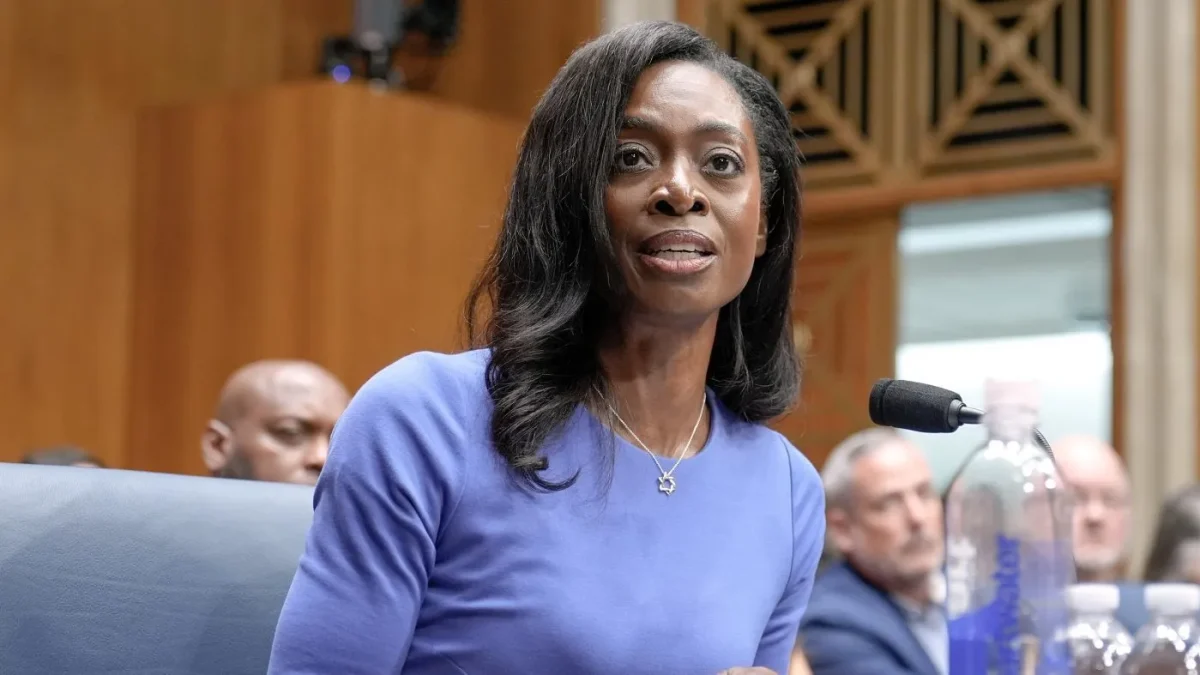
Table of Contents
CDC’s New Director Confronts a Fractured Workforce in First All-Staff Address
Provpnadvice.com – Erica Schwartz walked into her first all-staff meeting at the Centers for Disease Control and Prevention with a blunt assessment: the agency she now leads is struggling to hold itself together. In a recorded session obtained by The Hill, the newly confirmed CDC director told hundreds of employees that morale is in poor shape and that rebuilding institutional trust would be her central early task.
The remarks came after roughly twelve months without an official head at the nation’s primary public-health laboratory. Former director Susan Monarez was removed from the post after serving fewer than thirty days, leaving the Atlanta-based agency in a prolonged leadership vacuum. During that gap, the CDC endured sweeping workforce reductions and a fatal shooting on its headquarters grounds — events that compounded an already fragile institutional culture.
“I Want to Earn Your Trust”
Asked directly what she intended to do about the low morale she had acknowledged, Schwartz framed her approach as one of mutual obligation rather than top-down correction.
“I am here asking you to give me the benefit of the doubt and to work with me as I go through our listening sessions to help me rebuild the trust that may have been lost.”
She pressed the point further, telling staff that her own credibility would have to be constructed from scratch through sustained action.
“In order to build morale, I think the fundamental thing that I have to work on with all of you is to help you understand that I want to earn your trust, and that I will do what I need to do to earn your trust.”
The tone shifted when a staffer described feeling too anxious to ask questions for fear of being reprimanded. Schwartz responded with an explicit apology for the climate of psychological unsafety that had taken root inside the agency.
“You guys are feeling this weight, and I’m so sorry for that. I’m sorry that you have to live under this extreme psychological unsafety, and I apologize for that.”
Vaccine Policy and the ACIP Question
A second cluster of questions from staff focused on immunization policy. Earlier this year, a federal judge ordered the dissolution of the CDC’s Advisory Committee on Immunization Practices (ACIP), the long-standing expert panel that shapes childhood vaccination schedules. Separately, President Trump issued an executive order directing the separation of the combined MMR shot into individual components and a reduction in the number of recommended childhood immunizations.
Schwartz said the agency would seek a role in translating that order into operational guidance, while preserving scientific input once ACIP is reconstituted.
“My understanding — we are going to be looking at that executive order. Does it make sense? What are the pieces that we like? What are the pieces that we don’t like? And then when ACIP is reconstituted, we can have that body of information that we can share with ACIP, and ACIP can say this is ridiculous, or they can say this is actually really good, and we’ll use pieces of it.”
For public-health practitioners, the statement signals an attempt to thread the needle between executive-mandated changes and the evidentiary standards that have historically governed CDC immunization recommendations. The practical outcome will depend on how quickly ACIP is reassembled and what scope of authority it retains under the new administration.
Other Healthcare Developments This Week
Americans Drink Less Than at Any Point Since 1939
A Gallup survey released Thursday recorded the lowest share of U.S. adults who consume alcohol in the poll’s history, which stretches back to 1939. The figure held at 54 percent for the second straight year, continuing a multi-year slide from 62 percent in 2023 and 58 percent in 2024. The sustained decline underscores a generational shift in beverage preferences and carries implications for hospital systems, addiction-medicine programs, and state tax revenues tied to alcohol sales.
Sugary Beverages Linked to Gastric Cancer in Large Cohort Study
Researchers at Mass General Brigham published findings from two long-running cohorts — the Nurses’ Health Study and the Health Professionals Follow-Up — tracking 112,284 participants over several decades. Over that span, 278 individuals developed stomach cancer. The analysis categorized sugary drinks broadly, including lemonade, punch, sports drinks, and carbonated sodas, and identified a measurable association between regular consumption of those beverages and elevated gastric-cancer risk. The result adds to a growing body of evidence connecting high-sugar dietary patterns to gastrointestinal malignancy.
Jalapeño-Linked Salmonella Outbreak Tops 430 Cases
The CDC reported Wednesday that a salmonella outbreak tied to certain varieties of jalapeno peppers has expanded to 431 confirmed cases across 32 states, including 57 hospitalizations and no deaths as of that date. The tally represents a jump from the 345 cases in 27 states reported in early August. Agency officials cautioned that true numbers are likely higher because many salmonella infections resolve without medical attention and therefore never enter surveillance data.
Frozen Blueberry Recall Elevated to FDA’s Highest Risk Tier
The Food and Drug Administration classified a recall of frozen blueberries sold at Publix supermarkets as Class I — its most severe risk category — after roughly a dozen consumers reported E. coli-associated digestive illness. The recall was originally triggered in early July by Frutas y Hortalizas del Sur S.A., a Chilean supplier. Publix pulled 10-ounce packages from shelves following the initial consumer complaints. A Class I designation means the product is reasonably expected to cause serious adverse health consequences or death, prompting retailers to remove affected inventory immediately and notify consumers to discard any packages at home.
Related Reading
Frequently Asked Questions
What is n Healthcare n?
n Healthcare n is the main topic of this guide. The article explains the context, practical details, and next steps readers should understand.
Why does n Healthcare n matter?
n Healthcare n matters because readers are looking for a useful answer, not just a short summary. Good content should match search intent and help them decide what to do next.
