Trump’s border plans spark controversy at national park

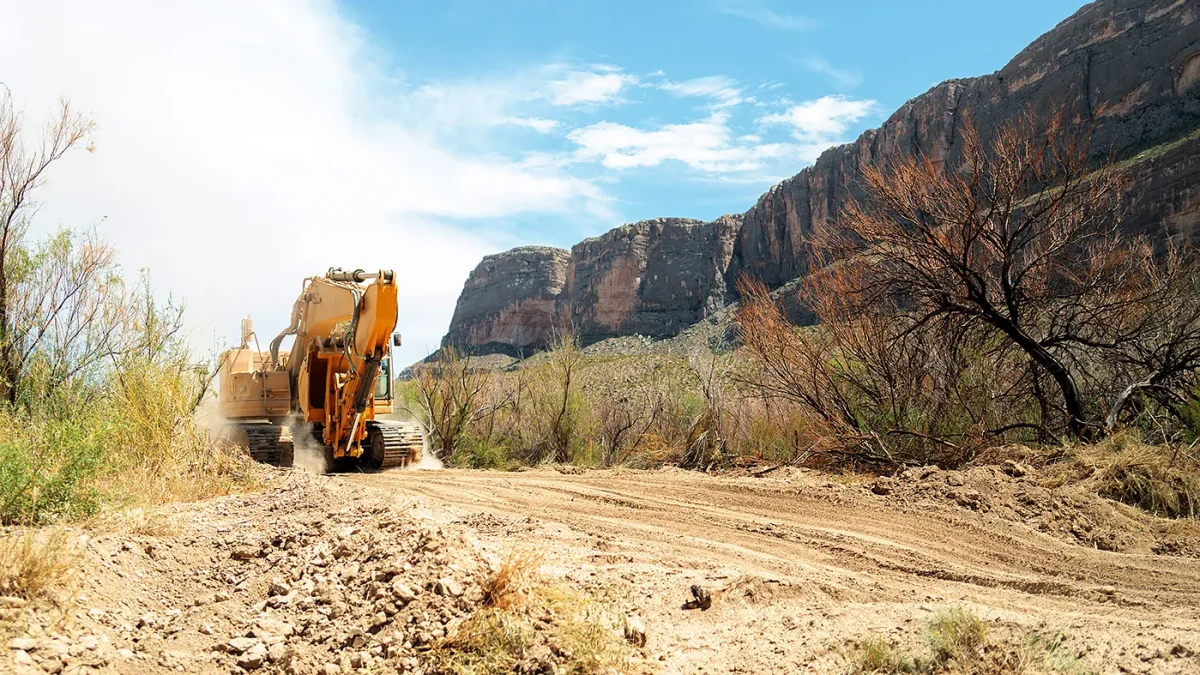
Table of Contents
Big Bend Ranchers, Sheriffs, and Activists Unite Against Federal Border Buildout
Provpnadvice.com – What began as a quiet stretch of desert and river canyon along the Texas-Mexico border has become one of the most contentious infrastructure debates in the American Southwest. Federal authorities are planning more than 100 miles of barrier and roadway construction through the Big Bend region, a swath of land that includes Big Bend National Park itself. The project has drawn opposition so broad and sustained that U.S. Customs and Border Protection (CBP) has already revised its blueprint once and faces pressure to revise it again.
The resistance is not confined to a single constituency. It spans environmental advocates, county law-enforcement leaders, cattle ranchers whose families have worked the land for generations, and small-business operators who depend on park tourism. Together, they argue that the terrain, the economics, and the cultural weight of the area make a physical wall both impractical and destructive.
A Landscape That Defies a Straight Line
Big Bend National Park sits where the Rio Grande carves a dramatic arc through the Chihuahuan Desert. Its interior holds deep river canyons, arid scrubland, granite peaks, and scattered oases visible only to those who know where to look. Visitors drive scenic routes, hike backcountry trails, and camp beneath open skies. In 2024 the park recorded roughly 561,000 visitors, generating an estimated $56.8 million in regional spending. For Presidio, Terrell, and neighboring counties, that tourism revenue is not a footnote; it is a lifeline.
Local officials point out that the park’s remoteness already functions as a natural deterrent to unauthorized crossings. Terrell County Sheriff Thaddeus Cleveland, a Republican and former Border Patrol agent, noted that the nearest paved highway lies approximately 120 miles from the park’s interior. He described the Rio Grande itself, along with sheer cliffs and canyon walls, as what he calls “God-made barriers” that render vehicular crossings impossible in most stretches.
“There’s not a piece of that portion of the border where you can actually drive a vehicle across the river. We have what I like to call the God-made barriers of the Rio Grande, the cliffs, the canyons that separate us, that make it impossible.”
Political Pushback Crosses Party Lines
In March, sheriffs from five counties—representing both parties—signed a joint letter to federal and state officials urging them to abandon the wall segment. More recently, outgoing Texas Senator John Cornyn (R) called on federal decision-makers to sit down with regional stakeholders before further ground is broken. The bipartisan nature of the opposition has made it harder for Washington to dismiss the complaints as partisan theater.
Susan Hays, a Democrat running for Presidio County Commission, described the mobilization as spontaneous and deeply rooted. She characterized the terrain as a patchwork of “rolling plains,” grasslands, mountain ranges, and hidden oases, and called the notion of threading a wall through that mosaic “no sense at all.”
“A very organic grassroots movement sprung up” to oppose the construction, Hays said.
Ranchers Fear Loss of Land, Water, and Identity
For Yolanda Alvarado, a cattle rancher whose property has passed through five generations of her family, the stakes are personal and existential. She serves as regional director for No Big Bend Wall, an advocacy group formed specifically to contest the buildout. Alvarado warned that barrier placement could sever her ranch from the Rio Grande, the water source her herds depend on, and that construction corridors might run through fields where her great-great-grandfather once planted crops.
“Our livelihoods are threatened at this point. Not just landowners, but business owners, and not just Big Bend National Park….it’s everyone in this region.”
She added that the visual saturation of anti-wall signage in local towns signals a community prepared to litigate, protest, and organize until the plans change.
“We’re struggling with that idea — to be cut off from our identity,” Alvarado said.
CBP Shifts Course; Questions Remain
Then-Homeland Security Secretary Kristi Noem waived several environmental-review requirements to accelerate barrier and road construction across the Big Bend sector. That waiver itself became a flashpoint, but the more immediate operational question is what CBP will actually build. The agency has already moved away from a continuous wall inside the park, opting instead for an access road, upgrades to existing routes, sensor and detection technology, and vehicle barriers at select points.
Cleveland acknowledged the revised approach but cautioned that the broader construction footprint—roads, staging areas, utility corridors—could still disrupt ranching operations, hunting access, and hotel supply chains throughout the region.
“Does President Trump know he’s basically taking land from American citizens?” he asked. “You’re taking land from people that — [for] some of them — [has] been in their families for generations.”
Damage Already Done
Even before final designs are locked, ground work has begun inside the park. Laiken Jordahl, national public lands advocate at the Center for Biological Diversity, said heavy machinery has already carved new routes through terrain that had previously been impassable, leaving scars that will persist long after any single administration leaves office.
“They’ve already caused permanent damage,” Jordahl said. “The heavy equipment they’ve used — they’ve carved these brand new routes into completely impassable desert.”
Jordahl also flagged an unresolved archaeological question: the full extent of prehistoric and historic human occupation in the affected zones remains undocumented, meaning that construction may have already disturbed sites of cultural significance without anyone knowing what was lost.
What Comes Next
The coming months will test whether CBP treats the revised plan as final or as another interim step. County commissions, state legislators, and federal courts all have avenues to challenge further ground disturbance. For the ranchers, sheriffs, and park-dependent businesses of the Big Bend region, the question is no longer whether opposition exists—it is whether the next iteration of the buildout will respect the landscape, the water, and the families who have called it home for centuries.
Related Reading
Frequently Asked Questions
What is Trump s border plans spark controversy?
Trump s border plans spark controversy is the main topic of this guide. The article explains the context, practical details, and next steps readers should understand.
Why does Trump s border plans spark controversy matter?
Trump s border plans spark controversy matters because readers are looking for a useful answer, not just a short summary. Good content should match search intent and help them decide what to do next.