Lake Powell, second-largest reservoir in US, hits record-low water level

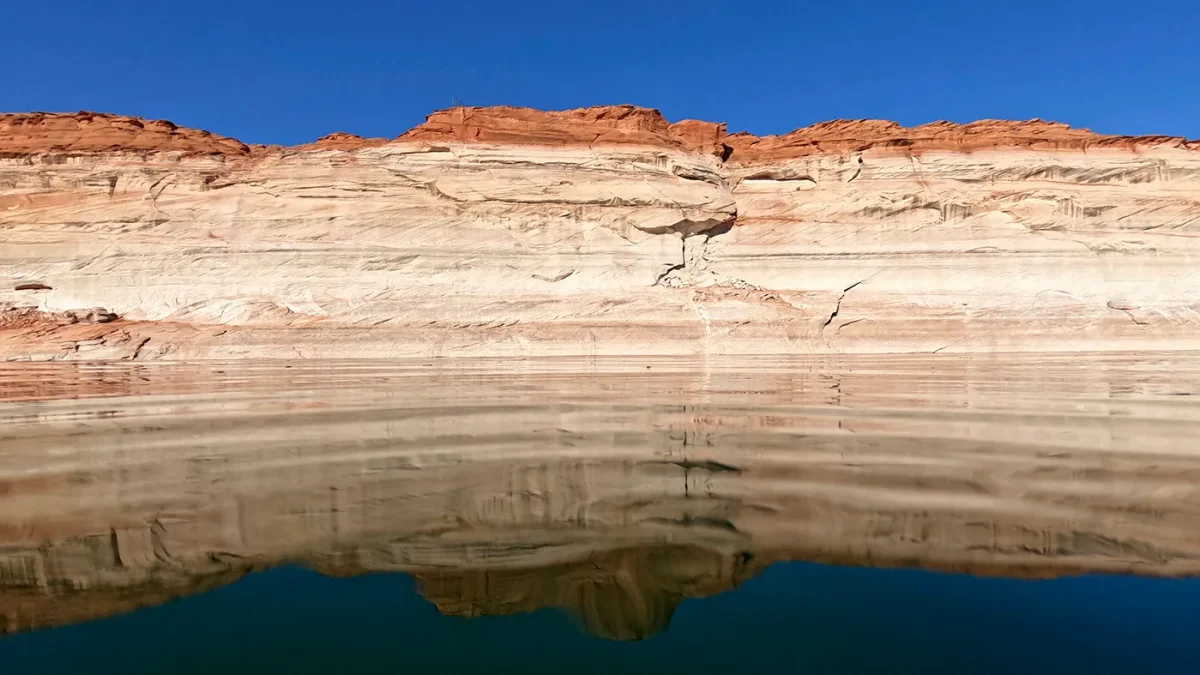
Table of Contents
Colorado River Reservoirs Slide to Historic Lows as Western Water Crisis Deepens
Provpnadvice.com – The second-largest reservoir in the United States has now fallen below every water-level reading recorded since its creation, marking another grim milestone in a decades-long drying of the American Southwest. Lake Powell, the vast impoundment straddling the Arizona-Utah border along the Colorado River, registered an elevation of 3,519.8 feet as of Sunday, according to data maintained by the U.S. Bureau of Reclamation. That figure eclipsed the previous all-time low established in April 2023, meaning the reservoir has lost yet another layer of stored water in a matter of weeks.
The decline is not a slow drift. Over roughly the past month, the lake’s surface dropped approximately 3.8 feet — a volume of water that, spread across the reservoir’s enormous footprint, represents billions of gallons vanishing from a system already operating near its functional floor.
A Parallel Collapse at Lake Mead
Downstream, Lake Mead — the largest reservoir in the country and the primary water source for the Las Vegas metropolitan area and surrounding communities — has also breached its historical minimum. As of Monday, its elevation stood at 1,039.83 feet, a drop of more than 23 feet from where it began the calendar year. The two reservoirs, separated by hundreds of miles of canyon country, are effectively two gauges on the same failing system: the Colorado River basin.
The Bureau of Reclamation’s own modeling, released last month, projects that Lake Mead will sink below 1,110 feet by July 2028. That threshold sits nearly 120 feet beneath the reservoir’s “full pool” elevation — the level at which the dam was designed to operate at maximum capacity. Falling below full pool means reduced hydropower output, diminished water delivery to downstream users, and increased salinity as the river’s remaining flow carries a higher concentration of dissolved minerals.
Approaching the Power-Generation Floor
For Lake Powell, the near-term danger is equally concrete. In July, the Bureau of Reclamation warned that the reservoir’s elevation could dip below 3,492 feet by the end of March 2027. The minimum power pool level — the lowest elevation at which the dam’s turbines can still generate electricity — sits at 3,490 feet. A margin of just two feet separates the projected trajectory from a scenario in which the Glen Canyon Dam ceases producing hydroelectric power, a loss that would ripple through the regional grid and force utilities to replace that generation with costlier alternatives.
Who Depends on the River
The stakes extend far beyond the canyon walls. Seven states — Arizona, California, Colorado, Nevada, New Mexico, Utah, and Wyoming — draw municipal water, agricultural allocations, and industrial supply from the Colorado River system. An estimated 35 to 40 million people rely on that flow for everyday needs: drinking water, sanitation, food production, and the recreation economy that sustains towns from Page, Arizona, to Boulder City, Nevada.
The river has endured a megadrought spanning more than 25 years. Scientists attribute the prolonged deficit to a combination of rising temperatures, shifting precipitation patterns linked to climate change, and decades of allocation that has left little slack in the system. Snowpack in the Rocky Mountains, the river’s principal source of spring runoff, has been trending lower and earlier each year, shrinking the annual inflow that once replenished the reservoirs.
Federal Proposal Meets State Resistance
In response to the compounding shortfall, the Department of Interior put forward a plan last month calling on the seven basin states to collectively reduce their annual water withdrawals by as much as 3 million acre-feet — a figure that would represent a substantial contraction of existing allocations. The proposal has drawn swift and pointed opposition from state leaders who argue the federal government is overreaching into water rights long settled by interstate compact and state law.
Arizona Governor Katie Hobbs, a Democrat, voiced that frustration publicly last month:
“It contains unacceptable options that include the federal government forcing Arizona to take the majority of draconian water cutbacks.”
The governor’s remarks capture a broader tension: states that built their economies around Colorado River water are reluctant to accept top-down mandates, while the federal agency tasked with managing the river warns that without coordinated reductions, the reservoirs will continue their descent toward operational failure. The window for negotiated conservation measures is narrowing with every foot the water level falls.
Related Reading
Frequently Asked Questions
What is Lake Powell second largest reservoir in US?
Lake Powell second largest reservoir in US is the main topic of this guide. The article explains the context, practical details, and next steps readers should understand.
Why does Lake Powell second largest reservoir in US matter?
Lake Powell second largest reservoir in US matters because readers are looking for a useful answer, not just a short summary. Good content should match search intent and help them decide what to do next.