Jim Jordan says costs ‘are tough,’ but economy is in a ‘pretty good direction’

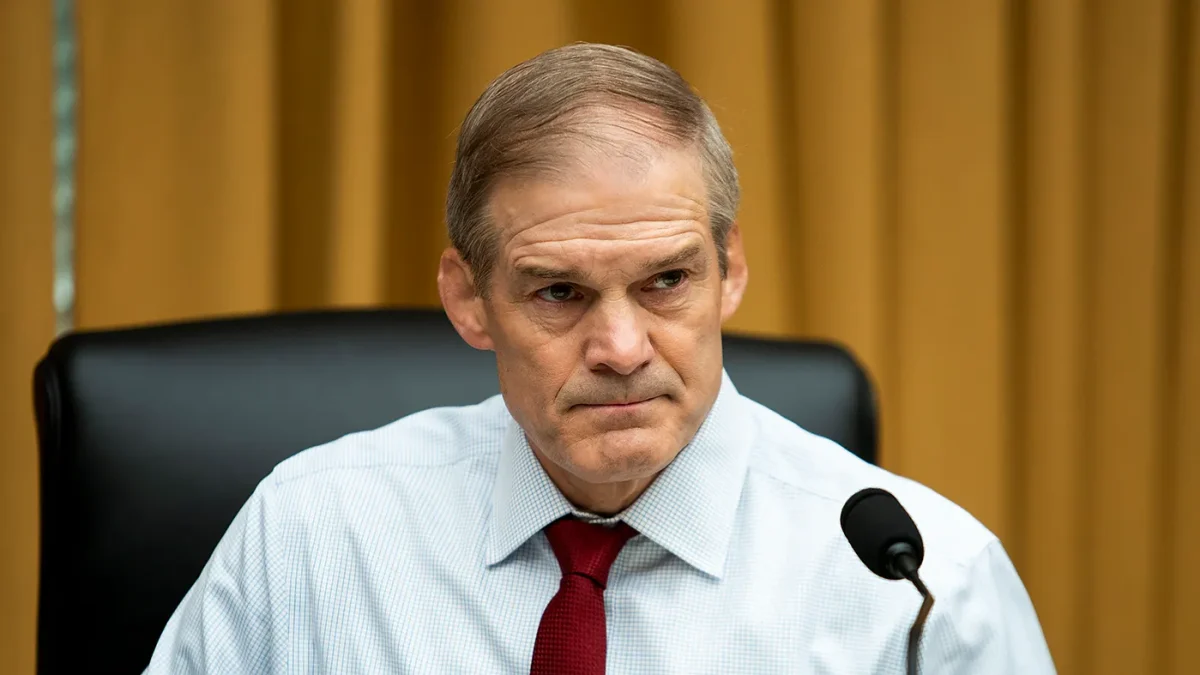
Table of Contents
Jim Jordan Says Costs Are Tough, Economy Heading Right
Provpnadvice.com – Jim Jordan says costs are tough on middle-class and working-class families, yet insists the broader economy is traveling in a “pretty good direction.” The Ohio congressman made that dual-track argument on Fox News’s Sunday Morning Futures, conceding real household strain while defending the administration’s record ahead of November’s midterm contests. Guest host Jackie DeAngelis pressed him on whether voters would buy the optimism, and his answer landed somewhere between reassurance and apology.
The congressman framed his remarks as a rebuttal to what he called Democratic Socialist Party (DSA) operatives weaponizing affordability language to undermine support for the ongoing Iran conflict. In his telling, Republicans delivered on tax-cut promises rather than merely gesturing at them, and the debate now boils down to “common sense versus the crazy on the Democrat left.” That binary framing signals how sharply the party wants to wall off pragmatic governance from what it labels ideological excess — even as the numbers complicate the tidy story.
“We said we would cut taxes, we did that,” Jordan told DeAngelis. “The economy is moving in a pretty good direction, but I understand there are costs out there that are tough on middle-class and working-class families.”
The Strait of Hormuz Shockwave
Beneath the measured optimism sits a macroeconomic reality no talking point fully neutralizes. Iran has repeatedly shut the Strait of Hormuz, the narrow corridor through which roughly one-fifth of global oil and gas shipments pass. Each closure sends shockwaves rippling through energy markets, and the cumulative effect has pushed crude benchmarks well above pre-conflict levels.
At various points during the six-month conflict, crude prices breached $100 per barrel. By Saturday, Brent crude — the international benchmark — traded above $88 a barrel in futures markets, while West Texas Intermediate, the domestic gauge, sat just over $82. For American drivers the translation is immediate: AAA data placed the national average gasoline price at $4.07 per gallon on Sunday.
Those energy costs compound an inflation environment already pressuring grocery bills, utility payments, and other essentials before the Gulf escalation. Households that were stretching budgets through 2024 absorbed a second wave of price increases tied directly to geopolitical disruption, making the checkout counter feel like a referendum on foreign policy.
What Polls Reveal About Voter Sentiment
A Marquette University Law School poll released earlier this month found that 35 percent of American adults identify cost of living and inflation as the single most important issue facing them right now. The broader economy ranked second at 15 percent, while handling of the Iran situation placed third at 10 percent. For roughly one in three adults, the question is not abstract foreign policy but whether this month’s bills can be paid.
A separate Harris Poll survey conducted for The Guardian last month produced a starker figure: 95 percent of U.S. adults believe the country is experiencing an affordability crisis, and 57 percent perceive the overall economy as deteriorating rather than improving.
Partisan Stakes Heading Into November
Democrats entered the 2025 cycle positioning cost-of-living advocacy as their signature issue, crediting that messaging with helping candidates such as New York City Mayor Zohran Mamdani (D) win office. The party’s argument is straightforward: voters were already angry about prices before the war, and Democratic candidates simply gave them language for that anger.
President Trump has repeatedly dismissed inflation anxiety as a “hoax” manufactured by political opponents. Yet within the Republican caucus, quieter worries persist that the conflict’s economic fallout could undermine party messaging going into the fall midterms. The congressman’s Sunday appearance — praising direction while acknowledging pain — reads less like a victory lap and more like an attempt to inoculate voters against Democratic counter-narratives before they fully take shape.
Frequently Asked Questions
What did Rep. Jim Jordan say about the economy on Fox News? He acknowledged that costs are tough on middle-class and working-class families while arguing the overall economy is moving in a “pretty good direction.” He pointed to delivered tax cuts as evidence Republicans kept campaign promises.
How has the Iran conflict affected U.S. gasoline prices? Repeated Iranian closures of the Strait of Hormuz have pushed crude benchmarks well above pre-conflict levels. At various points crude exceeded $100 per barrel; by late October Brent traded above $88 and WTI just over $82, translating to a national average gas price of $4.07 per gallon.
What do polls say about Americans’ top concern? A Marquette University Law School poll found 35 percent of adults rank cost of living and inflation as their number-one issue. A Harris Poll for The Guardian reported that 95 percent believe an affordability crisis exists and 57 percent see the economy as worsening.
How are Republicans responding to Democratic cost-of-living messaging? The party is drawing a sharp line between “common sense” governance and what it calls ideological excess on the left. Jordan’s remarks were framed as inoculating voters against Democratic narratives before the November midterms, even as internal caucus worries persist over the conflict’s economic fallout.