Blanche refuses to pledge DOJ will always act independently of White House

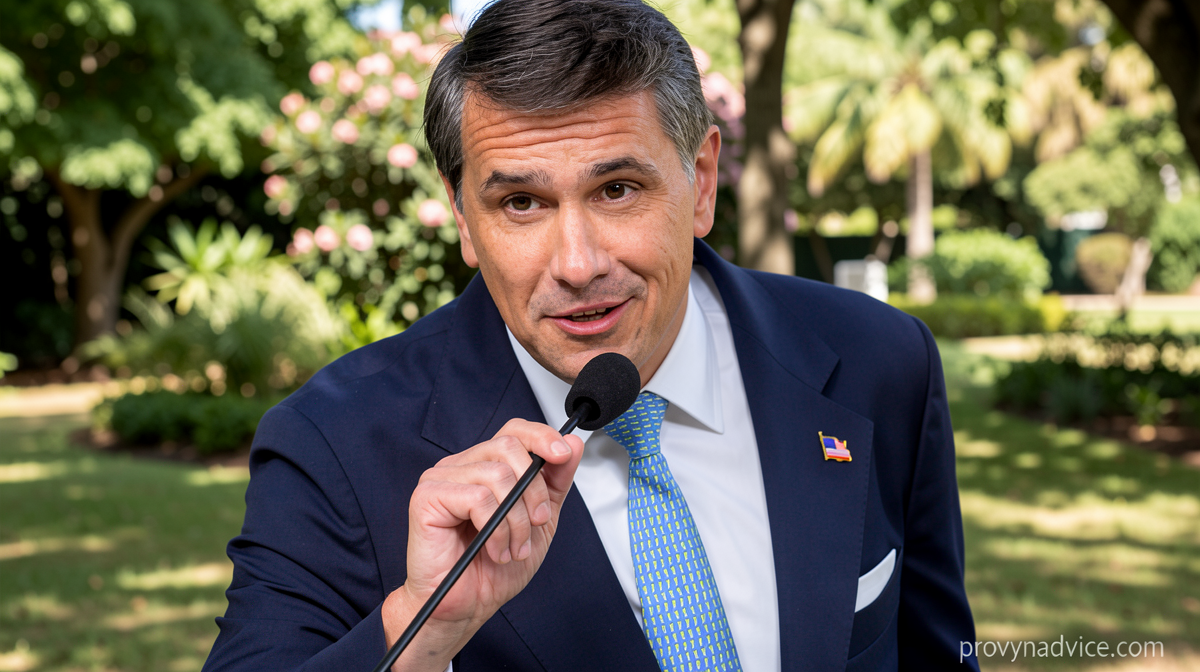
Table of Contents
Blanche Declines Independence Guarantee After Narrow Senate Confirmation
Provpnadvice.com – Todd Blanche, who was sworn in as the full-time attorney general on Monday following a razor-thin 50-49 Senate vote last weekend, made clear on Sunday that he will not promise the Department of Justice will operate at arm’s length from the White House. Speaking to Kristen Welker on NBC’s “Meet the Press,” the former personal lawyer for President Trump pushed back against what he framed as an unrealistic expectation placed on any sitting justice chief.
“No Attorney General Should Ever Pledge That”
When pressed on whether DOJ would investigate every case and act independently of presidential influence, Blanche drew a firm line. He distinguished between doing one’s job thoroughly and making a categorical independence guarantee.
“There’s a big difference between saying we will always do our job and investigate any case and act independently of the White House. No, I’m not going to pledge that. And no attorney general should ever pledge that,” Blanche told Welker.
The remark landed in sharp contrast with decades of institutional convention, during which successive attorneys general — from both parties — have generally affirmed DOJ’s operational autonomy as a structural safeguard against political interference in prosecutions. Blanche’s framing suggests he views such pledges not merely as unnecessary but as potentially misleading, given that the president sits at the top of the executive branch and holds statutory authority over the department.
The “Violent Criminal” Test
Blanche elaborated his position by offering a hypothetical. If Trump were to direct DOJ toward pursuing every violent offender in the country — a goal Blanche acknowledged the president has publicly stated — would independence mean telling him no?
“If I were to pledge I will be independent of the White House, what that means if that if President Trump says, ‘I want the Department of Justice (DOJ) to go after every violent criminal in this country,’ which is what he has said, what you’re saying to me is I should say, ‘No, sir, I’m not going to do it.'”
He added that he would “of course” factor the president’s perspective into decisions before acting, and expressed the view that “every attorney general in history would not answer that question differently.” In other words, Blanche positioned himself as following a long tradition of presidential input rather than breaking from it.
Comey Prosecution and the IRS Settlement
The independence question gained particular urgency because of two high-profile actions Blanche has already overseen since assuming the acting role at DOJ. The first is the department’s prosecution of former FBI Director James Comey over an alleged threat directed at Trump. Comey, whom Trump dismissed during his first term and who has been a vocal critic in recent years, denied making any such threat, pointing to his Instagram post featuring “86 47” seashells as evidence that no menace was intended.
The second action involves a $1.776 billion “anti-weaponization” fund created under the president’s settlement agreement with the Internal Revenue Service. As part of that deal, Blanche ordered the IRS to permanently refrain from auditing the taxes of Trump, his family members, or his business interests — even though the tax agency sits within the Treasury Department rather than DOJ. A federal judge subsequently reopened the president’s lawsuit against the IRS, adding a layer of judicial scrutiny to the arrangement.
The fund drew bipartisan criticism on Capitol Hill. The DOJ ultimately scrapped it, and Blanche formally rescinded his original order earlier this month. In return, Senators John Cornyn (R-Texas) and Thom Tillis (R-N.C.) agreed to back his confirmation bid, clearing a path to the narrow Senate vote that followed.
“He Will Never Do That”
Welker posed a pointed hypothetical: what would Blanche do if the president asked him to cross an “ethical or legal line”? The attorney general dismissed the scenario outright.
“The president will never ask me to do something unethical or illegal. He never has. He never will,” Blanche said Sunday.
He went further, describing a culture of robust internal debate within the cabinet and rejecting what he called an “extraordinarily false narrative” that Trump wakes each morning to call his justice chief with instructions to prosecute named individuals.
“The president does not expect any of his leaders, including me, to just say yes to him no matter what he says. And so of course, there’s vigorous back and forth with every cabinet member of the president of the United States, which is exactly what President Trump expects.”
“And there again, there is this extraordinarily false narrative that the president wakes up in the morning and calls me and says, ‘Todd, go prosecute x or y.’ He does not do that. He has never done that. He will never do that.”
Background and Implications
The comments arrive against a backdrop of heightened scrutiny over DOJ’s role in politically charged cases. Trump previously urged Blanche’s predecessor, former Attorney General Pam Bondi, to accelerate prosecutions targeting several of his perceived adversaries last year — an episode that fueled ongoing debate about the proper distance between the Oval Office and prosecutorial discretion.
Blanche’s confirmation by a single vote underscores how closely divided the Senate remains on questions of executive accountability. His insistence that independence pledges are neither required nor realistic will likely shape how congressional oversight committees frame future inquiries into DOJ case selection, particularly as the Comey matter proceeds through the courts and the IRS settlement faces renewed judicial review. Whether his framing — that presidential input is normal and expected governance rather than interference — gains traction among lawmakers on both sides remains to be seen.
Related Reading
Frequently Asked Questions
What is Blanche refuses to pledge DOJ will?
Blanche refuses to pledge DOJ will is the main topic of this guide. The article explains the context, practical details, and next steps readers should understand.
Why does Blanche refuses to pledge DOJ will matter?
Blanche refuses to pledge DOJ will matters because readers are looking for a useful answer, not just a short summary. Good content should match search intent and help them decide what to do next.