Why Americans now hate each other more than ever

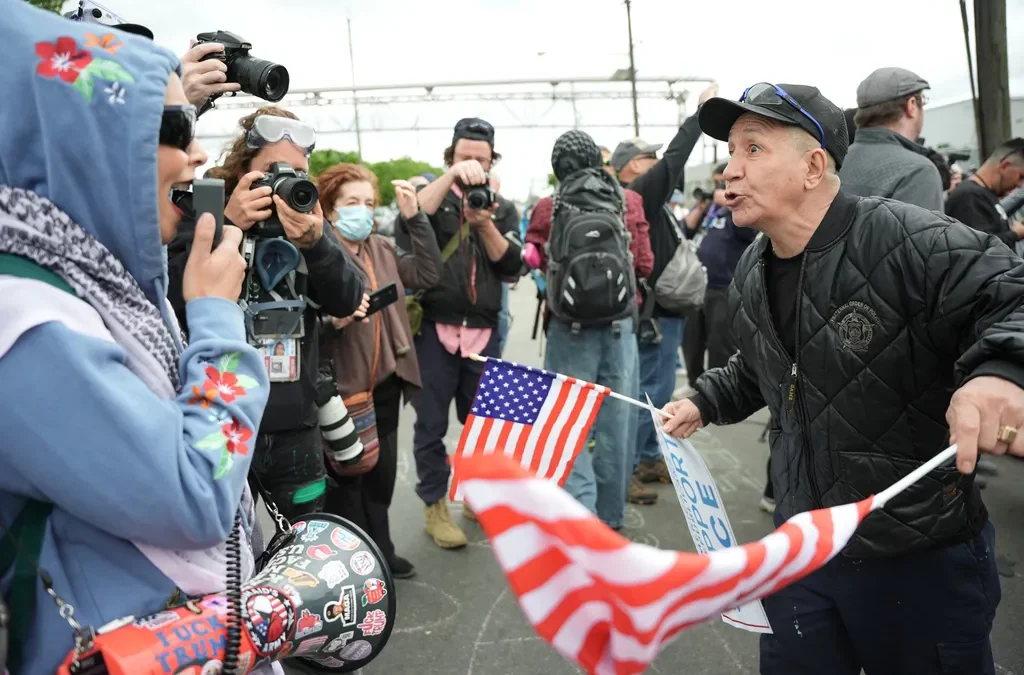
Table of Contents
A Crisis of Confidence: How American Distrust Became a National Condition
Provpnadvice.com – Something fundamental has shifted in the American psyche. A growing number of citizens no longer see their neighbors as fellow travelers but as potential adversaries. This transformation isn’t merely political—it’s moral, generational, and deeply structural. The evidence suggests we’re witnessing the birth of a new social reality, one where suspicion has replaced trust as the default human setting.
The Generational Divide in American Trust
Recent polling data from Marquette Law School reveals a striking pattern that cuts across age groups. Those who came of age before 1960 maintain a foundational belief that their community members are generally decent people. They operate under the assumption that most folks won’t take advantage if given the opportunity. This cohort represents the last generation to internalize trust as a social norm rather than an exception.
Each subsequent generation shows declining faith in human goodness. The youngest Americans—those born in the 2000s—exhibit the highest distrust levels ever documented by the polling organization. For many young adults, the working assumption is that other people pose some form of threat. This isn’t paranoia; it’s a rational response to growing up in an increasingly uncertain world.
Americans See Each Other as Morally Bankrupt
The problem extends beyond simple distrust. A comprehensive Pew Research Center survey covering twenty-five nations revealed something remarkable about American attitudes. While citizens worldwide may disagree with one another, Americans are uniquely likely to view their compatriots as fundamentally flawed in character. The data shows that U.S. residents are significantly more prone to seeing fellow citizens as morally deficient compared to people in other surveyed countries.
The specific finding is particularly telling: fifty-three percent of American adults openly declared that the typical U.S. citizen possesses poor morals and ethics. This number carries enormous implications. A functioning society requires most people to believe their neighbors are essentially decent. When that belief erodes, the social fabric begins to unravel.
Morality functions as the invisible operating system that keeps human beings from destroying each other over trivial matters. It establishes the rules by which we coexist. When a population loses faith in that shared foundation, the entire social contract transforms into something resembling a hostage situation.
From Anger to Structural Disgust
The emotional landscape of American politics has undergone a profound transformation. For over a decade, tracing back to President Trump’s notable 2015 escalator descent, the dominant political feeling has shifted from anger to something deeper and more corrosive. This isn’t mere irritation—it’s structural disgust that permeates daily interactions.
Relationship researcher John Gottman dedicated decades to understanding why marriages collapse. His work identified contempt as the strongest predictor of divorce. Gottman characterized contempt as a poisonous combination of hostility and mockery, where one person positions themselves morally superior to another. His research demonstrated that once couples begin communicating through eye-rolls and ridicule, the relationship is essentially dead.
A nation operates as an enormous network of personal relationships. It functions like a massive marriage between millions of people who never selected to live together but must share the same space. Currently, the American experiment exists in the terminal phases of what Gottman would recognize as a catastrophic relationship failure. Partners occupy separate rooms, exchange insults, and genuinely hope the other person suffers misfortune.
The Economics of Division
Several forces ensure this trajectory continues downward. The incentives surrounding American life perfectly reward hostility. Media algorithms, political fundraising networks, and cultural gatekeepers collectively generate billions of dollars by validating contempt. A peaceful, trusting population generates minimal revenue for the current economic infrastructure.
Modern America has constructed a business model built on demonizing the person living next door. To maintain revenue streams, citizens must remain sufficiently angry to click, donate, and express hatred. The institutional elite recognized early that rage scales infinitely better than unity. A divided population creates predictable voting patterns and captive consumer markets. This calculated fragmentation guarantees that the outrage industry remains fully funded and perpetually sustained.
Every political campaign operates on the explicit assumption that the opposing side intends to dismantle civilization—either through communism or fascism, neither of which sounds particularly attractive to most Americans. The current generation entering adulthood has never known a society where cooperation represented the default setting. They grew up watching adults treat the opposing political party as an existential threat to survival itself.
Viewing the Marquette findings as temporary anomaly represents a fundamental error. These numbers preview the next three decades of American life. The country has entered a self-reinforcing cycle where distrust generates contempt, contempt destroys relationships, and damaged relationships ensure each new generation intensifies the disdain. America is settling into a permanent, highly profitable state of mutual suspicion that shows no signs of abating.
Related Reading
Frequently Asked Questions
What is Why Americans now hate each other?
Why Americans now hate each other is the main topic of this guide. The article explains the context, practical details, and next steps readers should understand.
Why does Why Americans now hate each other matter?
Why Americans now hate each other matters because readers are looking for a useful answer, not just a short summary. Good content should match search intent and help them decide what to do next.