USS Abraham Lincoln controversy likely to loom over Pentagon

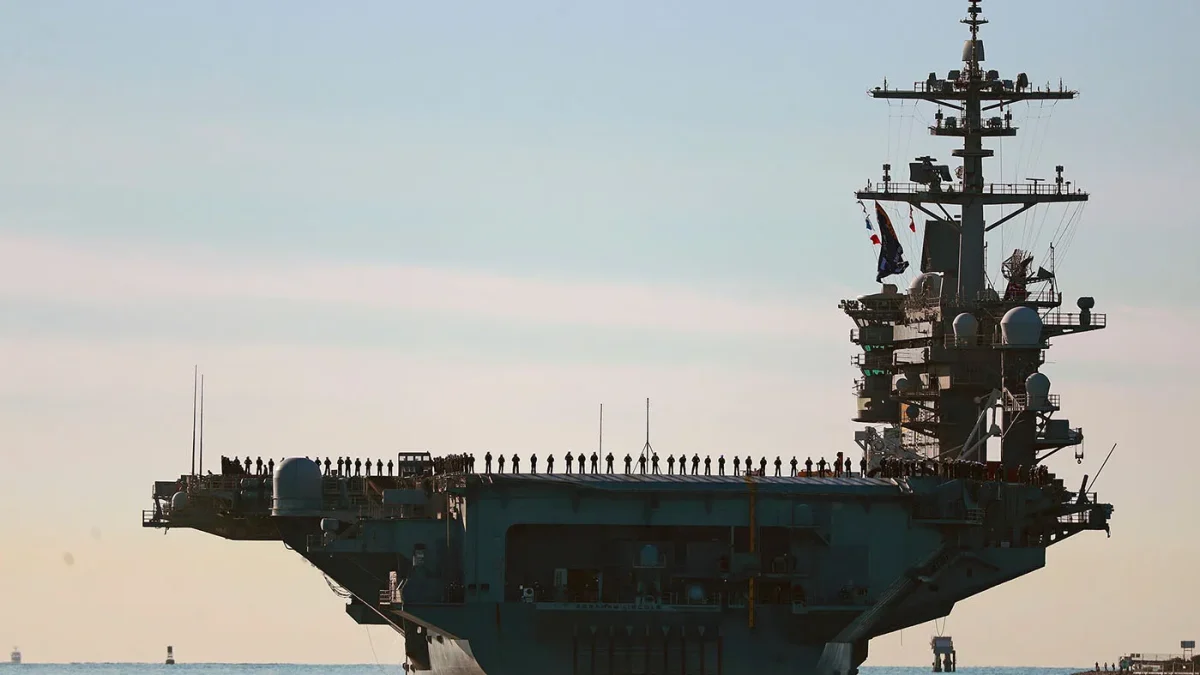
Table of Contents
Naval Deployment Under Fire as Lincoln Carrier Faces Mounting Pressure
Provpnadvice.com – The extended mission of the USS Abraham Lincoln has become a focal point for congressional examination and family concerns, with reports of deteriorating conditions aboard the vessel intensifying as the aircraft carrier prepares for its return. Despite the White House indicating Friday that the ship would soon come home, the controversy surrounding morale and operational challenges shows little sign of subsiding.
This deployment, stretching beyond 265 days, represents one of the most demanding periods in recent naval history for the crew. The vessel departed its home port in November and was subsequently rerouted to Middle Eastern waters in January to bolster American military presence during the ongoing conflict with Iran.
Unprecedented Challenges for Sailors and Families
The U.S. armed forces have maintained that media coverage has exaggerated the severity of problems aboard the Lincoln, while simultaneously minimizing concerns about a developing mental health situation among personnel. Nevertheless, the Pentagon is dispatching the USS George Washington to the region as a replacement, a move that may not fully satisfy legislators and relatives who have grown increasingly alarmed by accounts of sailors attempting to leap overboard due to harsh working environments.
“This is unprecedented,” Andrea Goldstein, former acting director of Navy force resiliency during the Biden administration, stated regarding the ongoing deployment ahead of Acting Navy Secretary’s announcement about the Lincoln’s return.
Goldstein, who managed comprehensive mental health and suicide prevention initiatives for both the Navy and Marine Corps, emphasized that the duration alone does not capture the full scope of the challenge. She noted that service members are receiving extensions without clear timelines for their return, creating what she described as a significant psychological burden stemming from uncertainty.
Political Responses and Media Criticism
President Trump challenged the narrative that families are particularly troubled by conditions on the Abraham Lincoln. When questioned by a reporter about parental and spousal concerns, the President responded definitively that families were not worried. He pointed out that the vessel was either currently underway or would depart imminently, and that a comparable ship would take its place in the region.
“No, no, no, not nearly long enough,” Trump replied when asked whether the aircraft carrier’s deployment had exceeded reasonable limits.
Acting Navy Secretary Hung Cao provided additional clarification later on Friday, confirming that the Abraham Lincoln would return home as part of a scheduled rotation, with further details forthcoming. Cao stressed that the extension was driven by operational necessity rather than administrative oversight.
“One of the hardest aspects about warfighting beyond knowingly placing our service members in harm’s way is that even with the best planning and communication, change and uncertainty will always be in play,” Cao explained, noting his appointment as acting secretary in April after former Navy Secretary John Phelan was removed from position.
Conditions and Operational Realities
Cao acknowledged that communication capabilities were occasionally restricted when operational threats reached elevated levels, and that resupply missions sometimes faced delays. He emphasized that despite these challenges, no fatalities had occurred aboard the Lincoln during the deployment.
“Deployments are hard. Combat operations make them harder. War is hell and normal routines are disrupted,” Cao wrote in a statement shared on social media platform X. “Our success depends on how we adapt.”
The Acting Navy Secretary further characterized the media’s portrayal of the situation as an attempt to present service members as victims rather than resilient warriors. He conceded that a limited number of mental health cases had received treatment but maintained that the overall picture had been distorted.
“There is no question our young men and women have been pushed to their limits—but they have never broken. They are rightly tired—but have never been out of the fight. However, it is clear, knowing the whole story, our force and their families are not victims. They are the epitome of American strength and resilience,” Cao concluded.
Defense Leadership Weighs In
Defense Secretary Pete Hegseth offered his assessment on Thursday, asserting that conditions aboard the aircraft carrier had been “completely misrepresented” in public discourse. Speaking with Newsmax while visiting Panama, Hegseth expressed confidence that every vessel, crew, and commanding officer received appropriate support throughout their missions.
“Listen, we make sure that every ship, every crew, every captain has everything we can provide them at every single moment,” Hegseth stated. “Some deployments are longer than others, and I have more respect and gratitude for those sailors than anybody.”
Hegseth’s comments did not specifically address allegations regarding supply chain disruptions, mail service interruptions, plumbing failures, or declining mental wellness among crew members.
U.S. Central Command, responsible for overseeing military activities across the Middle East, confirmed on Thursday that one sailor had fallen overboard on August 3 but was promptly and safely retrieved. The command reiterated that no service members aboard the aircraft carrier had lost their lives during the deployment.
Looking Ahead
The Abraham Lincoln’s situation reflects broader challenges facing the U.S. military as it navigates extended commitments in multiple theaters of operation. With congressional scrutiny likely to continue and families remaining vigilant about conditions experienced by their loved ones, the Navy faces the dual responsibility of maintaining operational effectiveness while addressing the human element of prolonged deployments.
The coming weeks will reveal whether the administration’s efforts to contextualize the deployment’s challenges prove sufficient to quell concerns, or whether additional measures will be necessary to support service members and restore confidence in naval operations.
Related Reading
Frequently Asked Questions
What is USS Abraham Lincoln controversy likely to loom?
USS Abraham Lincoln controversy likely to loom is the main topic of this guide. The article explains the context, practical details, and next steps readers should understand.
Why does USS Abraham Lincoln controversy likely to loom matter?
USS Abraham Lincoln controversy likely to loom matters because readers are looking for a useful answer, not just a short summary. Good content should match search intent and help them decide what to do next.