Who is Jay Clayton, new Trump DNI pick?

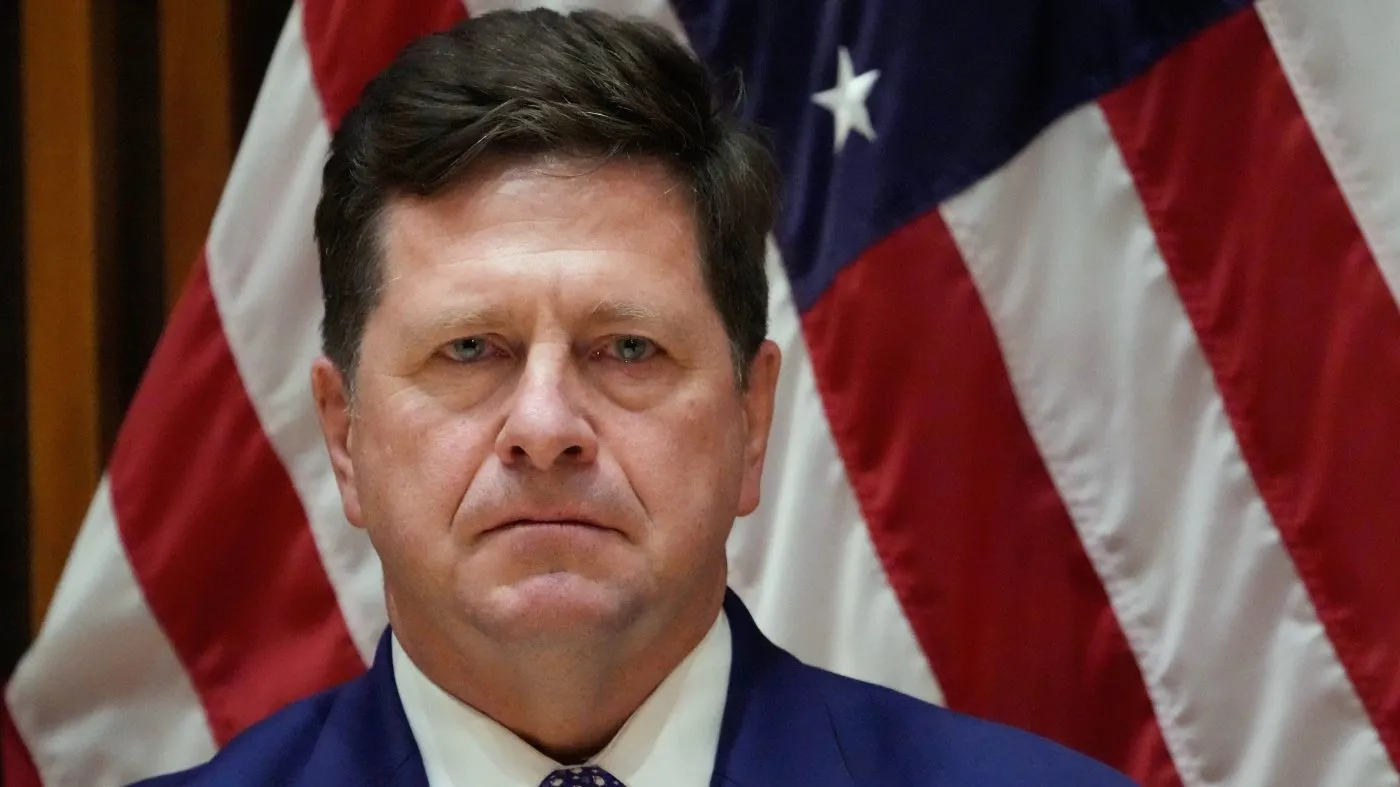
Who is Jay Clayton, new Trump DNI Pick?
Provpnadvice.com – On Thursday, President Donald Trump announced the selection of Jay Clayton to serve as the next Director of National Intelligence (DNI). This decision came amid a period of significant turnover in the intelligence community, following weeks of uncertainty after Trump appointed Bill Pulte as the acting director. Clayton, currently the U.S. Attorney for the Southern District of New York, is set to take on the role of overseeing the nation’s intelligence agencies, a position that holds considerable influence in national security matters.
“Few people anywhere in the Legal Community are respected at the level of Jay,” Trump wrote on Truth Social in announcing Clayton’s nomination. “I encourage the United States Senate to confirm Jay as soon as possible.”
Clayton, a registered independent, has held one of the most pivotal positions in the Department of Justice since August 2025. Legal analysts describe this role as the most powerful within the DOJ, given its responsibilities in shaping federal legal strategy and handling high-profile cases. Trump’s decision to nominate him followed his victory in the 2024 presidential election, during which he praised Clayton as “a strong Fighter for the Truth.”
Clayton’s tenure in the justice system has been marked by notable actions, including the high-profile indictment of Venezuelan President Nicolás Maduro in January. The charges, which included “narco-terrorism,” were part of a broader effort to hold foreign leaders accountable for activities linked to drug trafficking and destabilizing regional alliances. This case underscored Clayton’s approach to leveraging legal tools for geopolitical objectives, a strategy that aligns with Trump’s emphasis on aggressive enforcement against adversaries.
Before his current role, Clayton built a robust legal career. He began as a law clerk for Judge Marvin Katza of the U.S. District Court for the Eastern District of Pennsylvania from 1993 to 1995. After that, he joined the prestigious law firm Sullivan and Cromwell, where he progressed from associate to partner over two decades. His time at the firm positioned him as a key figure in corporate law, dealing with matters ranging from antitrust cases to financial regulations.
Trump’s interest in Clayton’s expertise led to his nomination as chairman of the U.S. Securities and Exchange Commission (SEC) on January 20, 2017, the day of Trump’s first inauguration. At the time, Clayton committed to distancing himself from his law firm and Wall Street clients, such as Barclays Bank, Royal Bank of Canada, and Deutsche Bank AG. This pledge was intended to address concerns about potential conflicts of interest, particularly given his background in corporate law.
The Office of Government Ethics reviewed Clayton’s financial disclosures and found no significant issues, clearing him for the SEC role. His confirmation by the Senate was swift, with a 61-37 vote in May 2017. Senate Majority Leader Mitch McConnell (R-Ky.) expressed confidence in Clayton’s capabilities, stating that he looked forward to “his leadership at this agency.” However, Democrats raised objections, with Senator Elizabeth Warren (D-Mass.) among those voting against his confirmation, citing his Wall Street ties as a potential liability.
Clayton’s tenure at the SEC was characterized by his focus on market regulation and investor protection. His biography notes that he frequently testified before Congress on topics such as enhancing market efficiency, digital asset oversight, cybersecurity threats, and responses to the economic challenges posed by the pandemic. He also addressed U.S.-China trade dynamics, highlighting the need for regulatory strategies to counter foreign economic influence.
Despite his SEC achievements, Clayton’s career trajectory shifted in 2020 when Trump selected him as U.S. Attorney for the Southern District of New York. This move came after the president dismissed Geoffrey Berman, the previous U.S. Attorney, and Clayton expressed interest in the position. However, it remains unclear whether he anticipated the firing of his predecessor. Trump’s choice of Audrey Strauss to replace Berman further illustrates the administration’s efforts to align the Southern District with its policy priorities.
After his time as U.S. Attorney, Clayton returned to Sullivan and Cromwell, resuming his partnership at the firm. Simultaneously, he assumed leadership roles at Apollo Global Management and American Express, leveraging his legal acumen in the private sector. These positions allowed him to maintain a presence in both corporate and financial circles, further solidifying his reputation as a versatile legal strategist.
Clayton’s academic contributions have also been significant. Since 2009, he has served as an adjunct professor at the University of Pennsylvania’s Carey Law School, where he has shared insights on regulatory frameworks and legal theory. In 2021, he expanded his academic role to include teaching at the Wharton Business School, bridging the gap between law and economics. His co-chairmanship of the University of Pennsylvania’s Institute for Law and Economics from 2022 to 2025 highlights his commitment to interdisciplinary legal analysis and policy development.
Trump’s recent nomination of Clayton to the DNI reflects a pattern of appointing individuals with a strong background in corporate law and regulatory expertise. This approach aligns with the administration’s focus on financial oversight and national security, suggesting a blend of legal precision and strategic foresight. As the DNI, Clayton will be tasked with coordinating intelligence efforts across agencies, a role that demands both legal knowledge and operational adaptability.
Clayton’s selection also signals Trump’s continued reliance on legal professionals with a track record of navigating complex cases and managing high-stakes political environments. His career has been defined by a balance between public service and private sector influence, a duality that has both supported and challenged his credibility among critics. Nonetheless, his nomination underscores the administration’s confidence in his ability to lead the intelligence community effectively.
With his confirmation process likely to mirror the SEC appointment’s efficiency, Clayton’s transition to the DNI may proceed without major delays. The Senate’s response to his nomination will be critical in determining how his past associations with Wall Street are perceived in the context of national security responsibilities. As the intelligence community prepares for this change, Clayton’s role in shaping policy and executing strategic initiatives will be closely watched.