Mullin threatens states as DHS launches widespread review of elections

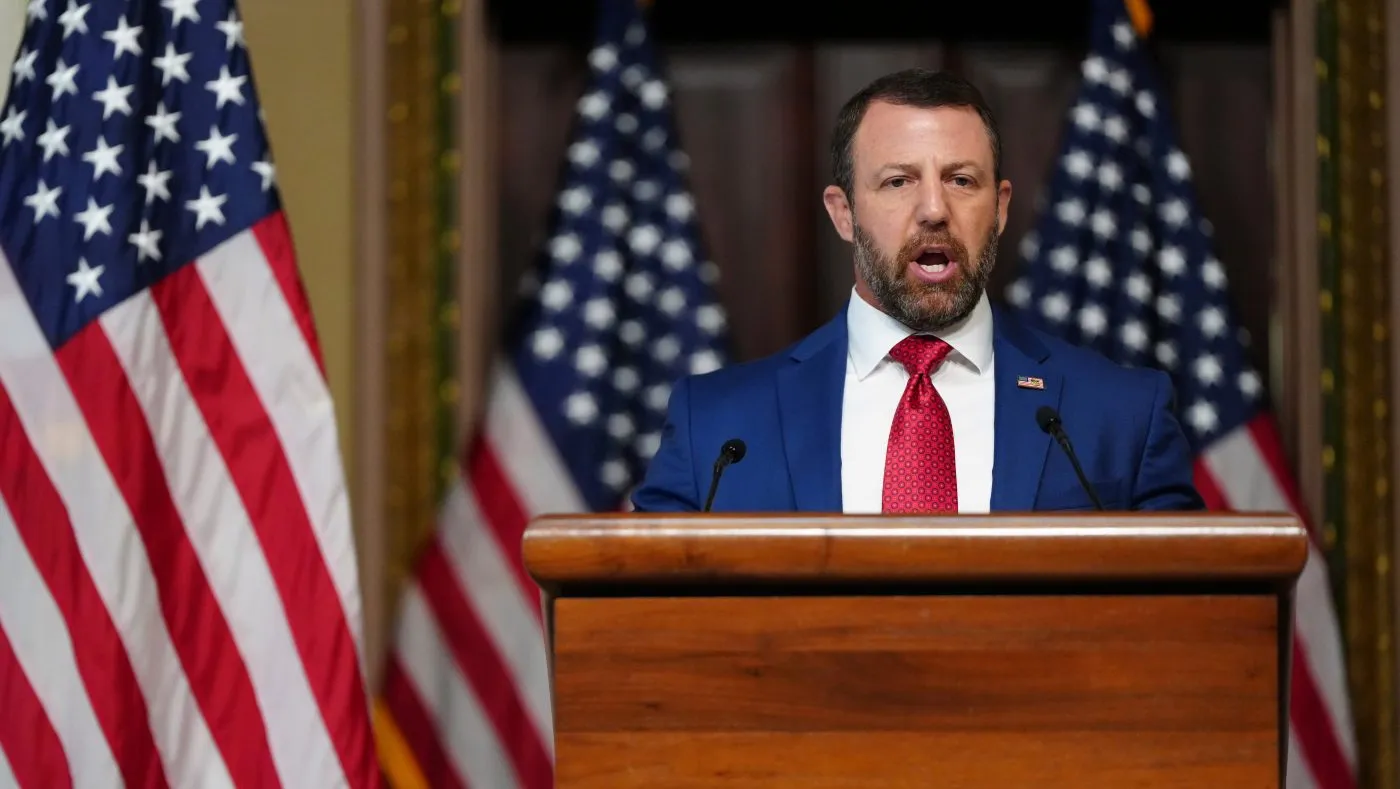
Mullin Issues Warning to States as DHS Expands Election Security Review
Provpnadvice.com – Homeland Security Secretary Markwayne Mullin delivered a forceful message to state election officials on Friday, going beyond President Trump’s recent statements by asserting that foreign adversaries possess the capability to hack into voter machines. During his address, Mullin threatened consequences for states declining to collaborate with his department while pledging to employ “maximum pressure” tactics to identify and eliminate any votes cast in violation of federal law.
Claims of Manual Vote Manipulation
While President Trump characterized voting machines as “vulnerable and they’re easily compromised” during his primetime address on Thursday, Mullin elevated concerns by suggesting hackers could enter these systems to manually alter votes. This assertion contradicts conclusions reached by the U.S. intelligence community, which has determined such manual manipulation has never occurred. Current voting machines remain disconnected from the internet and utilize paper ballot backups as a safeguard.
Mullin warned that state election officials would face repercussions if they declined to cooperate with Department of Homeland Security initiatives. He outlined plans to access states’ vote tabulators and potentially their voter registration databases—objectives that various courts have consistently rejected when the federal government attempted similar access.
“We’re not trying to get into anything else, but we’re saying that the machines had to be secured and that your voter registration list needs to be scrubbed,” Mullin told reporters on Friday.
“I will tell you if the states choose not to participate — we will make sure that we make those states a priority to look at who voted in their states and hold the election officials accountable,” he added.
Noncitizen Voting Concerns
A significant portion of Mullin’s press conference focused on the possibility that noncitizens might participate in elections, despite research indicating such occurrences are exceedingly uncommon. The left-leaning Brennan Center for Justice identified only 30 cases of noncitizen voting among 23.5 million total votes while examining the 2016 election cycle. Meanwhile, the conservative Heritage Foundation documented merely 24 instances of noncitizen voting across a twenty-year span from 2003 through 2023.
Nevertheless, Mullin contended that up to 287,000 noncitizens could be registered to vote—a statistic for which Trump administration officials have offered minimal supporting evidence. This figure was surpassed by his claim regarding deceased voters, with Mullin asserting approximately 400,000 dead individuals remain on voter registration lists.
Before Mullin’s press conference, the DHS announced it had sent correspondence to four states where a “preliminary review” suggested as many as 250,000 noncitizens had been registered to vote. The department did not contend that any of these individuals had actually cast ballots.
Discrepancies in DHS Numbers
However, copies of the letters obtained by The Hill revealed inconsistencies between the numbers DHS publicly announced and those communicated directly to states, along with insufficient explanation for how the department arrived at its top-level estimate. Analysis conducted by The Hill demonstrated that DHS could only identify 118,000 voters it claimed might correspond with information stored in their files for noncitizens.
“Preliminary review of the records revealed that there may be as many as 14,576 non-citizens registered to vote in Pennsylvania. As an example, we found 8,594 Pennsylvania registrants for whom the name, date of birth, address and Social Security number match a non-citizen in our files,” the DHS wrote in the letter.
“The most efficient way to ensure the accuracy of our findings is to work collaboratively on identity verification.”
A comparable pattern appeared in Nevada, where DHS asserted there could be as many as 15,903 non-citizens registered to vote, yet stated only 8,576 could correspond with information the department maintains on file.
State Responses and Legal Challenges
Pennsylvania Secretary of State Al Schmidt, a Republican, rejected the notion of granting DHS access to the state’s voter rolls, emphasizing that they are properly maintained and regularly updated.
“In Pennsylvania, every voter must take steps to verify their identity before they cast a ballot, including providing proper identification every time they register to vote, vote by mail, or vote at a new polling place. All evidence has shown that noncitizen voting is extremely rare across the country, including in Pennsylvania,” he said.
“While the Department has made clear that we cannot share Pennsylvanians’ private, personal information, we will review any information provided by DHS so that we can evaluate the validity of these claims.”
The judicial system has consistently prevented the federal government from accessing state voter databases. Democracy Docket, an organization operated by Democratic election attorney Marc Elias, highlighted that the Justice Department had suffered fifteen defeats in court battles on this issue without securing a single victory. According to their analysis, the majority of these rulings came from judges appointed by Republican presidents.
Mullin expressed frustration on Thursday regarding judges halting numerous White House and DHS efforts to expand federal oversight of state election processes, signaling that this conflict between federal and state authorities is likely to intensify in the coming months as election security remains a central priority for the administration.