Jeffries says he won’t back FISA until Pulte is removed by Trump as acting DNI

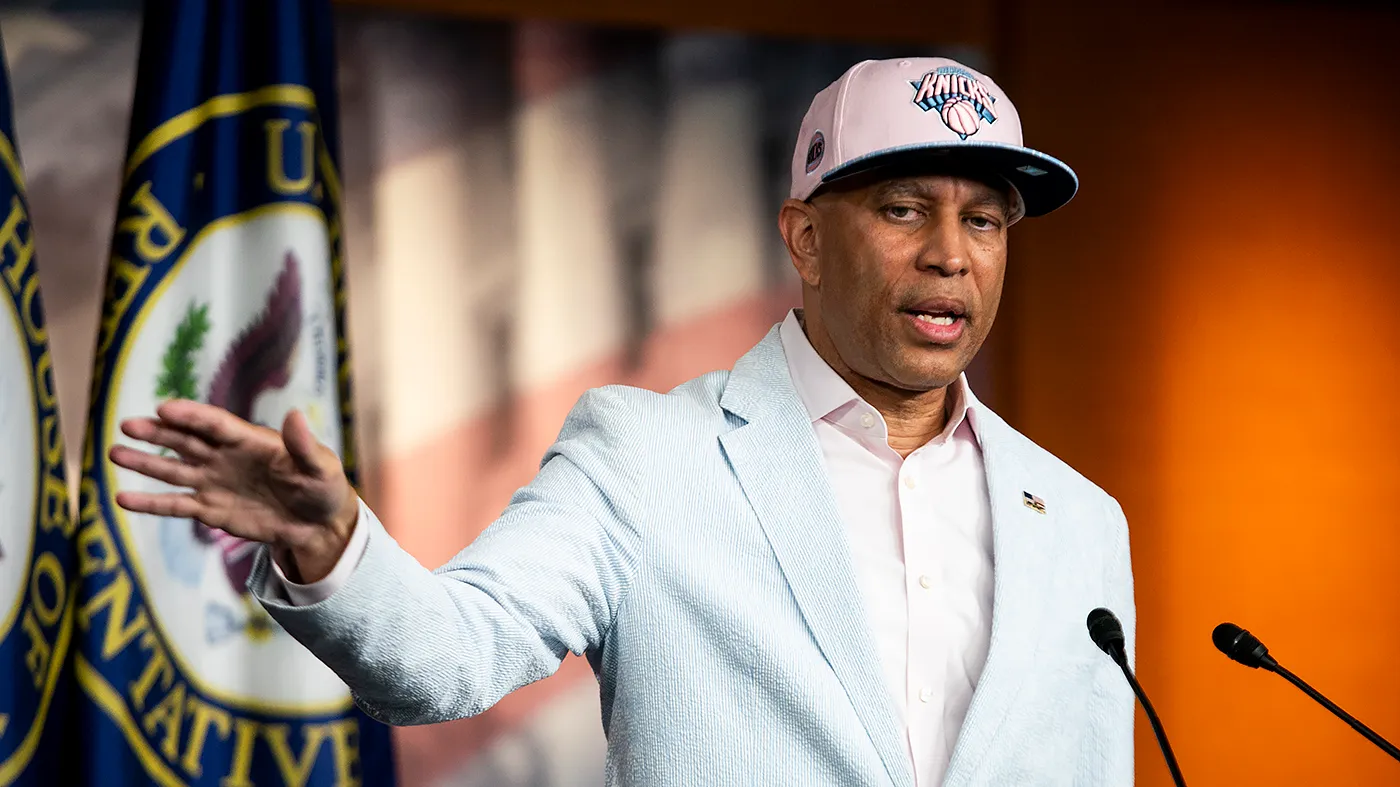
Hakeem Jeffries Declines to Support FISA Renewal Until Trump Removes Bill Pulte as Acting DNI
House Leader Voices Concern Over Pulte’s Appointment in Intelligence Role
Provpnadvice.com – House Minority Leader Hakeem Jeffries (D-N.Y.) has stated that he will not approve the extension of the United States’ warrantless surveillance authorities under the Foreign Intelligence Surveillance Act (FISA) unless Bill Pulte is relieved of his duties as acting Director of National Intelligence by President Trump. Jeffries emphasized that the decision to retain Pulte is a critical factor in the ongoing debate over the reauthorization of Section 702, a provision allowing intelligence agencies to monitor communications of foreign nationals without needing a court order.
“Reversing the Bill Pulte appointment is a starting point, not an ending point,” Jeffries remarked, describing the challenge of reauthorizing Section 702 as an ongoing struggle between different factions within Congress. He argued that the current leadership of the intelligence community has failed to address concerns about the role of warrantless surveillance in protecting American citizens’ privacy rights.
The minority leader reiterated that there is no scenario in which he would support the legislation while Pulte continues to hold the position. He explained that the negotiations surrounding FISA had already been tense prior to Trump’s selection of Pulte, as lawmakers debated the inclusion of a warrant requirement for accessing communications of American citizens during foreign surveillance operations. Jeffries called the situation “very sensitive,” highlighting the deep divisions within the Democratic Party and the broader legislative body over the balance between national security and civil liberties.
“Then Donald Trump, as he often does, tosses a hand grenade into those sensitive negotiations by elevating Bill Pulte as a director of National Intelligence, someone who’s a political hack, a malignant clown, and he’s woefully unqualified to serve in any position in the federal government, let alone as acting Director of National Intelligence,” Jeffries said. His comments reflect a growing skepticism about the qualifications of individuals appointed to key intelligence roles, particularly those with a history of aligning closely with the administration’s agenda.
Jeffries’ criticism extends beyond his personal views. He noted that this stance aligns with the opinions of Senate Majority Leader John Thune, who has also expressed doubts about Pulte’s suitability for the acting director position. Thune’s endorsement of Jeffries’ position underscores the bipartisan nature of the challenge to Pulte’s leadership, as both chambers of Congress grapple with the implications of his appointment on the integrity of the intelligence oversight process.
Pulte, who still holds his post at the Federal Housing Finance Agency (FHFA), has no background in national security or intelligence operations. His previous role at the FHFA, a federal agency responsible for overseeing Fannie Mae and Freddie Mac, has been marked by aggressive actions against critics of President Trump. During his tenure, Pulte has directed investigations into several individuals, including prominent opponents of the administration, and has pursued criminal charges against them for alleged mortgage fraud.
“Then Donald Trump, as he often does, tosses a hand grenade into those sensitive negotiations by elevating Bill Pulte as a director of National Intelligence, someone who’s a political hack, a malignant clown, and he’s woefully unqualified to serve in any position in the federal government, let alone as acting Director of National Intelligence,” Jeffries said. His remarks highlight the perception that Pulte’s appointment was a strategic move to consolidate control over intelligence operations, rather than a decision based on merit or expertise.
Jeffries’ focus on Pulte’s lack of qualifications raises broader questions about the selection process for high-level intelligence positions. Critics argue that the director of national intelligence should possess a deep understanding of surveillance laws, international intelligence cooperation, and the potential risks of unchecked power. Pulte, however, is seen as an outsider with limited experience in these areas, and his actions at the FHFA have drawn accusations of political bias.
The Federal Housing Finance Agency has become a central battleground in the political maneuvering between the White House and its adversaries. Pulte, who was appointed to the agency in 2020, has been accused of using his authority to target individuals who have publicly opposed Trump’s policies. Among those under scrutiny are Sen. Adam Schiff (D-Calif.), a leading critic of the administration, and Federal Reserve Board member Lisa Cook, whose economic analyses have clashed with Trump’s approach to monetary policy. Additionally, former Rep. Eric Swalwell (D-Calif.) and New York Attorney General Letitia James (D) have faced legal action for alleged involvement in mortgage fraud cases.
“That’s not just the House Democratic caucus position. The Senate Majority Leader John Thune has said that Bill Pulte is not qualified to be the acting director of National Intelligence,” Jeffries added. His assertion that Thune shares this sentiment suggests a coordinated effort across the legislative branches to challenge Pulte’s suitability for the role, even as he remains in his position at the FHFA.
Jeffries’ public stance has amplified pressure on Trump to address the controversy surrounding Pulte’s appointment. The acting director’s lack of intelligence experience is seen as a potential liability in a time of heightened global tensions and complex surveillance challenges. While Pulte’s role at the FHFA has been a focal point of political conflict, his move into the intelligence community has raised concerns about the stability of the nation’s surveillance framework and the potential for partisan influence in its management.
The debate over Section 702 reauthorization has become a microcosm of larger ideological battles within Congress. Proponents of the current system argue that it enables the intelligence community to act swiftly in response to emerging threats, while opponents like Jeffries warn that it could lead to overreach and the erosion of American privacy. The selection of Pulte is viewed as a pivotal moment in this debate, with his political affiliations and lack of experience in national security casting doubt on the impartiality of the intelligence oversight process.
As the FISA negotiations continue, the spotlight remains on Pulte’s leadership. His ability to navigate the intricacies of surveillance law and maintain the trust of both the intelligence community and Congress will be critical in determining the outcome of the reauthorization. For now, Jeffries and other dissenting voices remain firm in their demand for Pulte’s removal, seeing it as a necessary step toward ensuring the bill reflects a commitment to transparency and accountability in the nation’s spy programs.