Top Army commander in Europe, Africa relinquishes role

Top Army commander in Europe, Africa relinquishes role
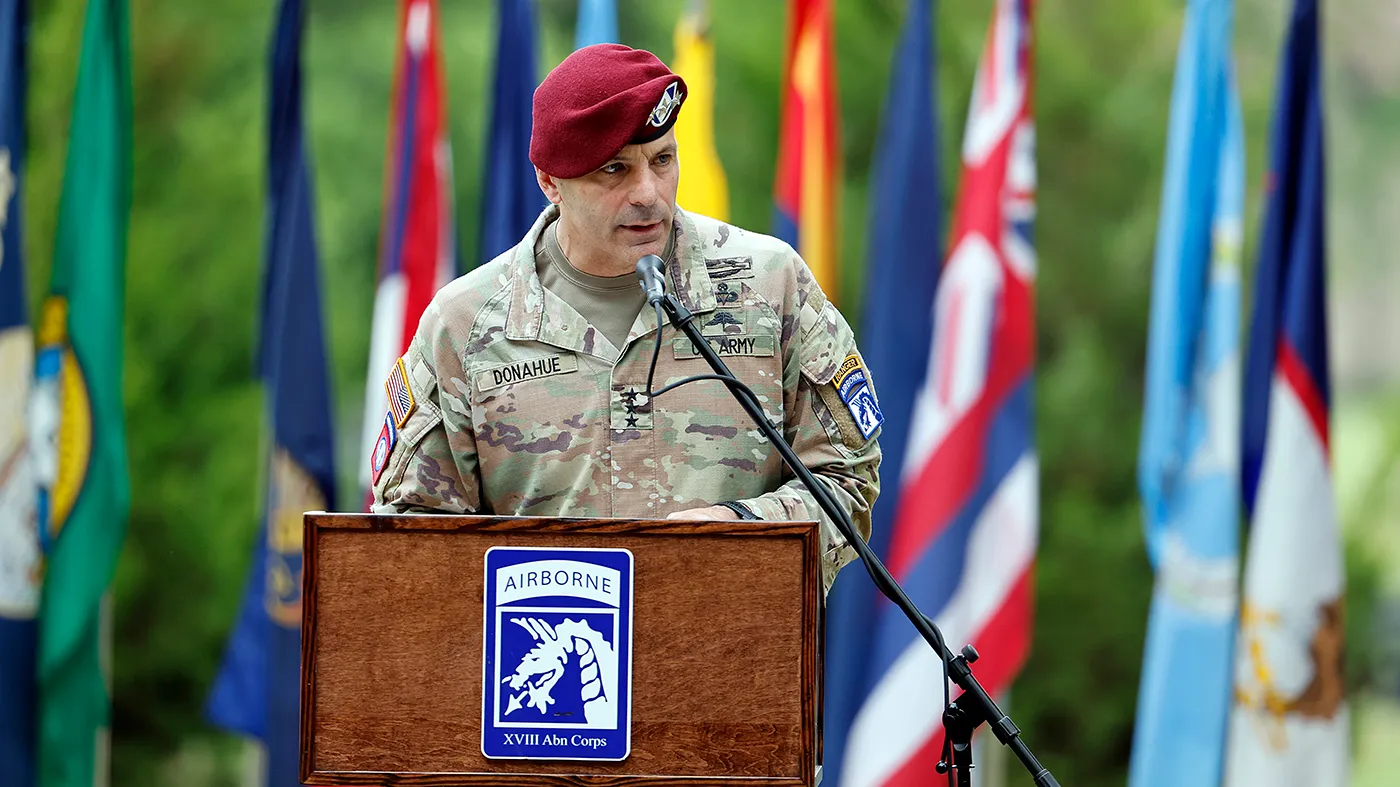
Provpnadvice.com – Army General Christopher Donahue has stepped down from his position as the commander of U.S. Army Europe and Africa, a move that occurred just days after he was unexpectedly removed from his role by Defense Secretary Pete Hegseth. Donahue, who is 56 years old, made the announcement during a formal ceremony in Wiesbaden, Germany, marking the end of his 18-month tenure in the critical military command. His departure has sparked discussions about the shifting dynamics within the Pentagon and the implications for U.S. military operations in Europe and Africa.
Donahue’s career has been defined by his service in the military’s special operations units, where he gained a reputation for leadership and resilience. Before ascending to his current position, he commanded the elite Delta Force, a unit renowned for its precision and high-stakes missions. His tenure with the 82nd Airborne Division further solidified his status as a strategic leader, particularly during the U.S. military’s chaotic withdrawal from Afghanistan. Donahue played a pivotal role in facilitating the evacuation of allies from Kabul’s international airport, a mission that became a defining moment in the war’s final days.
During the ceremony, Donahue expressed deep gratitude for his time in the role, emphasizing the collaborative effort that shaped the command’s achievements. “I love this team, and it has been the honor of a lifetime to be part of it,” he said, reflecting on the bond he formed with his colleagues. “I’m proud of what we built, and I have absolute confidence in what you will build next.” His words underscored the significance of the command’s mission and the trust he placed in his successor.
“Strong leaders are not threatened by accomplished commanders. Weak ones are,” wrote Senator Thom Tillis (R-N.C.) on the social platform X. “Hegseth’s paranoid micromanagement of senior military leaders and promotion lists is pure insecurity dressed up as reform. He is more interested in purging people he perceives as insufficiently loyal than empowering proven patriots who can actually lead.”
Donahue’s transition to the NATO Allied Land Forces Command in Izmir, Turkey, has also come to an end. He will formally relinquish that leadership position on July 9, following his departure from the U.S. Army Europe and Africa headquarters. This dual role highlighted his strategic importance, as he oversaw both the European and African military operations while contributing to NATO’s collective defense efforts.
The abrupt nature of Donahue’s removal has raised questions about the motivations behind the decision. While the Pentagon has not provided an official reason for the change, Hegseth has previously advocated for reducing the number of generals and admirals within the Defense Department. His approach has been characterized by a focus on streamlining command structures and prioritizing efficiency, though critics argue it has led to a purge of experienced leaders.
Donahue’s resignation is part of a larger trend of leadership changes under Hegseth, who has replaced at least a dozen senior officials since taking office last year. This includes a reshuffling of key positions in the Pentagon, reflecting a broader effort to align the military with Trump’s vision of a more streamlined and cost-effective force. The decision to reduce troop presence in Europe has been a central theme of this strategy, with some lawmakers expressing concern about the long-term impact on U.S. military readiness and alliances.
Despite the uncertainty surrounding his departure, Donahue’s legacy remains intact. As the last American soldier to leave Kabul during the 2021 withdrawal, his final image stepping onto the C-17 transport plane has become an enduring symbol of the mission’s conclusion. The photograph, capturing him in a moment of quiet determination, resonated with the public and served as a poignant reminder of the sacrifices made during the war.
His replacement, Major General Christopher Norrie, will assume the role temporarily until a permanent successor is appointed by President Trump. Donahue had been nominated by former President Joe Biden, a detail that has added to the political implications of his removal. Norrie’s appointment signals a continuation of the Pentagon’s leadership overhaul, which has seen a mix of promotions and replacements across various commands.
Analysts suggest that the change in command may be tied to broader strategic shifts within the Defense Department. Hegseth’s emphasis on reducing bureaucratic layers and focusing on combat-ready forces has influenced several decisions, including Donahue’s. However, some argue that this approach has created a climate of unpredictability, with senior leaders facing sudden changes in their roles and responsibilities.
As the U.S. military continues to evaluate its presence in Europe, the question of long-term commitments has become increasingly pressing. Trump’s push to withdraw troops from the continent has led to a reexamination of the American military’s footprint, with officials weighing the balance between strategic presence and resource allocation. Donahue’s departure adds to the conversation, highlighting the challenges of maintaining stability in a rapidly changing geopolitical landscape.
Donahue’s career trajectory has been marked by a blend of operational expertise and leadership. From his early days as an Army Ranger to his commanding roles in special operations, he has consistently demonstrated a commitment to excellence. His experience in high-pressure environments, such as the evacuation of Kabul, has been cited as a testament to his ability to navigate complex challenges with composure and decisiveness.
While the reasons for his removal remain unclear, the timing of the decision has been scrutinized. Donahue’s tenure as the U.S. Army Europe and Africa commander overlapped with Hegseth’s tenure as defense secretary, suggesting a possible alignment of priorities. Yet, the lack of transparency surrounding the change has left many wondering about the underlying motivations. Some speculate that personal or political factors played a role, while others believe it reflects a broader strategy to reshape the military’s leadership in line with Hegseth’s vision.
The impact of Donahue’s departure extends beyond the immediate command structure. His experience and institutional knowledge will be crucial as the Pentagon seeks to maintain cohesion during this period of transition. The ceremony in Wiesbaden was not just a formal handover but a symbolic moment, acknowledging the contributions of a leader who has played a significant role in shaping U.S. military operations in Europe and Africa.
As the U.S. military adapts to new leadership and strategic goals, the focus remains on maintaining operational effectiveness. Donahue’s role in building the command’s foundation will be remembered, even as his successor takes the helm. The changes in leadership, while unexpected, are part of a larger effort to reposition the military for the challenges ahead, both in Europe and on the global stage.