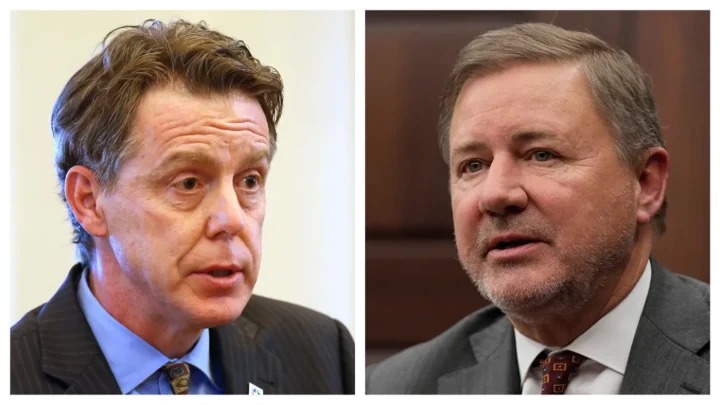
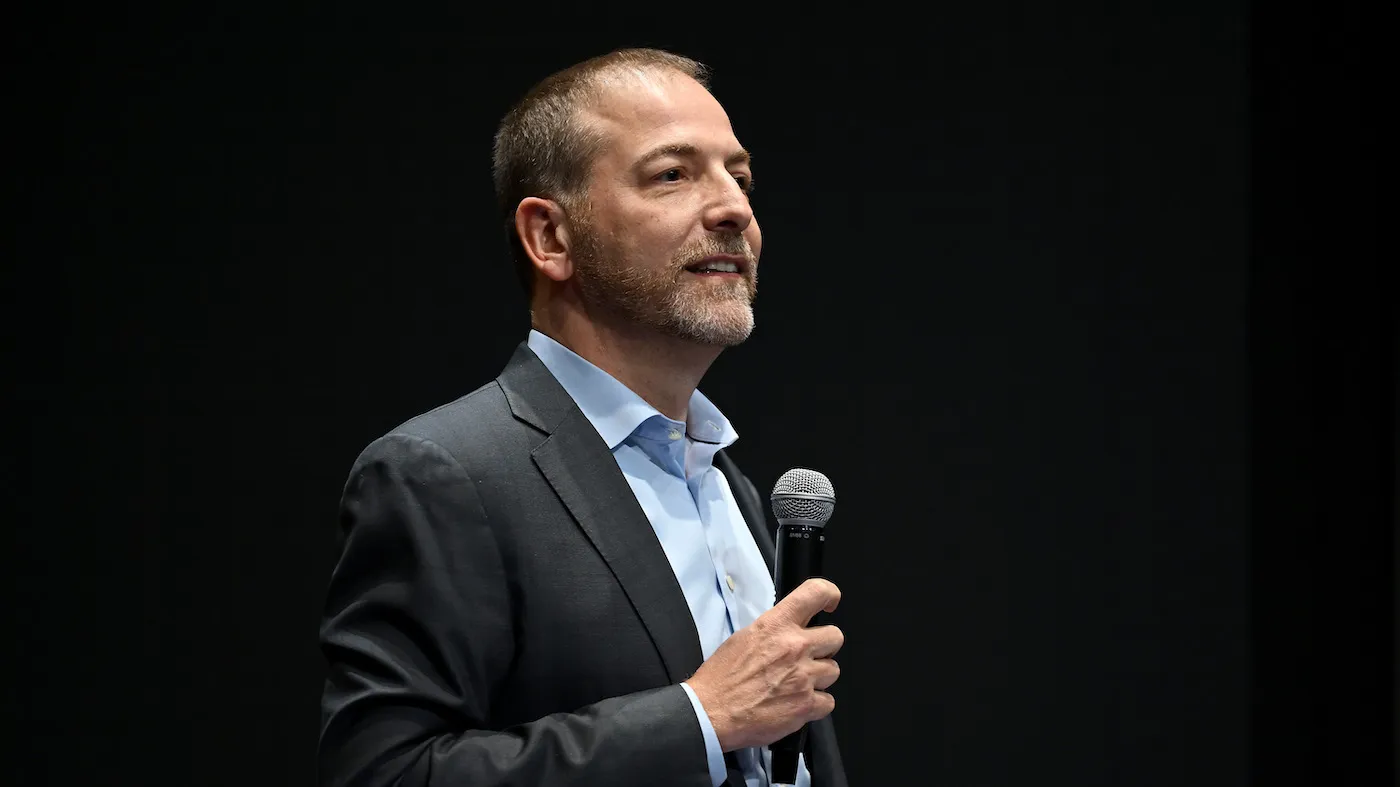
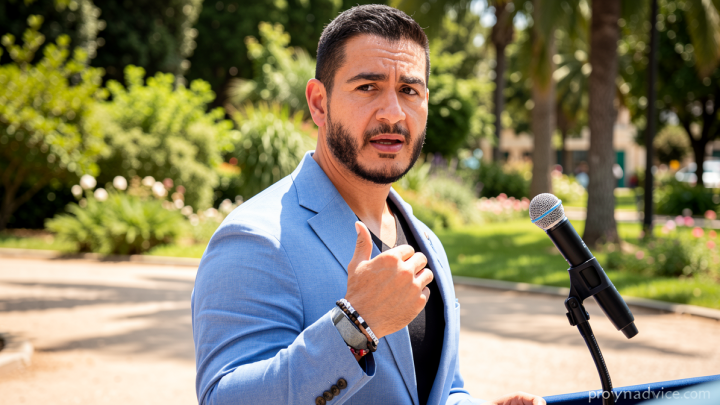
Lingering Democratic divisions could preview 2028 challenges

Table of Contents
Democratic Fault Lines Are Emerging Before the 2028 Presidential Race Begins
Provpnadvice.com – Democrats are approaching Tuesday’s midterm elections while already confronting tensions that could shape their next presidential nominating contest. The party is still processing its damaging 2024 defeat, and many activists have looked ahead to 2028 as an opportunity to regroup. Yet contentious Senate primaries in Michigan and Texas suggest that difficult ideological and personal divisions may endure well beyond Election Day.
Those disputes matter because a presidential primary will require Democrats to balance competing priorities: winning broad general-election coalitions, representing a more progressive wing of the party and preventing hard-fought intraparty battles from weakening eventual nominees. In both states, leading Democrats have endorsed primary winners, but the level of public unity has varied considerably.
Michigan’s Senate Contest Leaves a Visible Divide
Michigan has provided one of the clearest examples of unresolved friction. Rep. Haley Stevens, a Democrat, lost the party’s Senate primary to Abdul El-Sayed, whose politics are further to the left. The two appeared together and embraced at a unity event after the primary, but their communication has remained limited in the nearly three months since the contest ended.
El-Sayed’s campaign brought on some aides who had worked for Stevens, but the two candidates themselves have not been directly communicating. Stevens has said she will support El-Sayed, even as people close to her have chosen a different course.
Her fiancé, Jason Turkish, said he intends to vote for Republican Mike Rogers. Stevens’s former campaign chair has also said he plans to back Rogers. Turkish, who is Jewish and has criticized the Israeli government, pointed to El-Sayed’s language about Israel and Gaza as the reason for his decision.
“I’ve just seen an escalation in his rhetoric since the primary, and it makes folks unsafe,” Turkish said. “Every time he talks about genocide, Jews get death threats.”
Stevens has been campaigning for Democrat Jocelyn Benson in Michigan’s gubernatorial campaign and is not expected to appear with El-Sayed before voters head to the polls. Still, she has maintained that she wants the Democratic Senate nominee to prevail.
“Like a lot of households across America, we’re a house divided,” Stevens said. “I still very much want our Democratic nominee, his name is Abdul, to win this race.”
The episode illustrates the challenge for Democratic candidates after divisive primaries: an endorsement may signal party loyalty, but it does not necessarily repair disagreements over policy, rhetoric or campaign strategy.
Texas Shows a Different Kind of Distance
Texas presents another uneasy post-primary relationship. Rep. Jasmine Crockett endorsed state Rep. James Talarico after he defeated her in the Democratic Senate primary. However, Crockett has not joined Talarico at recent campaign appearances, leaving a noticeable gap between her formal backing and an active campaign partnership.
“I endorsed him 100 times,” Crockett said.
The Michigan and Texas races do not have identical dynamics. In Michigan, disagreement involving El-Sayed’s approach to Israel and Gaza has become especially public. In Texas, the separation has been less openly confrontational. But both contests show how difficult it can be for a nominee to fully consolidate support after defeating a prominent Democrat.
A Warning Sign for a Crowded National Contest
Democratic strategists see these state-level strains as an early indication of what could happen in 2028, when a potentially large presidential field will compete for a party coalition that includes moderates, progressives, organized labor, younger voters and activists focused on foreign policy and economic inequality.
Steve Schale, a Democratic strategist who led former President Obama’s Florida operation during his successful presidential campaigns, believes previous fights within the party will resurface.
“For sure, we’re going to relitigate the 2016 and 2020 primary all over again in 2028,” Schale said. “It’s real.”
One Democratic donor offered an equally blunt assessment:
“Anyone saying we don’t have a huge problem on our hands is in denial.”
Those concerns have been heightened by a series of democratic socialist victories around the country this year. The wins have energized part of the party, while also increasing anxiety among some moderates who fear that ideological conflict could overwhelm the shared objective of winning elections.
Democratic strategist Basil Smikle said the pattern demonstrates how internal disagreements can prevent the party from recognizing its broader electoral interests.
“Ideological and operational differences can sadly still stifle Democrats and snatch defeat out of the jaws of victory by not seeing the big picture,” Smikle said.
For Smikle, the stakes will rise sharply in the presidential race. A contest centered too heavily on internal grievances, he argued, could distract Democrats from persuading voters that they should return to the White House.
“Democrats can’t get locked in an internal squabble that overcomes their ability to convince voters they should be back in the White House,” he said.
Midterm Results May Shape the Argument
Other Democratic operatives see Tuesday’s results as a potential corrective. Eddie Vale said the practical lesson should be restraint and a focus on winning, rather than treating any single ideological approach as universally effective.
“Everyone chill out and let’s just win, baby,” Vale said.
Vale suggested that victories in very different political environments could demonstrate that candidate quality and local conditions matter alongside ideology. A candidate who succeeds in one state may not provide a universal model for every Democratic campaign. That conclusion could be important as the party debates how to construct a national ticket and message for 2028.
“More likely it’s the opening skirmishes of the inter-party fights everyone is gonna try and litigate endlessly until 2028,” Vale said. “But knock on wood, if they both win, it should show the different factions that there is no one magical trick to win everywhere and need the right candidates in the right places and that candidate quality matters a lot, too — not just ideology.”
The immediate question is whether Democrats can turn endorsements into genuine cooperation after difficult primaries. The longer-term question is whether the party can enter 2028 with disagreements that remain manageable rather than defining. Michigan and Texas are offering an early test of that ability, with the midterm outcome likely to influence how Democrats interpret the road ahead.
Related Reading
Frequently Asked Questions
What is Lingering Democratic divisions could preview 2028?
Lingering Democratic divisions could preview 2028 is the main topic of this guide. The article explains the context, practical details, and next steps readers should understand.
Why does Lingering Democratic divisions could preview 2028 matter?
Lingering Democratic divisions could preview 2028 matters because readers are looking for a useful answer, not just a short summary. Good content should match search intent and help them decide what to do next.