Real voters reveal what could decide the 2026 midterms


Table of Contents
Voters balance household costs, trust and security as 2026 midterms approach
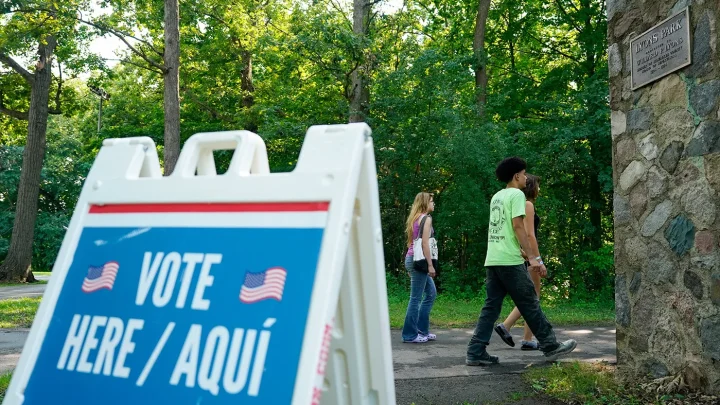
Provpnadvice.com – With Election Day roughly a month away, voters in Texas and Alabama are weighing a mix of personal financial strain, distrust in political institutions, foreign policy concerns and the growing presence of artificial intelligence in campaign messaging. Their views offer a reminder that the 2026 midterm elections may be shaped as much by cross-party anxieties as by traditional partisan loyalties.
The struggle to pay for ordinary necessities remains central for many people. Rising prices, housing expenses and transportation costs continue to influence how voters assess candidates and the parties seeking control of Congress.
“I think a lot of folks are struggling,”
Texas independent voter Sandi Hebley said, describing the challenge of covering rent or a mortgage while still being able to afford fuel for commuting to work. For voters facing those pressures, campaign promises often compete with the immediate realities of grocery bills, monthly payments and job-related expenses.
Texas Senate race draws attention
Economic concerns are especially significant in Texas, where Republican Ken Paxton and Democrat James Talarico are running in one of the country’s closest Senate contests. Recent polls have placed the candidates only a few percentage points apart, and some surveys have shown Talarico with a slim edge.
Both campaigns are also seeking support from Hispanic and Black voters, constituencies that could prove decisive in a race with little apparent room for error. The contest illustrates how a statewide election can turn on voters who may not be firmly aligned with either party, particularly when their concerns extend beyond a single issue.
Hebley, who identifies as an independent, also raised concerns about AI-generated political advertising. The technology has introduced a new layer of uncertainty into campaign communication, making it harder for voters to know whether they are seeing an authentic message from a candidate or material created by a campaign operation, outside group or automated system.
“I’d rather hear from the actual people than something that some committee somewhere made up,”
Hebley said.
That concern reaches beyond one Senate race. As artificial intelligence becomes more available to campaigns and political advertisers, voters may have to evaluate not only what a message says, but also who created it and whether it accurately reflects a candidate’s views. The question is particularly relevant in close races, where even small shifts in public perception can matter.
Pressure on both parties
Democratic voter Andrea Cervantes said Democrats need to sharpen their approach and place more emphasis on issues that directly affect Americans’ daily lives. In her view, the party should not allow its message to become overly focused on progressive politics while voters are looking for answers on practical concerns.
“I think that Democrats need to step up their game,”
Cervantes said.
She also argued for greater transparency in politics and stressed that corruption is not limited to either party. Her comments reflect the appeal of independent identification among people who feel neither major party fully represents them. A lack of unity within the Democratic coalition, she suggested, could be a disadvantage at a moment when voters are increasingly skeptical of political institutions.
That skepticism is not confined to one ideology. Voters who are dissatisfied with both parties can become important in competitive elections because they may be more willing to split their tickets, stay home or decide later in the campaign. Candidates trying to win their support may need to demonstrate credibility on immediate problems rather than relying only on party labels.
Security concerns compete with economic worries
For Republican voter Ajua Mason, higher costs are a real concern, but they are not the only priority. She said national security should remain part of the voting decision, particularly when evaluating the Trump administration’s policy toward Iran.
Mason defended President Donald Trump’s approach and said she would accept temporary financial difficulties if the administration’s actions ultimately improve the country’s security. Her perspective highlights a core tension that candidates will face throughout the midterm campaign: voters may agree that prices are too high while reaching very different conclusions about which risks deserve the greatest attention.
The economy and government have long appeared among the issues Americans identify as most important. Measures of public concern regularly show that voters can prioritize broad economic conditions while also focusing on confidence in government, international conflict and the ability of elected officials to address their concerns.
For some voters, the question is whether a candidate can make life more affordable. For others, it is whether that candidate can protect the country, speak honestly or provide a clearer alternative to a political system they distrust. Those concerns can overlap, but they do not always lead to the same electoral choice.
Control of Congress remains closely contested
The competing priorities could determine which party controls Congress after the midterms. On Oct. 1, Decision Desk HQ placed Democrats’ chance of winning the House at 75 percent and gave Democrats a 54 percent chance of taking the Senate. Those figures point to a highly competitive fight for both chambers, even with the House outlook appearing more favorable to Democrats.
Congressional control carries practical consequences for the final two years of a president’s term. The party holding each chamber has substantial influence over what legislation moves forward, how aggressively the administration is investigated and whether major policy proposals can advance. That makes close Senate races such as the Texas contest especially important, while House races can collectively determine the broader direction of Washington.
The conversations among these voters show why the final outcome remains difficult to predict. AI-created campaign content, concerns about corruption, the cost of living, housing payments, gasoline prices and foreign policy all sit beside one another in the minds of people preparing to vote.
Rather than dividing neatly along party lines, many voters are evaluating candidates through a personal combination of economic experience, trust and security. The campaigns that best address those overlapping concerns may have the strongest chance of persuading the undecided and independent voters who could decide the 2026 midterms.
Related Reading
Frequently Asked Questions
What is Real voters reveal what could decide?
Real voters reveal what could decide is the main topic of this guide. The article explains the context, practical details, and next steps readers should understand.
Why does Real voters reveal what could decide matter?
Real voters reveal what could decide matters because readers are looking for a useful answer, not just a short summary. Good content should match search intent and help them decide what to do next.