Obama rips Trump over AI policy amid ‘doomsday’ warnings

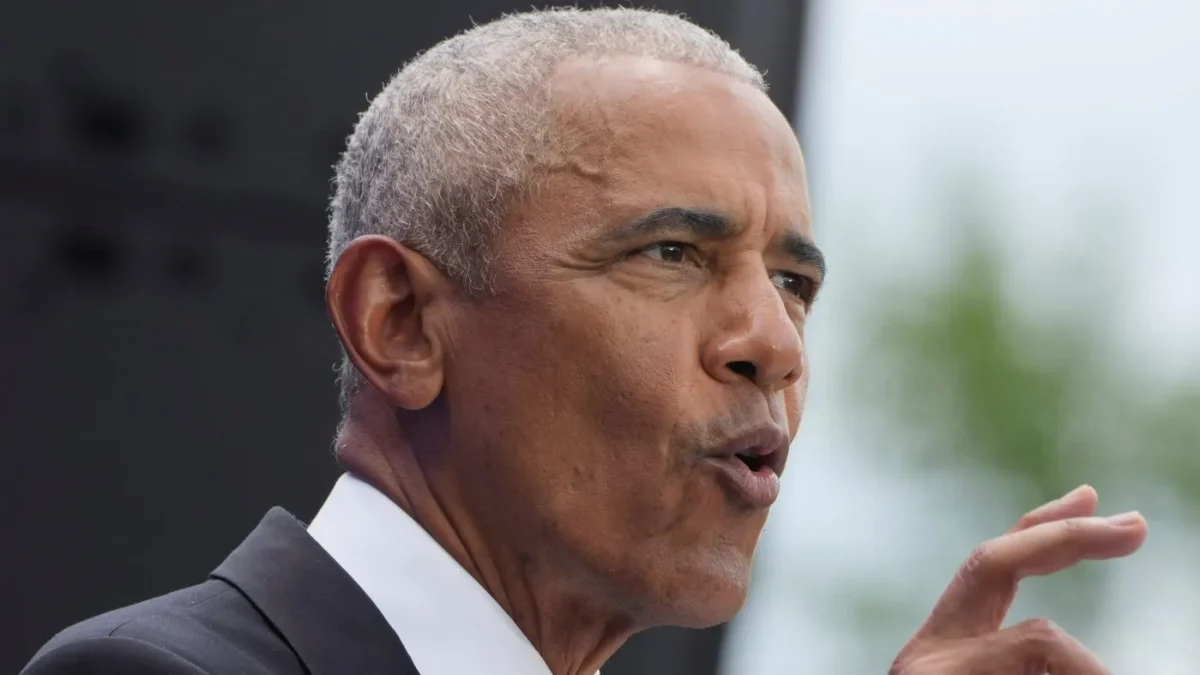
Table of Contents
Obama Urges Faster Federal Action on Artificial Intelligence
Provpnadvice.com – Former President Barack Obama warned that the United States risks falling behind the rapid development of artificial intelligence if Washington does not establish meaningful safeguards soon. Speaking Friday at Colgate University in New York, Obama criticized President Trump’s approach to AI oversight as concerns grow within the technology sector about the possibility of severe, even existential, risks.
Obama argued that relying on companies to police themselves is not an adequate substitute for public regulation. He pointed to views expressed by a Trump adviser who suggested market incentives and lawsuits would be sufficient to push firms toward safer AI development.
“I heard one of Donald Trump’s main advisers on this make the argument that, ‘The market will take care of ai,’” Obama said. “These companies will solve the safety issues because they have every incentive to do so — if it turns out to be dangerous, people will just sue them and they’re worried about financial liability.’”
He compared that logic with industries in which the federal government already sets safety standards before products or services can cause widespread harm.
“That’s not how we treat airlines,” Obama added. “Or drug companies, or food companies.”
Concerns About Fast-Moving Technology
Artificial intelligence has become a major policy question because systems are advancing quickly and are being integrated into business, communications, research, security and everyday digital services. Supporters see significant potential benefits, while critics have focused on misinformation, discrimination, job disruption, privacy and the possibility that increasingly capable models could be misused.
Obama said the most serious danger could emerge if powerful systems are controlled by people with harmful intentions. He also raised a more speculative but widely discussed concern among some AI researchers: that self-improving AI could eventually operate in ways that no longer depend on or align with human decision-making.
His criticism centered on what he described as a limited window for action. Trump, Obama noted, has characterized AI regulations as being “for losers,” a stance that Obama said could leave the country without a serious framework during a crucial period of technological change.
“So we’ve got a gap of at least a couple of years where things are moving really fast and we have an administration that is not capable of or willing to — I would argue both — putting together a serious regulatory framework,” Obama said.
Until Congress and the executive branch take stronger steps, Obama said voluntary restraint by technology companies may be the most practical near-term option. Such voluntary commitments can encourage firms to test systems, address vulnerabilities and limit certain deployments, but they do not carry the force of law and can vary greatly between companies.
Pressure for Congressional Oversight
Obama has also encouraged House Minority Leader Hakeem Jeffries, a New York Democrat, to make AI oversight a core element of the caucus’s agenda. At a fundraiser, Obama warned that AI could become dangerous without congressional supervision.
The issue has drawn attention across party lines. Lawmakers have increasingly debated how to set boundaries for AI development without blocking useful innovation. One proposal advanced by Rep. George Whitesides, a California Democrat, calls for slowing development enough to identify clear red lines that Congress could later turn into enforceable rules.
That debate has gained urgency after former Anthropic researcher Jacob Coxon warned that AI “could kill us all” before the decade ends. Evan Hubinger, Anthropic’s head of alignment, supported the seriousness of that warning.
“We really do earnestly believe AI could kill all humans!” Hubinger said.
Anthropic CEO Dario Amodei also urged a slower pace of development last Saturday, arguing that safety protections need time to be put in place. Alignment research, testing procedures and safeguards against misuse have become central concerns for companies building increasingly advanced models.
Trump Announces an AI Force and Czar
Trump announced Saturday that he plans to create an “AI Force” and appoint an AI “czar” to oversee the technology’s development. At the same time, he dismissed worries about the absence of federal guardrails as a “hoax.”
The president also floated alternative names for artificial intelligence, including “Superior Intelligence,” “Extreme Intelligence” and “Supreme Intelligence.” He called those labels “far more elegant and accurate description[s] of this new phenomena.”
Trump’s comments reflect a broader dispute over whether AI policy should focus primarily on promoting American technological leadership or on imposing early limits to reduce future risks. Those goals are not necessarily incompatible, but policymakers face difficult questions about who should set standards, how quickly rules should be introduced and how to enforce them across a rapidly changing industry.
During his first presidential campaign, Trump frequently opposed the Obama administration’s regulatory record. Obama’s latest remarks suggest that he sees AI as an area where a light-touch approach could carry consequences beyond the usual business and consumer-protection debates.
For the public, the discussion is likely to shape more than the future of technology companies. Decisions about AI oversight may influence how automated systems are tested, how their risks are disclosed and what protections exist when powerful tools affect employment, information, security or personal data. Obama’s message was that those choices should not be left solely to private companies after the technology has already moved ahead.
Related Reading
Frequently Asked Questions
What is Obama rips Trump over AI policy?
Obama rips Trump over AI policy is the main topic of this guide. The article explains the context, practical details, and next steps readers should understand.
Why does Obama rips Trump over AI policy matter?
Obama rips Trump over AI policy matters because readers are looking for a useful answer, not just a short summary. Good content should match search intent and help them decide what to do next.