Mullin responds to Salazar’s ad attacking Trump’s immigration crackdown

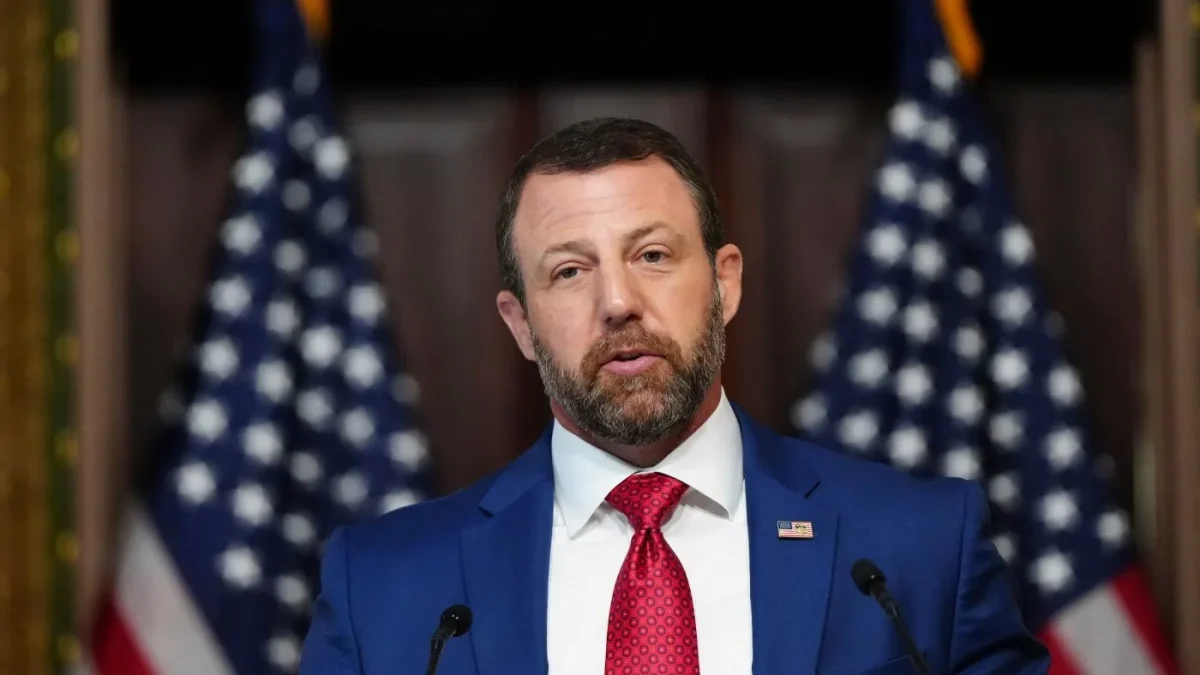
Table of Contents
Mullin defends immigration enforcement after Salazar criticizes ICE arrests
Provpnadvice.com – Homeland Security Secretary Markwayne Mullin defended the Trump administration’s immigration enforcement approach Friday after Rep. Maria Elvira Salazar, a Florida Republican endorsed by President Trump, criticized ICE arrests involving people without criminal records.
Salazar’s criticism appeared in a campaign advertisement for her reelection effort in South Florida, where she represents a majority-Hispanic district. The ad marks a significant public disagreement between the congresswoman and the president on immigration policy, an issue that has remained central to Trump’s political agenda.
“Mr. President, some of your immigration enforcement efforts have gone too far,”
Salazar says in the advertisement, which is scheduled to air on television and online in South Florida.
“In July, 50% of the 50,000 people that were detained had no criminal record,”
she adds.
“The same Hispanics who helped you get to the White House in 2024 feel betrayed today.”
Dispute over who ICE detains
During an interview, CNN’s Dana Bush asked Mullin about Salazar’s remarks and the concern raised by an elected official whose district has a large Hispanic population. Mullin said the Department of Homeland Security is carrying out immigration laws enacted by Congress rather than selectively deciding which rules to apply.
“We don’t pick and choose which laws we enforce. We enforce the immigration policy that Congress passed and obligated Department of Homeland Security to enforce,”
Mullin said.
The secretary also rejected the idea that the White House had imposed numerical arrest goals on DHS. He said there had never been a discussion with the White House about a target for immigration arrests.
His comments addressed a broader debate over enforcement priorities. Immigration authorities frequently describe people with serious criminal histories as their highest priority. Mullin said ICE does focus on those cases, but agents may also arrest other people who are in the country illegally when they encounter them during enforcement actions.
That distinction is central to the disagreement. Critics of wider ICE operations argue that an enforcement strategy should concentrate on people convicted of serious offenses. Supporters of the administration’s position maintain that immigration law applies regardless of whether someone has a separate criminal conviction.
July detention figures become a political flashpoint
Bash raised DHS figures obtained through a Freedom of Information Act request that showed roughly half of the approximately 50,000 people detained in July did not have criminal records. Salazar cited the same figure in her ad.
Mullin challenged the way that category was described. In his view, entering the country illegally itself constitutes breaking the law, meaning those detainees should not be characterized as having no criminal record in the broader sense.
“I will say that’s actually not true,”
he said before explaining his argument.
“When you broke the law and you came into this country illegally, you chose to become a criminal at that point, regardless,”
Mullin said.
The exchange highlights the different meanings that can be attached to the phrase “criminal record.” In the detention data cited by Salazar, the term refers to whether a person had a recorded criminal history beyond their immigration status. Mullin instead emphasized the legal consequences of unlawful entry or presence under immigration law.
For voters, the debate extends beyond terminology. It concerns how federal agencies should deploy enforcement resources, whether immigration violations should lead to detention when no other alleged crimes are involved, and how those choices affect immigrant communities and mixed-status families.
Salazar’s message to South Florida voters
Salazar’s ad places her in a politically sensitive position. She is a Republican who has received Trump’s endorsement, while also publicly warning that elements of his enforcement policy may be alienating Hispanic voters who supported him in 2024.
Her appeal does not reject immigration enforcement entirely. Instead, it argues that the administration’s current approach has crossed a line by detaining large numbers of people without prior criminal records. By making that case directly to Trump, Salazar is signaling that immigration policy can create divisions even within the president’s own party.
Mullin’s response makes clear that the administration sees little room for such a distinction when agents encounter people it believes are violating immigration law. The administration’s position is that DHS has a duty to enforce the laws Congress has established, while Salazar’s advertisement argues that the practical effect of those operations has generated frustration among constituents.
As her reelection campaign proceeds, the disagreement is likely to keep attention on the balance between strict enforcement and the political consequences of detaining people who have no separate criminal history. The July figures, the White House’s role in shaping enforcement priorities, and the definition of criminality in immigration cases will remain important parts of that conversation.
Related Reading
Frequently Asked Questions
What is Mullin responds to Salazar s ad attacking?
Mullin responds to Salazar s ad attacking is the main topic of this guide. The article explains the context, practical details, and next steps readers should understand.
Why does Mullin responds to Salazar s ad attacking matter?
Mullin responds to Salazar s ad attacking matters because readers are looking for a useful answer, not just a short summary. Good content should match search intent and help them decide what to do next.