Peter Navarro says Fed’s rate raise is ‘a bad decision’

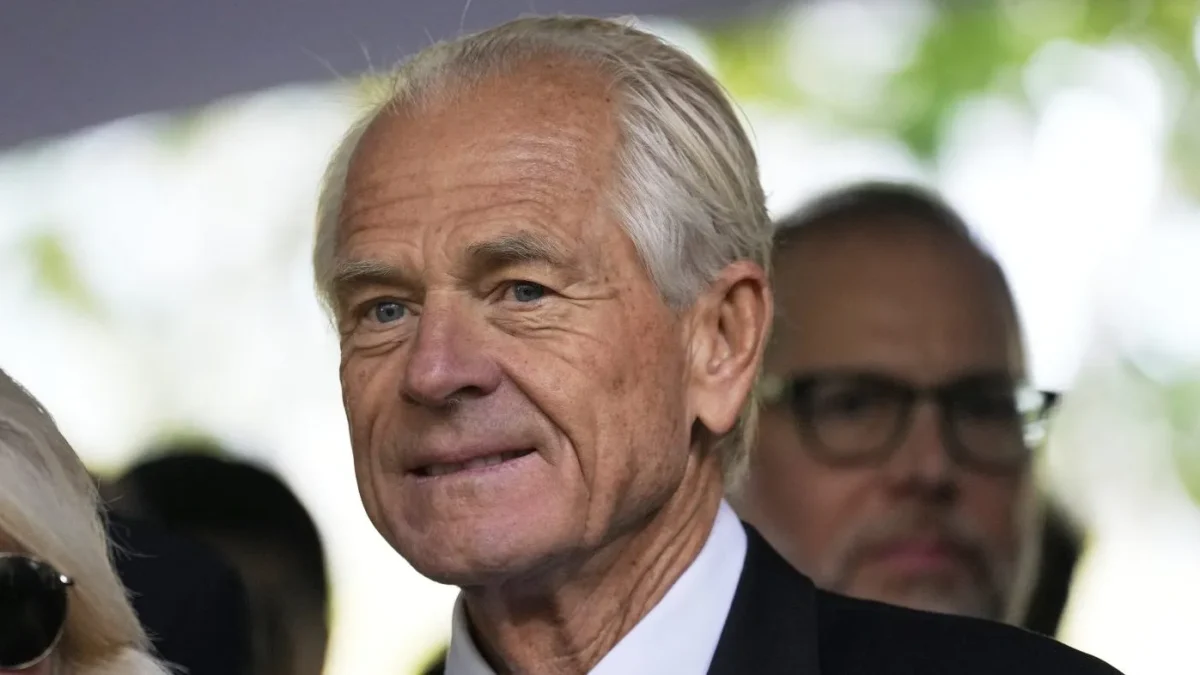
Table of Contents
Navarro condemns Federal Reserve rate increase ahead of midterms
Provpnadvice.com – White House adviser Peter Navarro sharply criticized the Federal Reserve after policymakers approved their first interest-rate increase in several years, arguing that the move will burden households and slow the economy.
The Federal Open Market Committee, chaired by Federal Reserve Chair Kevin Warsh, voted unanimously to lift the benchmark federal funds rate to a range of 3.75 percent to 4 percent. Warsh said the decision was intended to help bring inflation back toward the central bank’s 2 percent goal more quickly.
“I didn’t think Kevin Warsh was the right guy,” Navarro said. “And I was certainly in the minority there. But that’s a bad decision. And if they raise rates like five days before the election, you know it’s political. Shame on them.”
Navarro made the comments during an appearance with Blake Burman on “The Hill.” He said Warsh had previously told him that he would not raise interest rates, while also accusing the Fed of having become politicized during the tenure of Warsh’s predecessor, Jerome Powell.
Why the rate decision matters
The Federal Reserve uses interest rates as one of its primary tools for controlling inflation. Raising rates generally makes borrowing more expensive for consumers and businesses, which can reduce demand across the economy. The intended effect is to ease price pressures, though higher borrowing costs can also affect spending, investment and lending.
For households, the effects may be most visible in areas tied to credit. Mortgage rates, credit-card costs, auto loans and some business financing can be influenced by changes in the Fed’s benchmark rate. The exact impact varies by lender and by the type of loan, but the broader purpose of tighter monetary policy is to cool economic activity when inflation remains above the central bank’s target.
Navarro framed the decision as harmful to ordinary Americans, saying it would leave people with less money to spend and could contribute to a weaker economy.
“But what I can tell you is two things,” he continued. “One, it was a very bad decision by the Fed. Two, we have trade deficits with a whole bunch of people that cheat us, and we are cracking down on that. And that’s good for America.”
His criticism arrived as the country approaches the November midterm elections. Navarro argued that a rate increase so close to Election Day would carry political consequences, although the Fed has long maintained that its monetary-policy decisions are made independently of elected officials and are based on its employment and price-stability objectives.
Trump calls for lower rates
President Trump responded forcefully after the Federal Reserve announced its decision. In a Truth Social post published roughly two hours later, Trump demanded that the central bank reduce rates to 1 percent and connected his argument to the nation’s trade deficits.
“If we stopped Trading with every country that we have a Deficit with, which is most of them, we would make, at least, 1.5 Trillion Dollars a year,” Trump wrote. “The word ‘Deficit’ is nothing more than a fancy word for LOSS. We are ‘carrying’ almost every country in the World, and that cannot go on any longer. LOWER THE INTEREST RATES FOR THE UNITED STATES OF AMERICA, AND FAST!”
The president’s remarks followed a Sept. 4 Truth Social post in which he threatened to halt trade with countries where the United States has a deficit. When asked whether Trump would carry out that threat, Navarro did not give a direct answer. Instead, he said the president was “for himself” before returning to the administration’s approach to trade enforcement.
Trade deficits occur when the value of goods and services a country imports exceeds the value it exports. They can reflect a broad mix of factors, including consumer demand, currency values, investment flows, supply chains and the kinds of products traded between nations. Navarro’s comments emphasized the administration’s view that some trading partners use unfair practices and that the United States should respond more aggressively.
Inflation remains central to the debate
Financial markets had broadly expected the quarter-point increase. The decision came as inflation remained above the Federal Reserve’s 2 percent objective amid the war with Iran. For policymakers, that persistent gap between current inflation and the target provides the rationale for keeping monetary conditions restrictive.
The disagreement between Navarro and the Fed underscores a familiar tension in economic policy. Administration officials often focus on growth, wages, consumer spending and the near-term costs of higher interest rates. Central bankers, meanwhile, weigh those concerns against the risk that inflation could remain elevated for longer if demand is not restrained.
Navarro also pointed to what he described as a manufacturing boom in the United States. He said working-class Americans would be better off under Trump than they would be if Democrats gain control of either chamber of Congress in the midterm elections.
That political argument now sits alongside a practical question for consumers and businesses: whether the Fed’s action will help reduce inflation without causing a sharper slowdown. The central bank’s stated aim is a timely return to its 2 percent inflation target, while Navarro’s objections focus on the immediate cost of tighter financial conditions.
As the election nears, the rate decision is likely to remain part of a larger debate over inflation, trade policy, manufacturing, household budgets and the direction of the U.S. economy.
Related Reading
Frequently Asked Questions
What is Peter Navarro says Fed s rate?
Peter Navarro says Fed s rate is the main topic of this guide. The article explains the context, practical details, and next steps readers should understand.
Why does Peter Navarro says Fed s rate matter?
Peter Navarro says Fed s rate matters because readers are looking for a useful answer, not just a short summary. Good content should match search intent and help them decide what to do next.