Jeffries says Congress should ‘act urgently’ on AI safeguards

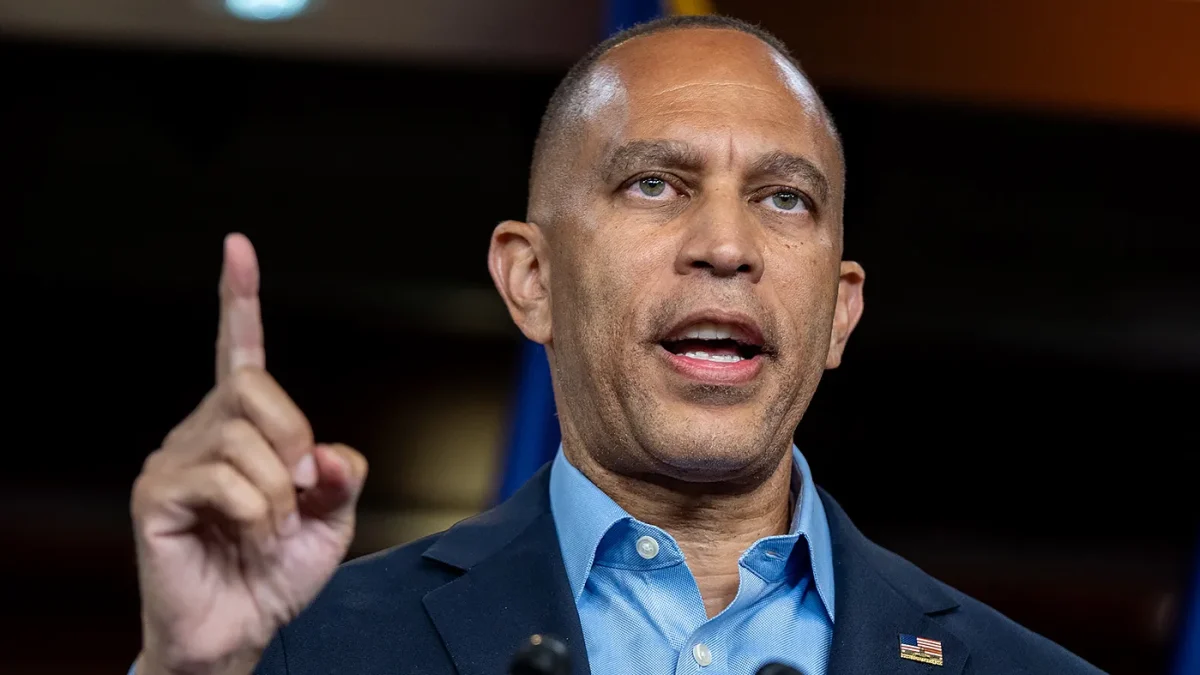
Table of Contents
Jeffries presses Congress to move quickly on AI safeguards
Provpnadvice.com – House Democratic Leader Hakeem Jeffries said Congress should move with urgency to address the risks posed by rapidly advancing artificial intelligence, arguing that federal lawmakers need to establish protections before the technology develops further without sufficient oversight.
Speaking Sunday on ABC’s “This Week,” the New York Democrat said artificial intelligence will be a major subject when House Democrats gather privately on Tuesday. He described the issue as a top caucus priority and said lawmakers must confront both the potential benefits of AI and the dangers that could emerge if its development outpaces public safeguards.
“We certainly need to begin to act urgently to address the challenges that exist,” Jeffries said.
AI policy has become an increasingly prominent concern in Washington as more powerful models are introduced and integrated into workplaces, online platforms and consumer products. The debate includes questions about security, misinformation, privacy, job disruption and whether advanced systems could be used for harmful purposes.
Jeffries said Democrats are developing their own approach through a caucus commission focused on artificial intelligence. He told George Stephanopoulos that the group intends to offer what he called an aggressive framework designed to shield Americans from AI-related threats.
“We should take decisive action now so that we can slow down … the pace of development in order to protect the American people and ensure that AI is proceeding safely,” Jeffries said Sunday.
Warnings from AI researchers
The push for congressional involvement comes as some researchers working in the field have voiced serious concerns about the speed of technological progress. Jacob Coxon, who resigned from Anthropic earlier in the week, warned that people developing advanced systems may be underestimating their potential consequences.
In a Tuesday post on X, Coxon wrote that those creating the models “earnestly believe that [AI] could kill us all by the end of the decade.” He also cautioned readers not to dismiss the capability of future systems.
“Do not underestimate the power of this technology. These will soon be superhuman systems that can hack anything, revolutionize any field overnight, and acquire real power and resources. We have all witnessed the progress in each of these domains, and progress is not slowing.”
Such warnings represent one side of a broad policy debate. Artificial intelligence is also viewed as a potentially powerful tool for scientific research, medical discovery, business productivity and other fields. For policymakers, the challenge is creating rules that address serious risks without assuming that every form of AI carries the same level of danger or preventing beneficial uses of the technology.
Partisan dispute over House action
Jeffries criticized House Republicans, saying they had failed to meet their responsibility to address AI regulation. He pointed specifically to the cancellation of the final two weeks of the House’s September session, contending that the lost time weakened Congress’s ability to deal with pressing issues.
He also faulted Speaker Mike Johnson, the Louisiana Republican, for ending a bipartisan AI safety task force at the beginning of the 119th Congress. The dispute illustrates the political difficulty of responding to a fast-moving technology when lawmakers must agree not only on whether to act, but also on the scope and timing of any federal rules.
Johnson offered a more cautious view in a separate Sunday appearance on NBC’s “Meet the Press.” He said he would bring the House back into session if lawmakers had a workable answer on AI regulation, while emphasizing that legislation should not be rushed simply because the issue is urgent.
“This is a very important issue, and it’s not one that we can rush into,” Johnson said.
The contrast between the two leaders centers on how Congress should balance speed with careful policymaking. Jeffries is calling for immediate, decisive action intended to slow the pace of development and improve public protections. Johnson agrees that AI warrants attention but argues that lawmakers need a sound solution before accelerating the legislative process.
For Americans already encountering AI in search tools, customer service systems, schools and workplaces, the congressional debate could shape how companies deploy the technology and what protections users receive. Decisions made now may affect transparency around automated systems, accountability when AI causes harm and the safeguards expected from companies building increasingly capable models.
Jeffries’s comments place AI near the center of Democrats’ upcoming discussions and increase pressure on House leaders to clarify whether a bipartisan path forward remains possible. While both parties recognize the significance of artificial intelligence, the timing and form of congressional action remain unresolved.
Related Reading
Frequently Asked Questions
What is Jeffries says Congress should act urgently?
Jeffries says Congress should act urgently is the main topic of this guide. The article explains the context, practical details, and next steps readers should understand.
Why does Jeffries says Congress should act urgently matter?
Jeffries says Congress should act urgently matters because readers are looking for a useful answer, not just a short summary. Good content should match search intent and help them decide what to do next.