NASA chief Jared Isaacman outlines first steps for ‘moon base’

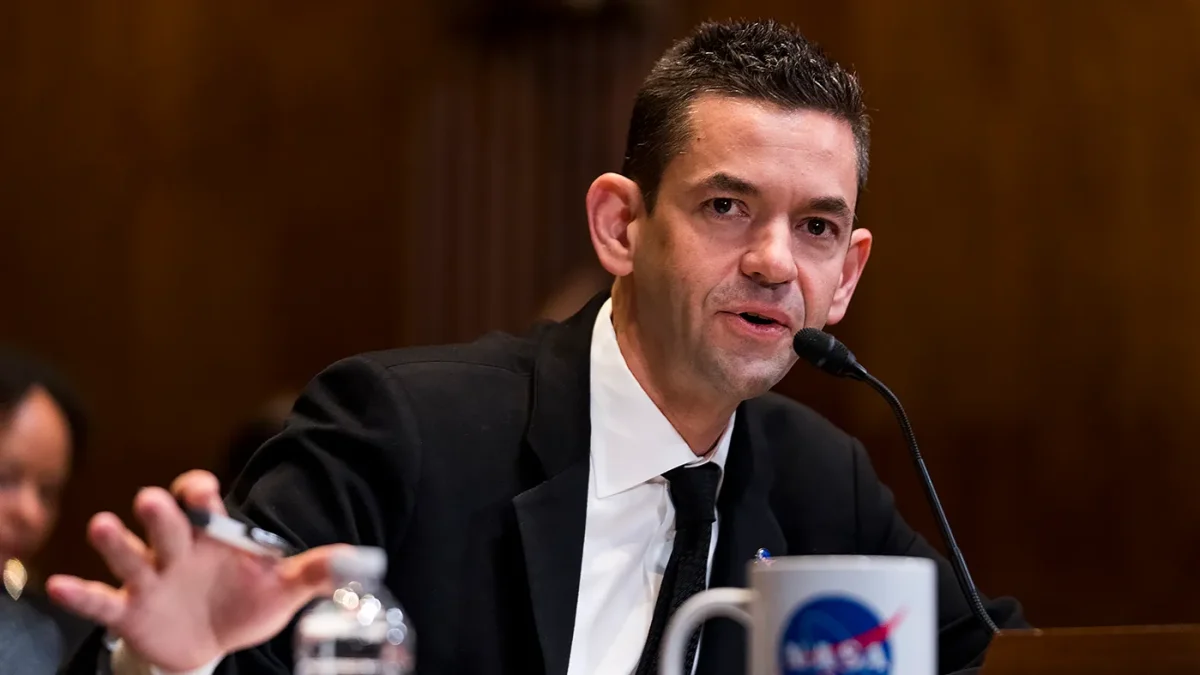
Table of Contents
NASA Administrator Jared Isaacman Details Roadmap for Permanent Lunar Infrastructure
Provpnadvice.com – The lunar south pole is about to become the most contested real estate in the solar system. NASA Administrator Jared Isaacman, who assumed his role in December 2025, has laid out a concrete timeline for constructing what he calls a “moon base” — a permanent American foothold on or around the Moon that Congress has explicitly mandated. The plan envisions a steady drumbeat of robotic deliveries beginning in earnest by 2027, followed by crewed missions that would bring astronauts back to the lunar surface for the first time in more than fifty years.
A Congressional Mandate and a Tight Timeline
Isaacman’s moon base initiative is not merely aspirational. Congress directed the agency to establish a lasting presence either in lunar orbit or on the Moon’s surface, and the administrator has framed his schedule around that obligation. He originally targeted component launches within the current calendar year, but an explosion aboard Blue Origin’s New Glenn rocket disrupted the delivery pipeline and pushed back certain surface-landing operations.
Isaacman downplayed the disruption in a recent interview, insisting the overall architecture of the program remains intact.
“I don’t really consider it much of a setback. We’ve always been looking toward 2027. That’s where you get in a rhythm, that’s when you get into that monthly cadence of putting landers and rovers on the moon.”
The reference to a “monthly cadence” signals an ambition far beyond the sporadic, mission-by-mission approach that characterized earlier lunar programs. Rather than launching a single lander every few years, the agency envisions a continuous logistics stream — landers, rovers, and scientific payloads arriving on a predictable schedule. That operational tempo is what separates a temporary expedition from a permanent installation.
Robotic Precursors Before the Astronauts Arrive
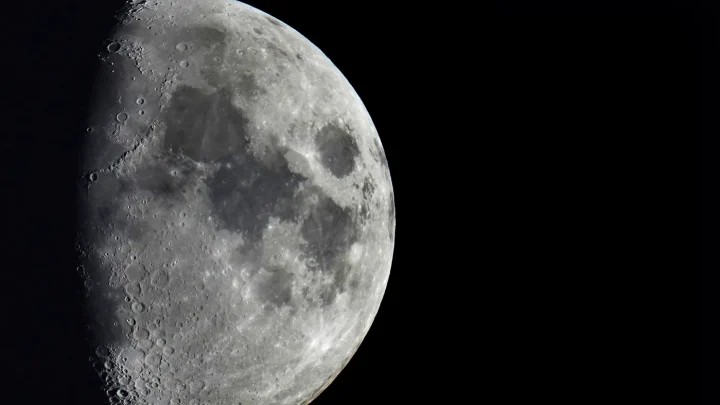
The first wave of moon base missions will focus on the lunar south pole, a region of scientific interest because permanently shadowed craters there are thought to harbor water ice — a resource critical for life support, radiation shielding, and potentially propellant production. Isaacman said NASA intends to deploy rovers, autonomous drones, and experimental hardware to that terrain well before any crewed landing.
The sequencing matters. By the time Artemis IV carries astronauts to the surface, the administrator envisions a working infrastructure already in place.
“By Artemis IV, when our astronauts land on the surface of the moon, they’re already going to have some of the infrastructure and rovers there waiting for them.”
Artemis IV is currently targeted for 2028. If that date holds, it would mark the first crewed return to the Moon since Apollo 17 in December 1972 — a gap of more than half a century. The robotic precursors, therefore, are not optional extras; they are the operational backbone that makes a sustained crewed presence feasible rather than a brief photo-opportunity landing.
The Broader Lunar Race
Isaacman arrived at NASA amid an intensifying competition with China, which has its own lunar exploration program and has already demonstrated robotic landings near the south pole. The U.S. push to re-establish a human presence is explicitly framed, within the agency, as a race to secure a strategic and scientific position before rivals entrench themselves. A permanent base — with power, communications, and mobility assets already deployed — would give American astronauts a dramatically different operational environment than the short-duration stays of the Apollo era.
The administrator also positioned the lunar effort as a proving ground for deeper-space ambitions. Living and working far from Earth’s immediate rescue capability, he argued, will teach NASA and its partners the engineering and operational lessons necessary for eventual missions to Mars and beyond.
Commercial Spaceports and a Growing Industrial Corridor
Isaacman emphasized that the moon base program will not be built by NASA alone. Private companies are already embedding themselves into the launch and logistics chain. SpaceX, for instance, has established what it terms “space ports” in Texas and Louisiana, creating dedicated launch-and-recovery infrastructure along the Gulf Coast. The administrator noted additional growth in the space industry across Alabama, Mississippi, and Florida, suggesting a broadening geographic footprint for the sector.
He drew an explicit historical parallel to explain why those locations matter.
“This is, I think, very analogous to the first stops on the rail line that led to some of our biggest cities or some of the first airports and seaports — a whole community and economy built around it. I think we’re going to see the same with our space ports.”
The analogy is not merely rhetorical. Rail depots, early airports, and river ports historically catalyzed entire metropolitan economies. If launch sites and associated manufacturing clusters follow that pattern, the moon base program could generate sustained industrial activity well beyond the agency’s own budget line items — a point Isaacman made while noting that extra-terrestrial investment by both government and private firms is already contributing to economic growth across multiple states.
What Comes Next
Isaacman confirmed that NASA will launch several moon base missions next year, each adding capability to the growing inventory of surface assets. The stated goal is to reach a steady operational rhythm by 2027, then layer crewed missions on top of that foundation with Artemis IV in 2028. The Blue Origin New Glenn explosion has introduced a variable into the near-term schedule, but the administrator’s public posture is that the delay is absorbed within margins already built into the plan. Whether that confidence holds will depend on the pace of New Glenn’s return to flight and on NASA’s ability to route deliveries through alternative launch providers in the interim.
What is clear from the administrator’s remarks is that the agency no longer treats lunar exploration as a series of discrete, decade-spaced expeditions. The language of “cadence,” “infrastructure waiting,” and permanent presence marks a shift toward continuous habitation — a fundamentally different engineering, logistical, and political undertaking, one that will test both American industrial capacity and the agency’s ability to coordinate with commercial partners at a scale never previously attempted.
Related Reading
Frequently Asked Questions
What is NASA chief Jared Isaacman outlines first?
NASA chief Jared Isaacman outlines first is the main topic of this guide. The article explains the context, practical details, and next steps readers should understand.
Why does NASA chief Jared Isaacman outlines first matter?
NASA chief Jared Isaacman outlines first matters because readers are looking for a useful answer, not just a short summary. Good content should match search intent and help them decide what to do next.