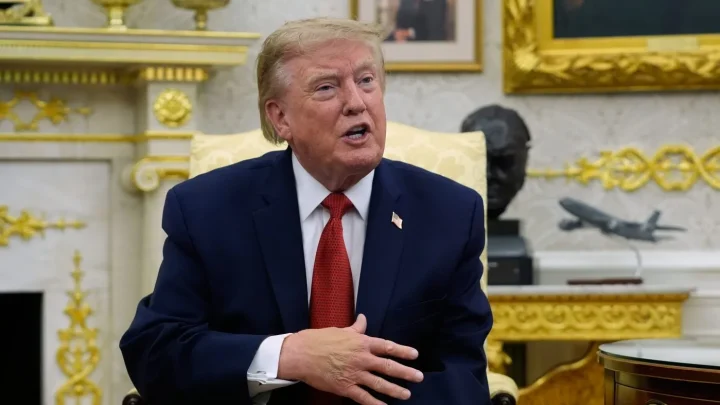
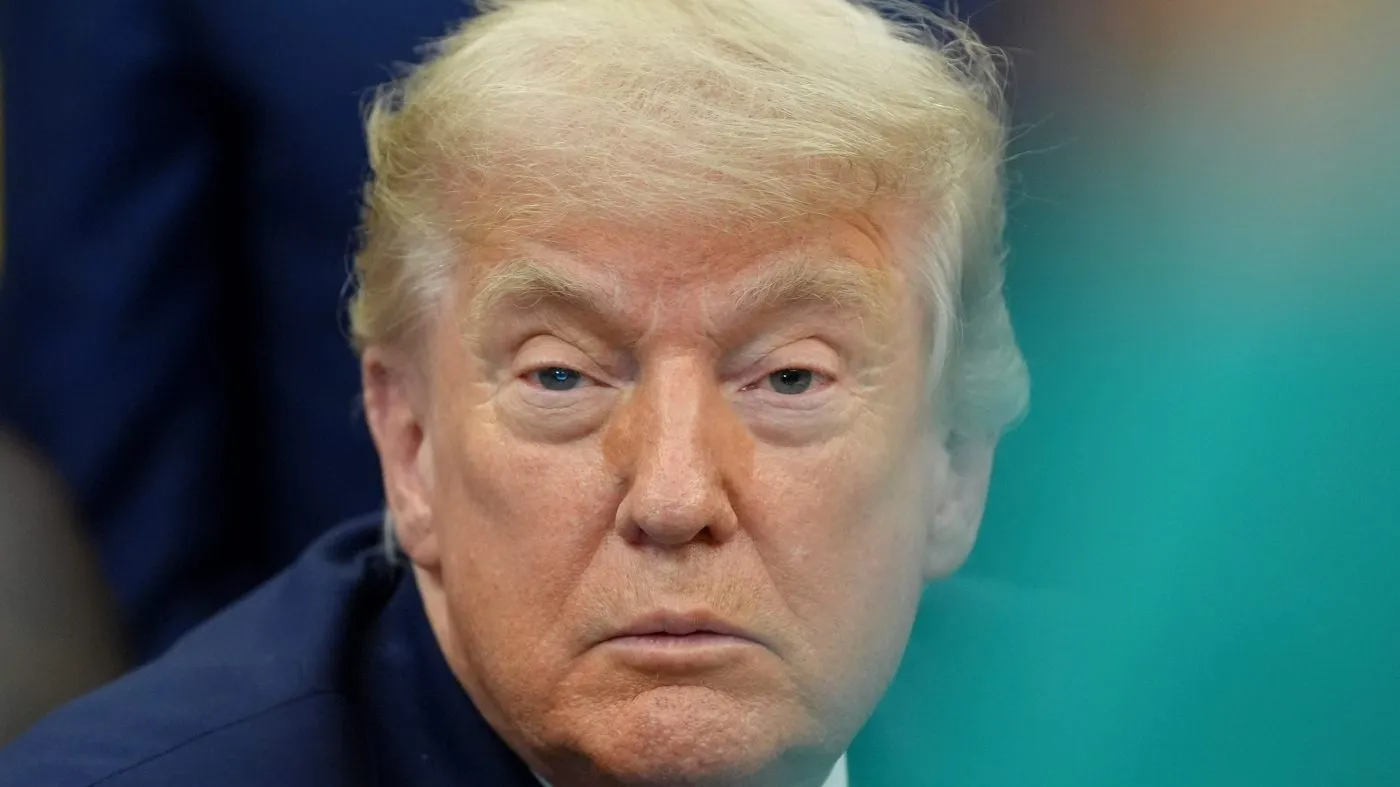
Trump: ‘I don’t wear a wig’

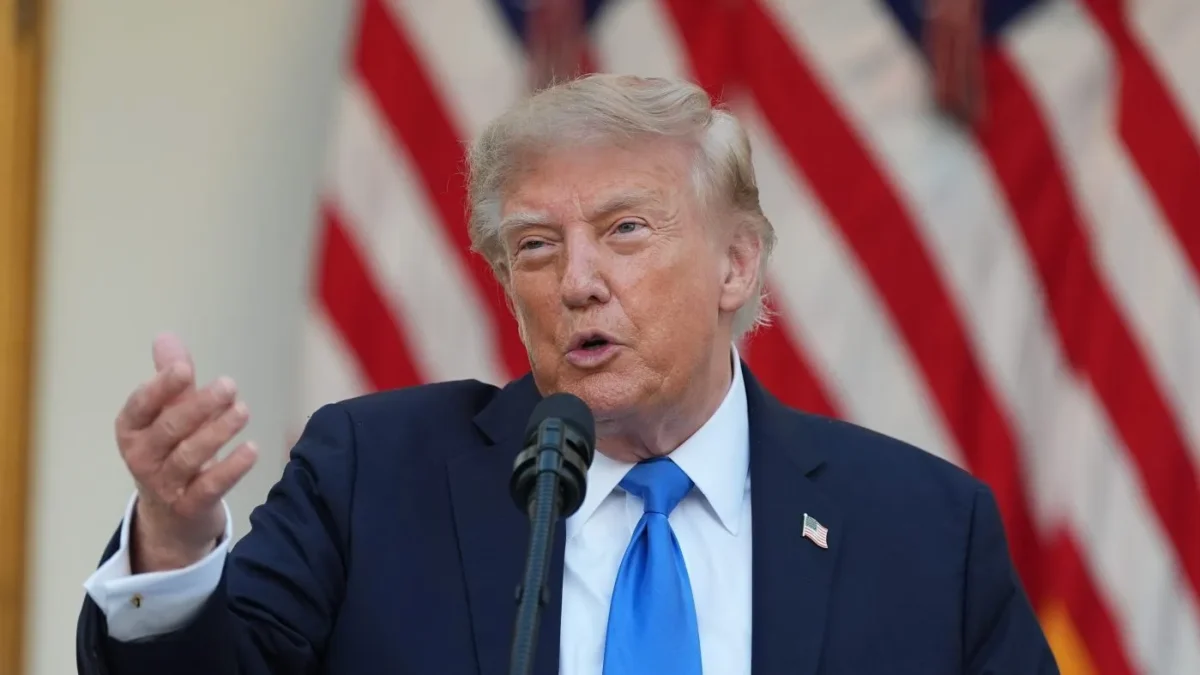
Table of Contents
Trump Takes to the Podium to Settle a Decade-Old Hair Question
Provpnadvice.com – Trump – The question of whether Donald Trump wears a wig has circulated through American political culture for well over a decade, but the president decided Wednesday that the matter deserved a definitive, in-person answer — delivered not from a press briefing room, but from the White House Rose Garden during a dinner event. His response was emphatic, personal, and anchored to a specific memory of wind-soaked chaos at a 2024 campaign stop.
A Windy Night in Ohio Becomes the Evidence
Speaking to guests at the Rose Garden dinner, Trump recounted an episode from a campaign rally he attended in 2024 supporting Senator Bernie Moreno (R-Ohio). The event took place outdoors on what witnesses described as an airfield in Vandalia, Ohio, where gusts strong enough to destabilize stage equipment turned the evening into something closer to a weather event than a political gathering.
“I went up to the speaker, and it was blowing so hard,” Trump recalled. “You know, for years, I had to suffer with people saying, ‘He wears a wig.'”
He described the conditions as the worst outdoor weather he had encountered in his public career, comparing them only to a hurricane that once struck Florida. Teleprompters mounted on the stage were reportedly blown off their positions as he approached the podium, underscoring just how violent the gusts had become.
“I don’t wear a wig. But that night, they found out I did not wear a wig because if you did, it was not going to be on your head very long,” he continued.
The logic was straightforward: in winds powerful enough to rip equipment from its mounts, a hairpiece would have been stripped away within seconds. The fact that his hair remained intact, he argued, settled the question once and for all.
The O’Donnell Jibe That Sparked the Latest Round
The renewed public attention on the topic traces in part to a remark made in August by comedian Rosie O’Donnell, who has maintained a long-running public feud with Trump spanning multiple election cycles. While filling in for Jimmy Kimmel on ABC’s late-night program “Jimmy Kimmel Live!” for a third consecutive night, O’Donnell directed a pointed comment at the president’s appearance.
“You’ve got to realize it’s time to hang up your wig and let Natalie tuck you in,” she told the audience.
She followed the jab with a short musical number performed while hosting, one of whose lines read, “Your wig’s a mess.” The segment drew immediate social-media attention and reignited a conversation that has periodically resurfaced since Trump first entered national politics.
A Long History of Hair Skepticism
The wig question is not new to Trump’s political life. During his first presidential campaign in 2015, he addressed the topic directly at a rally, insisting with visible frustration that his hair was entirely his own.
“I don’t wear a toupee; it’s my hair, I swear,” he told the crowd that year.
To reinforce the point, he invited a woman from the audience onto the stage to run her fingers through his hair. She confirmed what he had just stated, and the moment became a small but memorable footnote in campaign lore. Since then, the topic has resurfaced with varying frequency — in comedy sets, late-night monologues, social-media threads, and occasional news segments — each time drawing a similar, exasperated denial from the president or his aides.
Political commentators have noted that hair, particularly for male candidates, occupies an unusual space in American electoral culture. It is simultaneously treated as trivial and scrutinized with unusual intensity, becoming a proxy for questions about authenticity, aging, and image management. Trump’s hair, in particular, has become a recognizable visual signature — one that supporters celebrate and opponents mock with equal regularity.
Why the Rose Garden Setting Matters
Choosing a formal White House dinner as the venue for his wig rebuttal was itself a statement. Rather than dismissing the question through a spokesperson or a social-media post, Trump elevated the topic to the level of a presidential address, complete with anecdote, physical description, and a pointed moral. The Rose Garden, with its manicured hedges and soft evening lighting, offered a controlled backdrop that contrasted sharply with the chaotic airfield he was describing — a visual reminder that the president now commands the most secure stage in the country, not just any windy rally platform.
The episode also illustrated a broader pattern in Trump’s communication style: converting a perceived slight or joke into a narrative of personal vindication, delivered with specificity and theatrical timing. By anchoring his denial to a concrete sensory experience — the feel of wind, the sight of equipment flying offstage — he transformed an abstract rumor into a verifiable physical scenario, at least in his telling.
Whether the wig debate will finally recede after Wednesday’s Rose Garden intervention remains uncertain. Given the durability of the topic in comedy writing and internet culture, the question is likely to resurface in some form before the next election cycle. But for one evening, at least, the president had his answer on the record, delivered under the chandeliers of the White House rather than the gusts of an Ohio airfield.
Related Reading
Frequently Asked Questions
What is Trump?
Trump is the main topic of this guide. The article explains the context, practical details, and next steps readers should understand.
Why does Trump matter?
Trump matters because readers are looking for a useful answer, not just a short summary. Good content should match search intent and help them decide what to do next.