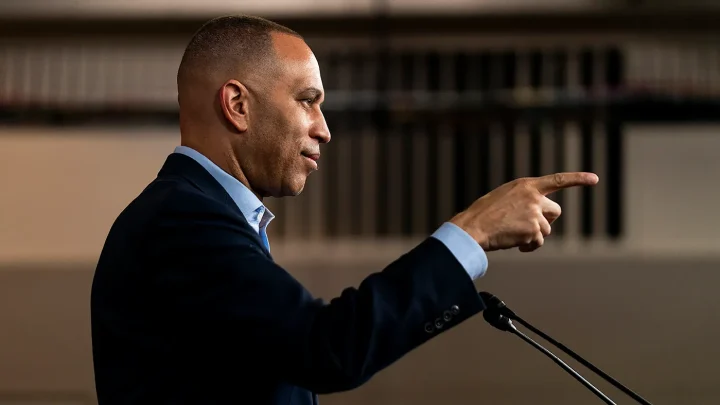
Billionaire Leon Black challenges House subpoena for Epstein testimony


Table of Contents
Leon Black Takes Epstein Subpoena Fight to Federal Court as Congressional Showdown Intensifies
Provpnadvice.com – The congressional probe into Jeffrey Epstein’s decades-long network of influence and alleged crimes has entered a new legal phase. Leon Black, the billionaire private equity investor who co-founded Apollo Global Management, filed a federal lawsuit on Thursday seeking to block subpoenas issued by the House Oversight and Government Reform Committee. The committee had demanded both his sworn testimony and the production of documents tied to his long financial relationship with the late convicted sex offender. Black’s deposition was originally scheduled for that same day, but the legal filing effectively removed him from the witness chair before questioning could begin.
Black has consistently maintained that he had no awareness of Epstein’s criminal conduct. His attorneys, however, went further in the complaint, arguing that the committee overstepped its constitutional authority in issuing the subpoenas and that the demands reach into private, confidential information that Congress has no lawful power to compel. The suit was lodged in federal court in Washington, D.C., and had not yet been assigned to a judge as of Thursday.
The Privacy Argument at the Heart of the Complaint
A central pillar of Black’s legal challenge concerns third-party privacy. The complaint contends that compliance would force the committee to expose individuals who never publicly connected themselves to Epstein, who negotiated confidentiality agreements, and who lack the resources to defend their own privacy before a congressional panel.
“Additionally, the subpoenas would also expose women who value their privacy, who have no known or public connection to Epstein, who bargained for confidentiality and have refused to release it, and who have no ability to protect themselves and their privacy before the Committee.”
The filing also frames the situation as a forced dilemma, describing what it calls a “Hobson’s choice” between surrendering confidential material the committee allegedly cannot lawfully demand, or maintaining objections and facing contempt proceedings and federal court enforcement of what Black’s team characterizes as an overbroad subpoena.
Comer: An Empty Chair Will Do
Rep. James Comer (R-Ky.), who chairs the Oversight and Government Reform Committee, responded swiftly. He confirmed that Thursday’s deposition session would proceed regardless of Black’s absence, with an empty chair occupying the witness stand. In a written statement, Comer expressed frustration at what he characterized as an avoidance tactic.
“It’s a shame Leon Black is hiding behind litigation rather than provide answers to the American people.”
Comer framed the broader investigation as an examination of how federal agencies failed Epstein’s survivors for years and how the financier cultivated relationships with powerful figures to deflect scrutiny. He emphasized that Black’s role as a fee-paying client bound by multiple nondisclosure agreements made his testimony indispensable to the committee’s work. The Kentucky Republican added that he would consult with fellow panel members regarding next steps once the deposition concluded.
Garcia Pushes for Contempt Referral
On the Democratic side, Rep. Robert Garcia (Calif.), the committee’s ranking member, urged colleagues to move immediately to hold Black in contempt of Congress. Under the U.S. Code, a successful contempt finding allows the House to refer a witness to the Department of Justice for criminal prosecution, carrying a potential sentence of up to twelve months in prison. Garcia’s statement was pointed and detailed.
“By refusing to testify today, Leon Black is now defying two Congressional subpoenas. Black gave Jeffrey Epstein over $180 million over six years. He funded Epstein’s abuse and trafficking of women. Multiple women have also accused Black of sexual assault. His connections to Epstein and his unwillingness to cooperate are unacceptable. We must hold him in contempt immediately.”
Background: A Relationship Measured in Hundreds of Millions
Black and Epstein maintained a financial relationship spanning roughly six years, during which Black transferred more than $180 million to Epstein. Black has described those payments as compensation for tax planning, estate planning, and other advisory services. He has denied any knowledge of Epstein’s abuse of women and has stated that he complied with several earlier document requests from the committee, while contesting others as overbroad in scope.
The tension between the two men and the committee escalated visibly in June, when Black voluntarily sat down for an interview with lawmakers. He departed mid-questioning, and the committee issued its subpoenas that same day. The episode set the stage for the current standoff: Black now faces two outstanding subpoenas, one for testimony and one for documents, both of which he is contesting in court.
What Happens Next
The federal court filing introduces a procedural delay that could stretch weeks or months, depending on how quickly a judge is assigned and how the committee responds. If the court sides with Black, the subpoenas may be narrowed or vacated. If the court upholds the committee’s authority, Black’s continued noncompliance would strengthen the case for a contempt referral to the Justice Department. Either outcome will shape the pace of a congressional investigation that has already drawn national attention and that lawmakers say remains focused on accountability for Epstein’s crimes and the institutional failures that allowed them to persist.
For survivors and advocates who have waited years for answers, the legal maneuvering adds another layer of frustration to an investigation already marked by delays, sealed records, and questions about how far the reach of congressional power extends into the private finances of powerful individuals.
Related Reading
Frequently Asked Questions
What is Billionaire Leon Black challenges House subpoena?
Billionaire Leon Black challenges House subpoena is the main topic of this guide. The article explains the context, practical details, and next steps readers should understand.
Why does Billionaire Leon Black challenges House subpoena matter?
Billionaire Leon Black challenges House subpoena matters because readers are looking for a useful answer, not just a short summary. Good content should match search intent and help them decide what to do next.