Maine Republican governor nominee requests ICE at polling places during midterms

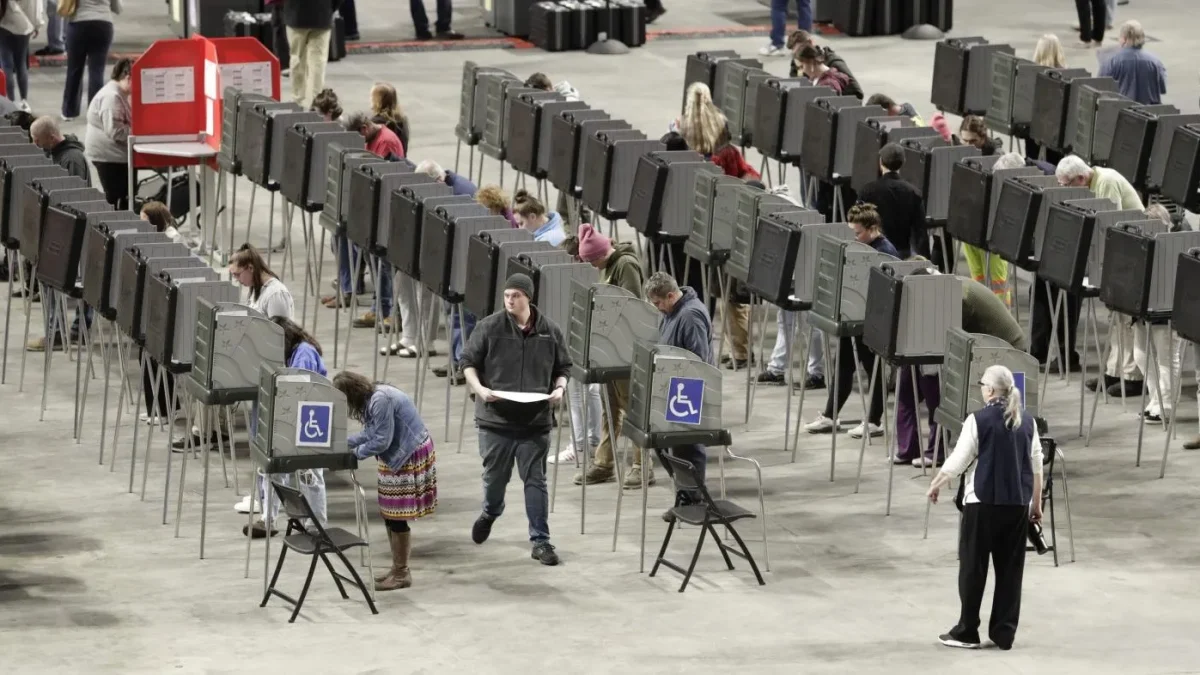
Table of Contents
Maine GOP Governor Candidate Seeks Federal Immigration Agents at Ballot Boxes Ahead of Midterms
Provpnadvice.com – With less than a month separating voters from the November 3 ballot, a fresh flashpoint has emerged in Maine’s governor’s race. Republican nominee Bobby Charles has publicly called for Immigration and Customs Enforcement officers and U.S. Marshals to be stationed at polling locations across the state, framing the request as a necessary safeguard against what he describes as potential irregularities at the ballot box.
The remarks surfaced in audio recordings captured at a Thursday gathering hosted by Maine Young Republicans. Speaking to the crowd, Charles outlined his plan to approach Tom Homan, the White House border czar, roughly three to four weeks before Election Day.
“I’m going to ask Tom, I’m going to actually — three or four weeks before the election, maybe three — I’m going to make an appeal for ICE and Marshals to be at our voting booths,” Charles said.
He went further, posing a rhetorical question to the audience about whether undocumented residents who allegedly receive payments would welcome the sight of federal immigration agents hovering near their ballots. No verified documentation exists showing that migrants without legal status have been compensated to cast votes, and federal and state law already prohibit noncitizens from participating in elections at either level of government.
Campaign Framing: A “Sanctuary State” Problem
Dale Crafts Jr., who manages Charles’s campaign, characterized the request as part of a broader legal strategy. In a written statement, Crafts emphasized that his candidate intends to exhaust every lawful avenue available to protect the integrity of Maine’s elections.
“Bobby will do everything legally possible to prevent illegal voting in Maine, to make sure that Maine elections are decided by legal Maine voters,” Crafts said.
He expanded on the point, noting that because Maine now operates as a sanctuary state, Charles would seek every form of legal assistance from the Justice Department and the Department of Homeland Security to ensure no irregular voting occurs.
Who Is Bobby Charles?
Charles is a veteran of two Republican administrations. He served in the Reagan White House and later held a position at the State Department during the George W. Bush years. In June, he edged out seven fellow Republicans to secure the party’s gubernatorial nomination. His general-election opponent is Hannah Pingree, a Democrat who previously served as Maine House Speaker and is the daughter of longtime Representative Chellie Pingree (D-Maine). The Cook Political Report currently classifies the contest as solidly Democratic, reflecting the state’s deep blue lean in recent cycles.
Democratic Response: Intimidation, Not Protection
Devon Murphy-Anderson, executive director of the Maine Democratic Party, reacted sharply. In a public release, he labeled Charles a “MAGA extremist” and called the ICE-at-the-ballot-box proposal both “deeply alarming” and “likely illegal.”
“This is a blatant attempt to intimidate voters and yet another reason Bobby Charles is too extreme for Maine,” Murphy-Anderson wrote.
The criticism lands in a state where in-person early voting opens thirty days before Election Day, meaning polling locations will be active for nearly a month. The prospect of uniformed federal agents present during that extended window has drawn particular scrutiny from local election officials and voter-advocacy groups.
What Washington Has Already Said
The Department of Homeland Security, which oversees both ICE and the U.S. Marshals Service, pointed reporters back to remarks made by Secretary Markwayne Mullin during his March confirmation hearing before the Senate Homeland Security and Governmental Affairs Committee. Mullin stated that ICE personnel would appear at polling places only “if there was a specific threat,” explicitly ruling out deployment for “intimidation” purposes.
“I can’t sit here and guarantee hypothetically what threat might be there or not,” Mullin told Sen. Elissa Slotkin (D-Mich).
He also addressed Sen. Andy Kim (D-N.J.) directly on the question of noncitizen voting, noting that such voting is already prohibited by law and expressing that he did not “understand what the concern is about enforcement of immigration at polling places anyways.”
A DHS spokesperson, reached on Wednesday, directed attention to those hearing transcripts and appended a brief comment: “Elections exist for the American people, not illegal aliens, to choose their leaders.” The White House had not responded to requests for comment on Charles’s specific appeal as of publication.
The Broader Federal Election-Monitoring Landscape
Charles’s request arrives amid an already significant federal presence at American polls. This primary season alone, the Justice Department dispatched more than eighty election monitors to over two hundred polling sites across seven states, acting under authority granted by the Voting Rights Act of 1965. Assistant Attorney General Harmeet Dhillon, who leads DOJ’s Civil Rights Division, told Bloomberg last week that the department intends to deploy a record one thousand monitors for the fall midterms.
President Trump has repeatedly asserted, without presenting substantiating evidence, that immigrants lacking permanent legal status vote in large numbers. Independent analyses suggest such incidents remain rare. For months he has also pressed Republican senators to suspend the filibuster and pass legislation requiring proof of citizenship at voter registration and a photo identification at the ballot — measures that would reshape federal election administration.
Legal Constraints on Armed Federal Presence
Several statutory and constitutional limits bear on Charles’s proposal. Federal law prohibits deploying the military to polling places except in the narrow circumstance of suppressing a domestic armed rebellion. Neither ICE nor the U.S. Marshals Service sits within the Department of Defense, yet the Brennan Center for Justice has argued that sending armed federal agents to vote sites nonetheless violates existing legal prohibitions on federal interference with state-run elections. Whether a candidate’s public appeal can override those constraints — or whether it would require formal interagency coordination and judicial review — remains an open question that Maine’s election officials and both campaigns will likely need to resolve before November.
Related Reading
Frequently Asked Questions
What is Maine Republican governor nominee requests ICE at?
Maine Republican governor nominee requests ICE at is the main topic of this guide. The article explains the context, practical details, and next steps readers should understand.
Why does Maine Republican governor nominee requests ICE at matter?
Maine Republican governor nominee requests ICE at matters because readers are looking for a useful answer, not just a short summary. Good content should match search intent and help them decide what to do next.