Democrats in key House, Senate races sign AI regulation pledge amid data center scrutiny

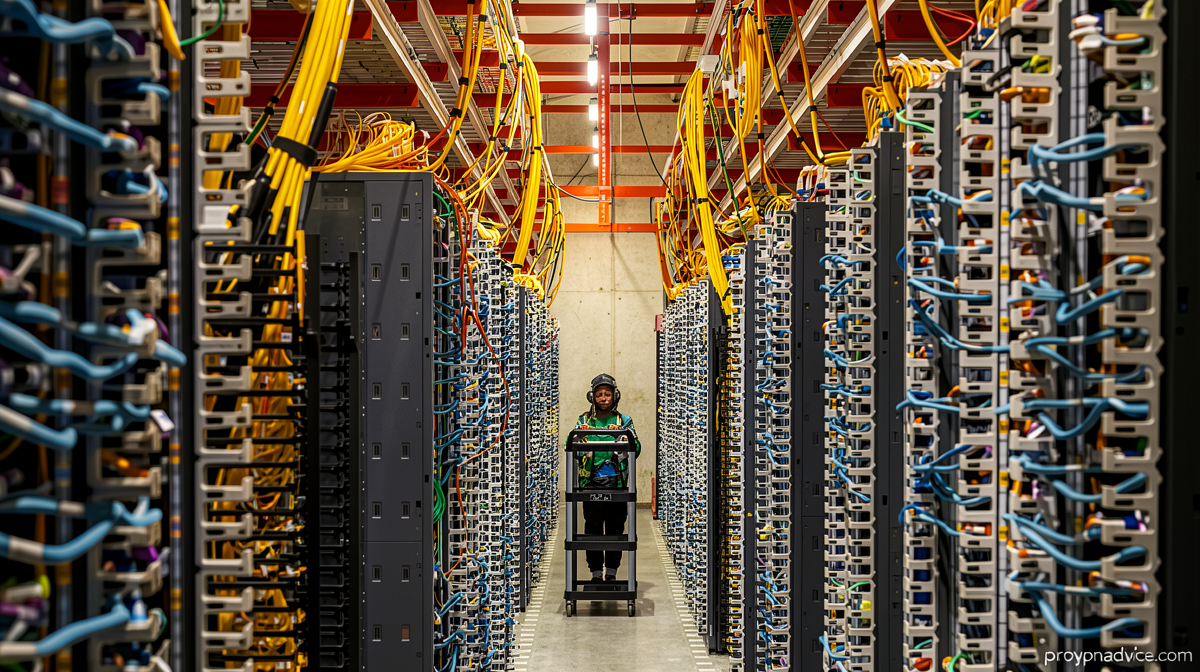
Table of Contents
AI Regulation Pledge Draws 18 Candidates as Data Center Backlash Intensifies
Provpnadvice.com – The pressure to impose meaningful oversight on artificial intelligence has moved from think-tank white papers into the campaign trail. Eighteen candidates running for House seats, Senate seats, and governor’s offices have formally committed to a structured regulatory framework for the AI sector, signaling that congressional and state-level races are increasingly being shaped by questions about how the technology will be governed — and who benefits from its unchecked expansion.
The group consists of seventeen Democrats and one independent candidate. The independent signatory is Dan Osborn, who is mounted a challenge against Republican Senator Pete Ricketts of Nebraska. Together, these candidates endorsed what organizers call the “AI Pact,” a five-part policy blueprint designed to give elected officials a concrete checklist for legislating in the sector.
What the Pact Demands
The initiative was drafted by the Political Integrity Project, an anti-corruption organization focused on reducing corporate capture of government. Its five pillars call on lawmakers to:
First, eliminate what the document terms data center “giveaways and backroom deals” — the practice of routing public land, tax breaks, and utility subsidies to hyperscale computing facilities through opaque negotiations. Second, require mandatory safety reviews before any AI company deploys a new model to the public. Third, establish an “AI dividend” mechanism to assist workers displaced by what the pact labels “market disruptions.” Fourth, impose liability on firms responsible for “financial and material harms” caused by their systems. Fifth, decline to back public bailouts for AI companies that “take on reckless market risk” and subsequently fail.
The timing of the pledge is not accidental. Public anxiety over both the technology itself and the physical infrastructure it demands has climbed sharply over the past year, turning what was once a niche policy debate into a mainstream electoral issue.
Polling Shows Growing Opposition to Data Center Buildout
A survey conducted by Emerson College last month found that 63 percent of respondents opposed the construction of data centers in or near their communities. Support stood at 27 percent, with 10 percent expressing no firm position. That figure represents a notable shift from an earlier Emerson poll conducted in December, when opposition to local data center construction measured 42 percent and support at 33 percent. The roughly twenty-point swing in just a few months underscores how quickly the issue has moved from abstract to tangible for ordinary voters.
The physical footprint of these facilities helps explain the backlash. A medium-sized data center can draw up to approximately 110 million gallons of water annually for cooling operations — an amount comparable to the combined yearly water consumption of roughly 1,000 households, according to an analysis published last year by a researcher at the Environmental and Energy Study Institute. In drought-prone regions, that figure translates into direct competition between industrial computing loads and municipal water supplies.
Industry Lobbying Meets Candidate Pushback
The AI sector has responded to regulatory momentum with an aggressive spending campaign. Charlie Blaettler, political director of the Guardrails Alliance, a coalition advocating for AI oversight, pointed to what he described as “hundreds of millions of dollars on lobbying and on super PACs like Leading the Future to scare candidates and lawmakers from standing up for common sense” regulation of the technology.
“Candidates need to make it clear whether they stand with the vast majority of Americans who want serious regulations on this technology or if they’re going to roll over for the AI industry in exchange for campaign checks,” Blaettler said in a statement accompanying the pledge launch.
The Guardrails Alliance frames its mission as intervening “before it’s too late to matter,” arguing that the window for effective oversight narrows as model capabilities scale and corporate market positions harden.
Medical Adoption Adds Complexity to the Debate
Not every dimension of AI expansion is uniformly negative. In healthcare, adoption has accelerated, particularly in drug development and treatment design. The American Medical Association reports that more than three-quarters of physicians now believe the technology enhances their capacity to care for patients. That reality complicates a purely adversarial framing of the industry and suggests that effective regulation must distinguish between high-stakes deployment contexts where oversight is most warranted and lower-risk applications where flexibility serves public health.
Who Signed, and What It Signals
Among the signatories are candidates representing a range of ideological positions within the Democratic coalition. Angie Nixon, the Florida Senate Democratic nominee and self-described democratic socialist, added her name to the pledge, as did Connie Chan, the Democrat seeking to succeed retiring former Speaker Nancy Pelosi in California’s congressional delegation. Gina Hinojosa (D), who is challenging Texas Governor Greg Abbott (R) in a high-profile state race, also signed.
In total, the signatories hail from fourteen states, giving the pledge geographic breadth beyond any single region or party faction. For voters watching the fall cycle, the pledge functions as a litmus test: candidates who endorse it are publicly committing to a regulatory agenda that runs counter to the industry’s preferred model of minimal oversight, while those who remain silent face questions about where their campaign funding comes from and what it purchases.
As data center construction pipelines stretch across multiple states and AI model releases continue at accelerating intervals, the question facing the next Congress will not be whether to regulate the sector but how quickly and how firmly. The eighteen candidates who signed the AI Pact have made their position explicit. The remaining candidates, and the incumbents they seek to unseat, have yet to answer.
Related Reading
Frequently Asked Questions
What is Democrats in key House Senate races?
Democrats in key House Senate races is the main topic of this guide. The article explains the context, practical details, and next steps readers should understand.
Why does Democrats in key House Senate races matter?
Democrats in key House Senate races matters because readers are looking for a useful answer, not just a short summary. Good content should match search intent and help them decide what to do next.