Dingell: November election isn’t about Hasan Piker

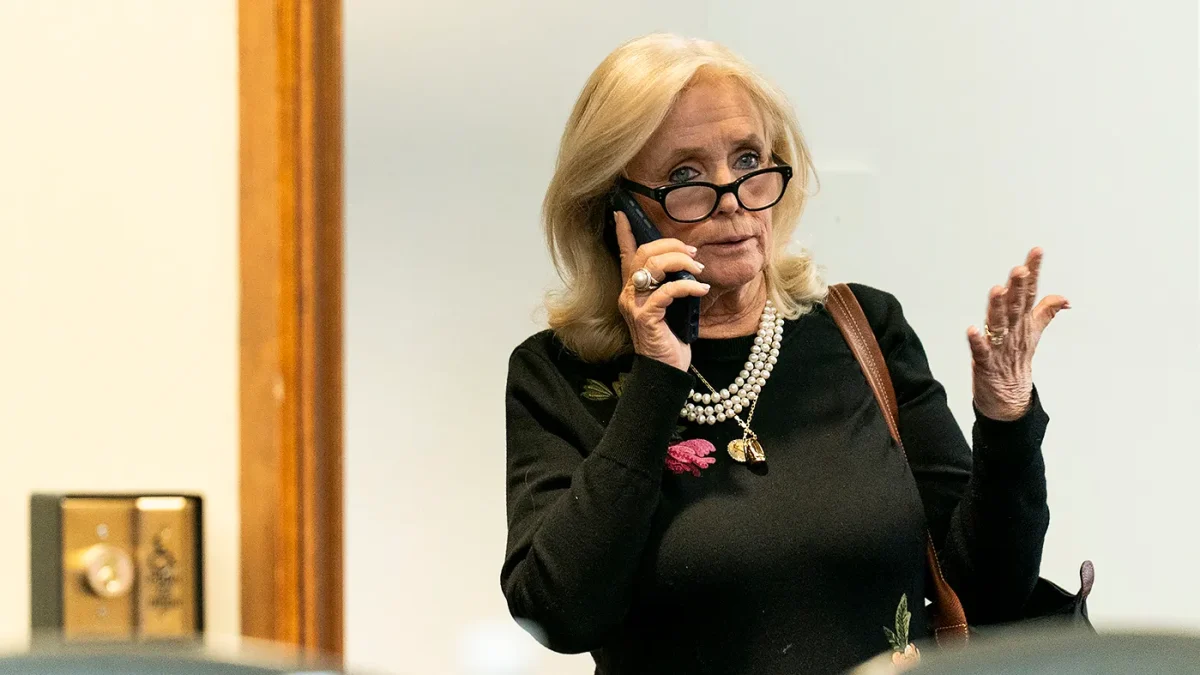
Table of Contents
Michigan Senator Candidate’s Ally Calls for Media to Drop Streamer Obsession Ahead of November Vote
Provpnadvice.com – The contest for Michigan’s open Senate seat has taken on an unexpected dimension this fall: a growing chorus of Democratic voices demanding that journalists stop fixating on internet personality Hasan Piker and refocus their attention on the actual ballot question. On Wednesday, Rep. Debbie Dingell (D-Mich.) made that demand explicitly at a campaign rally for Abdul El-Sayed, her party’s nominee for the U.S. Senate in the state.
Dingell, who represents Michigan’s 8th congressional district, told reporters gathered at the event that she was finished fielding questions about the streamer’s recent forays into national politics. Her frustration was pointed and personal.
“But I want to tell you: this is just the opportunity to say something to you, I’m done. This election is about what’s going to happen when we elect Abdul [El-Sayed] to the United States Senate,” Dingell said. “So, don’t any reporter ask me again about Hasan Piker, it’s not what November is about.”
She framed the media fixation as part of a broader Republican strategy to fracture the Democratic coalition. In her telling, the party’s opponents are deliberately amplifying Piker’s most inflammatory remarks to sow discord among progressive voters who might otherwise turn out for El-Sayed.
“Republicans are trying to make it, they’re trying to divide us, and we got to stop letting them try to divide us. I don’t agree with Hasan Piker on a lot of stuff, and I really don’t agree with him on some of the woman things he said,” she added.
Dingell closed her remarks with a forward-looking pledge: the party’s goal is victory in November and a reversal of Republican legislative priorities.
“And we need to win in November, and we will reverse all of the things that they have done,” Dingell said of Republicans.
Piker’s Rise and the Backlash That Followed
Hasan Piker, a Twitch streamer with millions of followers, first entered the Michigan race’s orbit by campaigning alongside El-Sayed earlier in the cycle. Over the past several months, however, his political activity has expanded well beyond a single state. He has publicly endorsed a string of progressive and democratic-socialist candidates across the country, elevating his visibility on the national political stage to a degree that surprised even longtime observers of online culture.
That visibility has come with controversy. Piker has a documented history of remarks that draw sharp criticism, and this season has produced several flashpoints. Most recently, he suggested that American Jewish support for Israel could paradoxically worsen antisemitism — a claim that triggered a wave of pushback from Jewish community leaders and moderate Democrats alike.
El-Sayed’s campaign has responded by quietly but clearly drawing a line between its own messaging and Piker’s rhetoric. The candidate has made moves to distance his Senate bid from the streamer, signaling that the campaign will not be held hostage to one internet personality’s social-media feed.
A Broader Democratic Unease
Dingell’s exasperation is not isolated. More moderate figures within the party have also weighed in against Piker’s recent statements. Rep. Jared Moskowitz (D-Fla.) and Sen. John Fetterman (D-Pa.) have each voiced criticism, joining a growing list of elected Democrats who find the streamer’s rhetoric incompatible with their party’s institutional positions.
The most pointed public rebuke came on Sunday from Rep. Jake Auchincloss (D-Mass.), who appeared on Fox News’s “Fox News Sunday” and used the platform to draw a firm boundary between his party and Piker’s ideology. Auchincloss referenced specific incidents — including Piker’s apparent celebration or excusing of the September 11, 2001 attacks, and his comments surrounding the assassination of conservative commentator Charlie Kirk — to underscore his point.
“Piker’s ideology, whether it was seeming to celebrate or at least excuse 9/11, whether it is seeming to excuse the assassination of Charlie Kirk, which I condemned immediately, the Democratic Party does not stand for what Hasan Piker stands for,” Auchincloss said.
The remark was notable both for its substance and its venue: a Massachusetts Democrat taking a conservative cable-news stage to define his party’s line against a left-wing internet figure. It underscored how thoroughly Piker’s presence has crossed from niche online discourse into mainstream electoral politics.
Even Allies Question the Media Cycle
Not everyone who sympathizes with Piker’s general politics is comfortable with the volume of coverage he has attracted. Activist David Hogg, known for his work on gun reform and youth organizing, told left-leaning media personality Jack Cocchiarella over the weekend that the sustained spotlight felt disproportionate.
“To be honest with you, I find it kind of weird. Like he’s a streamer. This guy is not an elected official, and there’s a lot of elected officials out there that are saying incredibly horrible thing[s],” Hogg said.
Hogg’s comment captures a tension that runs through much of the current debate: progressives who admire Piker’s energy and reach nonetheless acknowledge that the media’s disproportionate focus on one non-elected commentator, while elected officials make arguably worse statements with less scrutiny, distorts the public conversation about what is actually at stake in November.
What Is at Stake in Michigan
Set against this noise, the substantive question in Michigan remains straightforward. The state’s Senate seat, vacated by the retirement of Sen. Gary Peters, is one of the most closely watched races in the country. Michigan’s electoral college votes, its industrial workforce, and its history of competitive two-party contests make the outcome a bellwether for the broader midterms. El-Sayed, a former nonprofit executive and longtime community organizer in Detroit, is running on a platform centered on working-family economic security, healthcare access, and infrastructure investment.
Dingell’s plea to reporters — drop the streamer, cover the ballot — is ultimately an argument about electoral priorities. In a state where margins of victory have historically been measured in tens of thousands of votes, every hour of airtime spent debating an internet personality’s latest clip is an hour not spent explaining what a new senator would do on the first day in office. Whether the media heeds that advice, or whether the cycle continues to orbit Piker’s controversies, will shape the final weeks of a race that both parties view as decisive.
Related Reading
Frequently Asked Questions
What is Dingell?
Dingell is the main topic of this guide. The article explains the context, practical details, and next steps readers should understand.
Why does Dingell matter?
Dingell matters because readers are looking for a useful answer, not just a short summary. Good content should match search intent and help them decide what to do next.