
Goodbye Graaff-Reinet: South African town’s name change stirs racial tensions
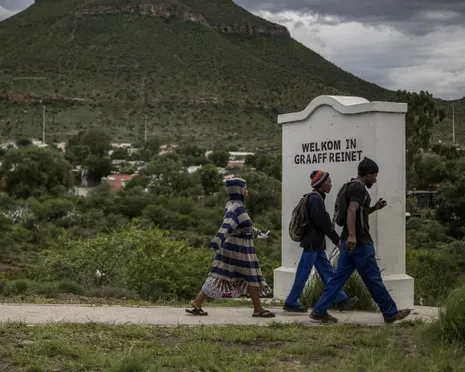
Goodbye Graaff-Reinet: South African Town’s Name Change Sparks Racial Divide
A name change in a South African town has ignited significant racial debate, with residents split between preserving its colonial past and embracing a new identity tied to anti-apartheid hero Robert Sobukwe. The decision, approved by Minister Gayton McKenzie on 6 February, has drawn petitions, protests, and a formal letter of objection, highlighting deepening divisions within the community.
Historical Roots and New Identity
Named after Dutch colonial figures Cornelis Jacob van de Graaff and his wife Hester Cornelia Reynet, Graaff-Reinet was established in 1786. While some residents cling to the historical significance, others argue the name symbolizes a legacy of oppression. The renaming, following Sobukwe’s founding of the Pan Africanist Congress in 1959, is seen by advocates as a step toward redressing apartheid-era inequalities.
“Many residents felt that changing the name would erase part of their identity as ‘Graaff-Reinetters,’” said Ronnie Donaldson, a geography professor at Stellenbosch University, reflecting on the survey results. The study revealed 83.6% of locals opposed the shift, with 92.9% of Coloured residents, 98.5% of white residents, and 55% of Black residents expressing resistance. A third of Black residents, however, supported the change.
A Legacy of Resistance
Robert Sobukwe, born and buried in Graaff-Reinet, became a pivotal figure in the fight against apartheid. His 1960 protests against pass laws led to the Sharpeville massacre, where 69 people were killed. The town’s name change aims to honor his legacy, but critics claim it overlooks the complex social dynamics that emerged during the post-apartheid era.
“We are not emotional about the Dutch… Out of the grief of the past, [Graaff-Reinet] became a benefit for the people and for the economy of the town,” said Laughton Hoffman, a Coloured community leader and founder of a youth-focused non-profit. Hoffman, who wears a “Hands Off Graaff-Reinet” T-shirt, accused post-apartheid governments of marginalizing his group, despite their earlier privileges.
Legal and Cultural Controversies
Derek Light, a white lawyer who penned a complaint against the name change, criticized the process as legally flawed. “It was a faux process,” he stated, lamenting the unrest it has caused. Yet, Black activists from the Robert Sobukwe Steering Committee dismissed such concerns, asserting that racial tensions have long existed, though often subtly.
According to an official database, over 1,500 placenames were altered between 2000 and 2024, including 400 post offices, 144 rivers, and seven airports. The city of Port Elizabeth, for instance, was renamed Gqeberha in 2021. The Department of Sports, Arts, and Culture cited “restorative justice” as the rationale, aiming to correct colonial and apartheid-era naming practices.
“We have always had racial problems,” said Athe Singeni, a member of the steering committee, emphasizing the ongoing struggle to reclaim historical narratives. Her mother, Nomandla, added that the community remains undeterred despite recent vandalism of Sobukwe’s grave.
Hoffman’s community, comprising Khoi-San and mixed-race individuals, feels sidelined by the ANC-led government. He described the 32 years since 1994 as a period of “oppression,” where Coloured people were pushed to distance themselves from Black communities to access better opportunities. This historical divide continues to fuel contemporary tensions over the town’s name.
With a population of around 51,000, Graaff-Reinet’s vibrant Cape Dutch architecture faces challenges from the change, as Laughton Hoffman warned about its impact on tourism. The debate underscores how renaming can become a symbol of broader cultural and political reconciliation efforts in post-apartheid South Africa.
