
Drug counselor who delivered ‘Friends’ star Matthew Perry ketamine that killed him gets 2 years
Drug counselor who delivered ‘Friends’ star Matthew Perry ketamine that killed him gets 2 years
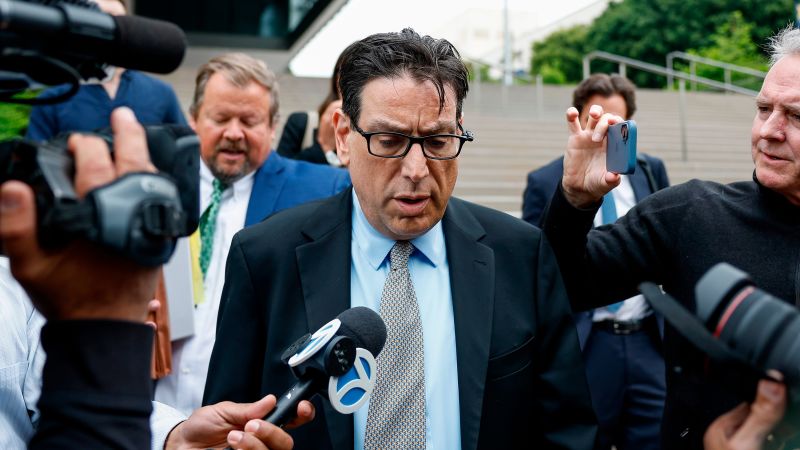
Drug counselor who delivered Friends star – In a Los Angeles federal courtroom, Judge Sherilyn Peace Garnett delivered a two-year prison sentence to Erik Fleming, a licensed drug addiction counselor who provided the ketamine that contributed to the death of “Friends” actor Matthew Perry. The 56-year-old defendant, who had been on bond for nearly two years, was ordered to surrender himself within 45 days to begin his incarceration. Additionally, Fleming received three years of probation as part of his sentencing. This marked his first court appearance since his role in Perry’s death became publicly known, and he was the fourth individual among five guilty pleas in the ongoing prosecution of the actor’s 2023 passing.
Fleming, a former film and television producer whose career had been derailed by addiction, testified before the judge, expressing deep regret for his actions. “It’s truly a nightmare I can’t wake up from,” he said, his voice steady but somber. “I’m haunted by the mistakes I made.” He appeared in a black suit, standing at the podium as he recounted the events that led to Perry’s demise. His defense team had previously requested a sentence of three months in prison and nine months in a residential treatment facility, but the judge opted for a longer term, emphasizing the gravity of the case.
“I’m haunted by the mistakes I made.”
Fleming’s cooperation with investigators played a key role in reducing his sentence. His attorney, Robert Dugdale, argued that the defendant had essentially “handed over the Ketamine Queen on a silver platter” to authorities. “They didn’t have a clue who she was before that day,” Dugdale said. Fleming’s timely surrender of Jasveen Sangha, prosecutors’ nickname for the drug dealer linked to Perry’s death, was critical in advancing the investigation. However, the government contended that his cooperation was motivated more by self-preservation than genuine remorse.
“Mr. Fleming didn’t cooperate because he had a benevolent motive, or because he wanted justice for Mr. Perry,” Assistant US Attorney Ian Yanniello stated during the proceedings. “He wanted to save himself.” The prosecution highlighted that Fleming’s information might have been uncovered anyway through the seizure of his phone, and his early admission of guilt in August 2024—before the arrests were formally announced—was a significant factor in his sentence. Yet, they maintained that his role as a drug counselor who “deliberately undertook to sell illegal street drugs to a victim who had a public, well-documented battle with drug addiction” should weigh heavily against him, even if Perry wasn’t a regular client.
The Path to Perry’s Death
Fleming’s connection to Perry began through a friend who sought additional ketamine beyond what doctors could supply. After his stepmother’s death in 2023, which had triggered a relapse in Fleming’s sobriety, he became involved in the drug trade. He sourced ketamine from Sangha, marked up the price for profit, and delivered it to Perry’s home. The final batch included 25 vials for $6,000, sold to the actor’s live-in personal assistant, Kenneth Iwamasa, four days before Perry’s death. Iwamasa administered the drug on October 28, 2023, and hours later, Perry was found lifeless in his Jacuzzi.
The medical examiner’s report confirmed that Perry’s death was caused by the acute effects of ketamine, a substance commonly used for depression but increasingly administered off-label. Fleming’s defense team underscored his rehabilitation efforts, noting that he had spent 20 months sober and helped establish a sober living home. “His extraordinary work towards recovery deserves recognition,” they argued, while also emphasizing that he had only dealt drugs for 11 days and to a single customer.
Impact and Aftermath
Outside the courthouse, Fleming reflected on the emotional toll of his actions. “My chest and heart hurt every day for the pain I caused not only his family but the millions of people who adore him,” he said. His emotional state was compounded by the loss of his stepmother, which had destabilized his recovery. Prosecutors, however, remained firm in their stance, pointing to the systemic role Fleming played in the tragedy. “He’s not just a one-time seller, but a catalyst in a chain of events that led to a fatal overdose,” one prosecutor noted.
The case has sparked broader discussions about the use of ketamine in treating mental health conditions and its accessibility through non-traditional channels. Perry’s death has highlighted the risks of off-label prescriptions, particularly when combined with a person’s existing struggle with addiction. Fleming’s sentence, while reduced by his cooperation, serves as a reminder of the consequences of distributing substances that can be deadly in high doses. His story also underscores the personal and professional struggles of individuals in the recovery process, who may find themselves drawn back into the drug trade under duress.
Despite the sentence, Fleming’s family and friends remained supportive. After the hearing, he embraced several loved ones in the courtroom, acknowledging their presence as a source of strength. His attorneys continued to stress his willingness to assist authorities and his efforts to help others avoid similar fates. Yet, the case has left lingering questions about the balance between rehabilitation and the risks of relapse, as well as the broader implications of the ketamine trade on public health.
As the fourth defendant sentenced in this case, Fleming’s trial marked a pivotal moment in the prosecution of those responsible for Perry’s death. While the sentence may have been softened by his cooperation, the tragedy he helped perpetuate remains a stark reminder of the intersection between addiction, treatment, and fatal consequences. The case also sheds light on the challenges faced by individuals like Fleming, who transition from recovery to relapse, and the critical role they play in the drug supply chain.
With Sangha already serving a 15-year sentence for her role in the case, the legal proceedings against Fleming and others have painted a picture of a network that exploited Perry’s vulnerability. The actor’s death, which occurred during a period of intense emotional and physical distress, has left a lasting mark on the entertainment industry and the public’s perception of substance use disorders. As the sentencing concluded, the focus shifted to the broader narrative of how addiction can intertwine with professional responsibilities, leading to irreversible outcomes.
Fleming’s testimony and the judge’s remarks illustrated the complexity of the case. While his actions were undeniably harmful, they were also shaped by his own battles with dependency. The prosecution’s argument that his cooperation was self-serving contrasted with the defense’s portrayal of him as a remorseful individual who sought redemption. Regardless of the motivations, the sentence served as a formal acknowledgment of the role Fleming played in Perry’s fatal overdose, linking his personal struggles to the broader societal impact of the drug trade.
The case also highlighted the importance of accountability in professions that involve drug use. As a counselor, Fleming was entrusted with guiding Perry through his recovery, yet his actions contributed to his demise. The sentencing underscored the dual nature of his role—both as a healer and as a dealer—forcing the court to weigh his intentions against the consequences of his choices. For Perry’s family and fans, the sentence offered a measure of closure, though the emotional weight of the tragedy remains profound.
