
Israel’s war to erase Syria
Israel’s War to Erase Syria
On Tuesday, a stark statement resonated through Tel Aviv. Israeli Finance Minister Bezalel Smotrich, addressing a crowd of allies, announced: “The conflict will persist until hundreds of thousands of Gazans are displaced… and Syria is divided.” These remarks, disseminated rapidly across digital platforms, shattered any lingering illusions. Israel’s campaigns are not driven by “security” or “terrorism” alone. They aim to reshape the region’s borders, dismantle nations, displace populations, and rewrite the narrative of history itself.
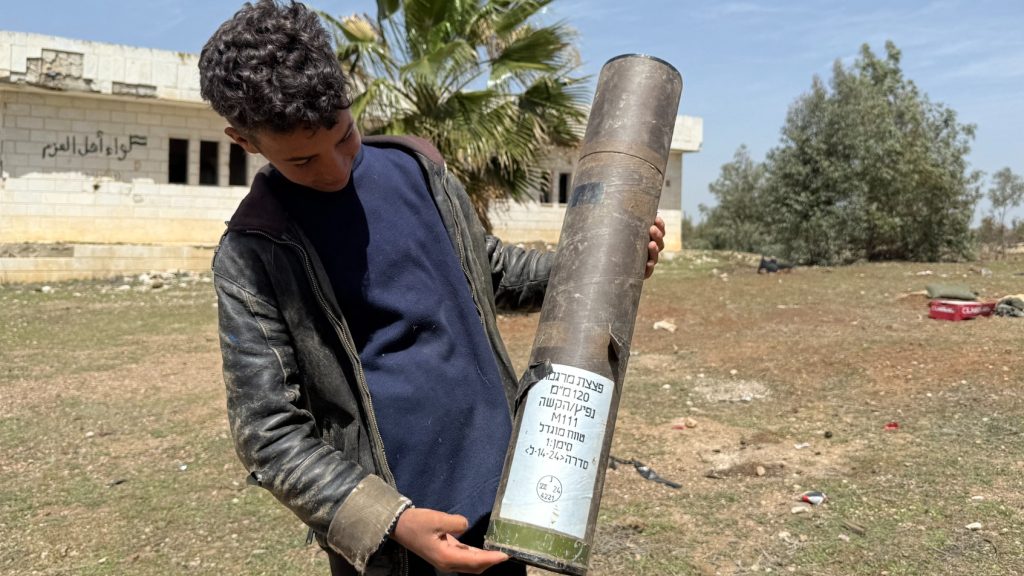
Earlier in April, Israeli aircraft resumed their assault on Syrian skies, launching a relentless barrage of missiles at military installations and residential areas. The strikes spanned from central airfields to the southern reaches of the country, where Israeli troops advanced into the vicinity of Nawa, resulting in the deaths of nine civilians. The official rationale, as usual, centered on “defense” and “preemptive action.” Yet, the underlying motive runs deeper—targeting the land’s cultural and historical legacy.
A Sanctuary of Wisdom
Nawa, the site of the attack, is not just a town. It is the cradle of Imam al-Nawawi, a scholar of immense reverence in Islamic civilization. His intellectual contributions have transcended centuries and continents. To destroy this city is to obliterate a lineage of knowledge. The name of al-Nawawi still lingers in homes, institutions, and places of worship from Cairo to Kuala Lumpur, a testament to his enduring influence.
Not far from Nawa stands Tell al-Jabiyah, where Caliph Omar ibn al-Khattab once stood. The caliph had traveled from Madinah to claim the keys of Jerusalem, meeting his officers on the eve of a pivotal transfer of power. The earth of Houran still murmurs with the echoes of their footsteps. This land is sacred, not only to faith but to the annals of history.
Foundations of Legacy
To the south and east, other intellectual beacons have risen. The esteemed jurist and theologian Ibn al-Qayyim al-Jawziyyah hailed from Izraa in Daraa. Ibn Kathir, the celebrated historian of Al-Bidaya wal-Nihaya, was born near Bosra in Majdal. Houran has long been a crucible of scholarship, its soil nurturing a civilization that transcended borders, sects, and empires.
Further south, along the Yarmouk River, Khalid ibn al-Walid led Muslim forces in 636 AD to a decisive triumph against the Byzantines. This victory marked a turning point, dismantling imperial control and ushering in a new era. Attacking this land is not merely an act of aggression—it is an assault on the very fabric of Arab and Islamic continuity.
Occupation and Intent
Since the collapse of Assad’s rule on 8 December 2024, Israel has escalated its operations in Syria. Hundreds of aerial strikes have crippled military infrastructure, air defense systems, and supply depots. The stated reason? Distrust in the new interim government. However, the timing and scale of these attacks suggest a more calculated aim.
Just one day after Assad departed for Moscow, Israeli leaders unveiled plans for a “security zone” spanning 400 square kilometers—larger than Gaza’s entire territory. Forces have now entrenched themselves on the Syrian side of Mount Hermon, openly defying international norms. Initially, officials hinted at a temporary presence, but that pretense has since been discarded.
“We will stay,” declared Defence Minister Israel Katz atop the mountain. “We will secure the southern zone’s demilitarization and safeguard the Druze from perceived dangers under the new Syrian leadership.”
This declaration marks the beginning of a symbolic campaign. Israel invokes the protection of minorities, yet history reveals the fragility of such claims. The Druze of Palestine, long enlisted in the Israeli military, have fought for a state they hoped would recognize them as equals. Now, as citizens of Israel, they find themselves marginalized in their own homeland.
