Massive ’86 47′ appears on National Mall days before Trump’s birthday UFC match

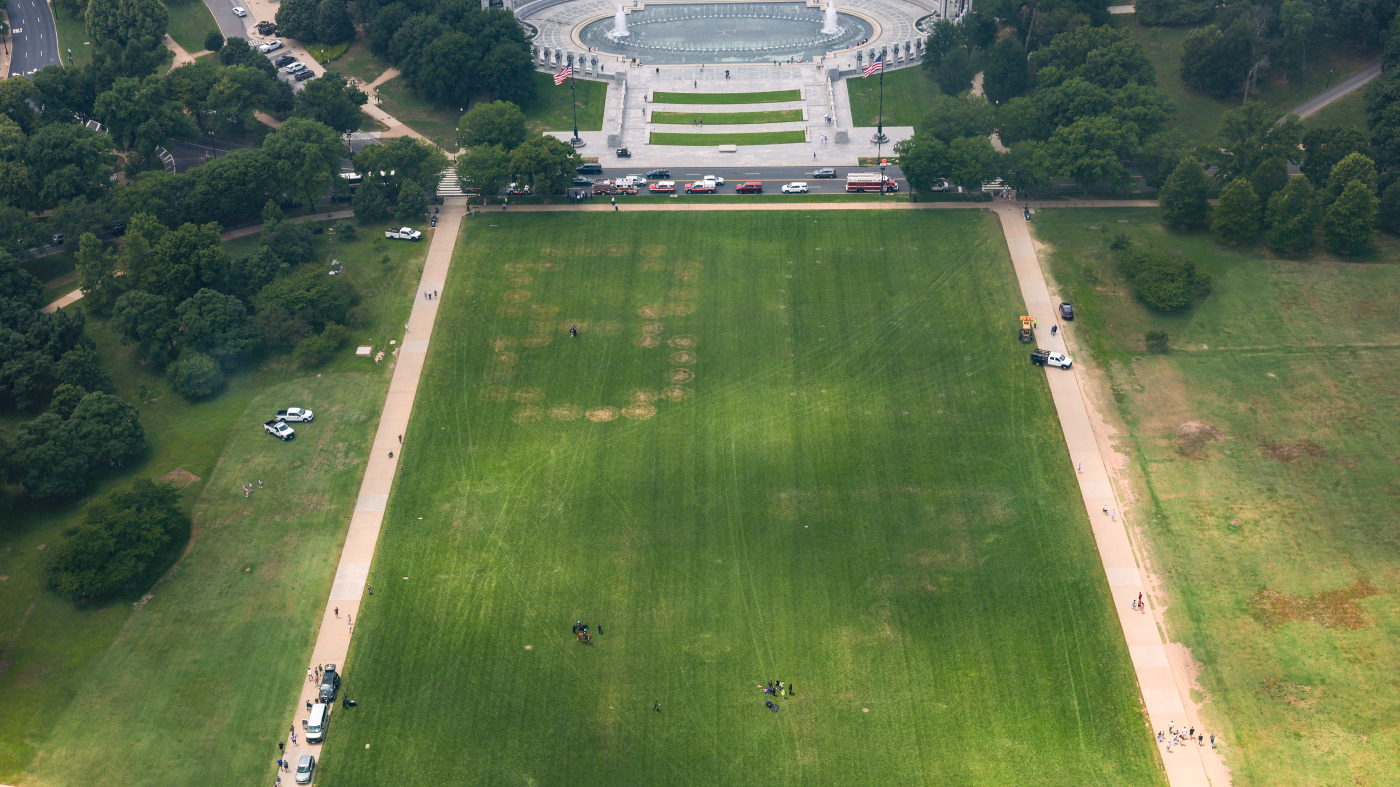
Massive “86 47” Etching Emerges on National Mall Ahead of Trump’s Birthday Event
Provpnadvice.com – On Thursday, a prominent “86 47” symbol was etched into the grass of the National Mall, prompting immediate concern from the Trump administration. The message, visible from the live webcam atop the Washington Monument, appeared as a stark contrast of dead grass located east of the World War II Memorial. Authorities swiftly blocked off the area, with CNN reporting that emergency vehicles were deployed to secure the site. This incident occurred just days before President Trump’s birthday and the scheduled UFC match outside the White House, raising questions about its intended significance.
A Political Statement in Grassy Script
The numbers “86 47” have become a recurring symbol of dissent against the president, with “86” widely recognized in the food and beverage sector as a directive to remove or discontinue items. However, in the context of political activism, the phrase has taken on a more ominous tone, interpreted by the administration as a call for action. The precise meaning of the numbers remains open to interpretation, but their placement on the iconic National Mall underscores their symbolic weight.
The White House spokesperson, Davis Ingle, expressed strong disapproval of the act, stating in a statement that “anyone who engages in or endorses political violence or assassination culture must be condemned in the harshest terms possible.” This remark echoes previous statements by the president, who has consistently framed the numbers as a direct threat. In a Fox News interview, Trump emphasized the severity of the message, claiming it “meant assassination” and that “a child knows what that meant.” He added that former FBI Director James Comey’s earlier social media post, which featured seashells arranged to spell out the numbers, had been a clear warning.
“If you’re the FBI director and you don’t know what that meant, that meant assassination. And it says it loud and clear,” Trump remarked.
Investigation Underway by U.S. Park Police
The U.S. Park Police, responsible for maintaining the National Mall, confirmed that they are conducting an investigation into the incident. A spokesperson from the agency noted that the cause of the grass discoloration has not yet been determined, though samples were collected for analysis. The investigation was initiated after a report of vandalism was received around 11:30 a.m. on Thursday, prompting the rapid response from emergency services.
When The Hill inquired about the numbers in the grass, the White House directed all questions to the Department of the Interior. A spokesperson for the Interior Department stated, “The deranged vandalism on our National Mall will not be tolerated. Any threat against the President is taken very seriously by the Department, and our U.S. Park Police will investigate this incident and hold those responsible accountable.” This highlights the administration’s emphasis on the symbolic and political implications of the act, framing it as a deliberate challenge to presidential authority.
Historical Precedent and Current Context
The use of “86 47” as a political statement draws a parallel to an earlier incident involving Comey. Last year, the former FBI director shared a photo of seashells etched into the sand to form the numbers, a gesture that Trump immediately labeled as a threat to his life. The president’s interpretation was reinforced when Comey was recently indicted for the post, which had been taken down from Instagram roughly a year prior. This timeline has led to speculation about the connection between the two events.
Despite the president’s claims, Comey has denied any wrongdoing, asserting that the post was a neutral observation and not an attack. He plans to file multiple motions to dismiss the indictment, with a potential arraignment scheduled for September 30. If the case proceeds, the trial is set to begin on October 21. The political fallout from this situation has been significant, with the administration framing Comey’s actions as a deliberate attempt to undermine the president.
“He knew exactly what that meant,” Trump said, referencing Comey’s social media post. “A child knows what that meant. If you’re the FBI director and you don’t know what that meant, that meant assassination.”
Symbolism and Public Reaction
The choice of the National Mall as the location for the etching is particularly symbolic, given its status as a central hub for American political expression. While the numbers may have originated in the food industry, their adoption as a political code has sparked widespread debate. Advocates of the message argue that it represents a collective call for accountability, while critics view it as an act of vandalism designed to provoke fear.
Public reaction to the incident has been mixed. Some citizens have interpreted the numbers as a bold statement of opposition, while others have questioned the proportionality of the administration’s response. The White House’s swift action to block off the area and direct inquiries to the Department of the Interior has been seen as a strategic move to control the narrative. Meanwhile, the U.S. Park Police’s ongoing investigation aims to uncover whether the etching was a planned protest or a spontaneous act of dissent.
A Nation on Edge
The timing of the incident, coinciding with Trump’s birthday and the upcoming UFC match, has heightened its political significance. The president’s public focus on these events may have created a backdrop for the message to gain traction. As the investigation continues, the administration remains vigilant, with Interior Department officials reiterating their commitment to addressing threats to the president.
While the exact intent behind the “86 47” symbol remains unclear, its presence on the National Mall has ignited discussions about the intersection of public space and political messaging. The use of such symbols, whether in the form of etched numbers or seashell arrangements, reflects a broader trend of leveraging everyday objects and locations to convey dissent. As the U.S. Park Police work to determine the cause of the discoloration, the incident serves as a reminder of the power of visual communication in shaping public perception and political discourse.
Looking Ahead to the UFC Match
With the National Mall incident now in the spotlight, the focus shifts to Trump’s birthday event and the UFC match scheduled to take place outside the White House. The president’s team has emphasized the importance of maintaining security for the event, which is expected to draw a large audience. The presence of the “86 47” symbol may influence the atmosphere of the match, as both supporters and critics prepare to voice their perspectives.
In the days leading up to the event, the administration has intensified its efforts to monitor potential threats. The White House and Department of the Interior have coordinated to ensure that any signs of political unrest are swiftly addressed. As the investigation into the grass etching progresses, the spotlight on the National Mall will likely remain a point of discussion, reflecting the ongoing tension between public expression and executive authority.
This incident underscores the evolving nature of political messaging in the United States, where even the simplest symbols can carry profound implications. The “86 47” etching, though brief in its physical form, has become a focal point for debates about free speech, national symbolism, and the role of the federal government in responding to perceived threats. As the U.S. Park Police continue their analysis, the message remains etched in the minds of the public, waiting for its full interpretation to emerge.