
Slovenia election sees ruling party tied with opposition
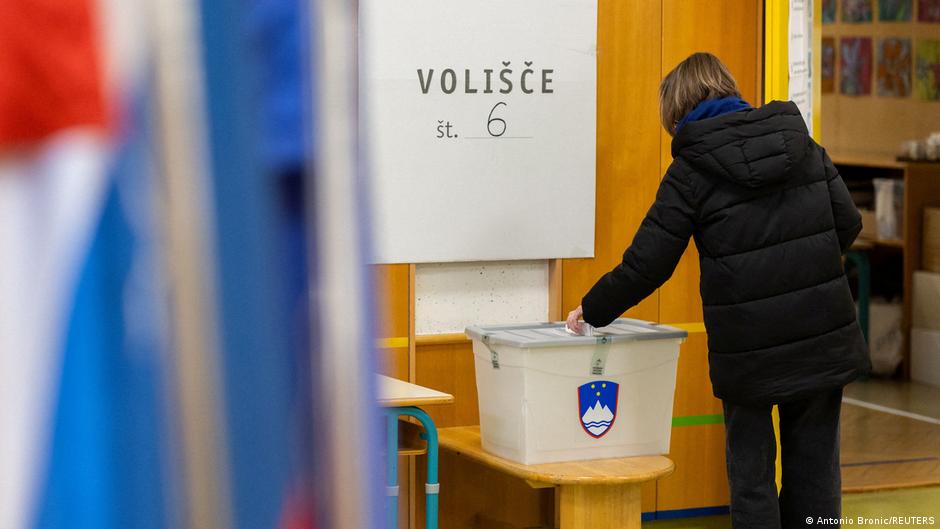
Slovenia Election: Ruling Party and Opposition Nearly Tied
Close Results Challenge Political Landscape
Slovenia’s parliamentary election on Sunday has produced a nearly deadlocked outcome between the governing liberal Freedom Movement of Prime Minister Robert Golob and the opposition Slovenian Democratic Party (SDS), led by Janez Jansa. With 99% of votes counted, the two parties stand at 28.5% and 28.1%, respectively, leaving the path to forming a government uncertain. Smaller political groups may hold the key to determining the next administration.
A Shift in EU Political Dynamics
The election carries significant weight for the European Union, as it could shape the balance between liberal and right-wing populist ideologies. Golob’s party advocates for EU-aligned policies, while Jansa’s SDS has aligned with leaders like Hungary’s Viktor Orban and Slovakia’s Robert Fico, emulating the style of former U.S. President Donald Trump. This contest is critical for the bloc’s future direction.
Exit polls initially suggested a wider lead for Golob’s party, but the actual count has narrowed the gap. The race highlights Slovenia’s ongoing political oscillation between liberal and conservative factions since its independence from the former Communist Yugoslavia in 1991. The nation joined both the EU and NATO in 2004, solidifying its position as a Western-aligned country.
Allegations of Foreign Election Influence
Accusations of external interference have emerged in the lead-up to the vote. Janez Jansa was linked to Black Cube, a private Israeli intelligence firm, through claims that the group helped spread videos alleging government corruption. While Jansa has denied these accusations, he has previously criticized Golob’s administration as a “crime syndicate.”
“Tough negotiations lie ahead,” Golob stated after results were announced. “In the next term, we will do everything we can to ensure a better future. We can look forward to moving ahead, into the future, under a free sun.”
Slovenian authorities reported Black Cube operatives visited Ljubljana four times during the campaign. The firm, run by ex-Mossad agents, has faced controversy in the past, including its role in undermining Harvey Weinstein’s accusers. Golob urged the EU to investigate the matter, emphasizing the need to safeguard democratic processes across the bloc.
To view the related video, enable JavaScript and upgrade to an HTML5-compatible web browser.
