
Republic of the Congo elections: A foregone conclusion?
Republic of the Congo Elections: A Predictable Outcome?
This Sunday’s Vote and the Legacy of Denis Sassou Nguesso
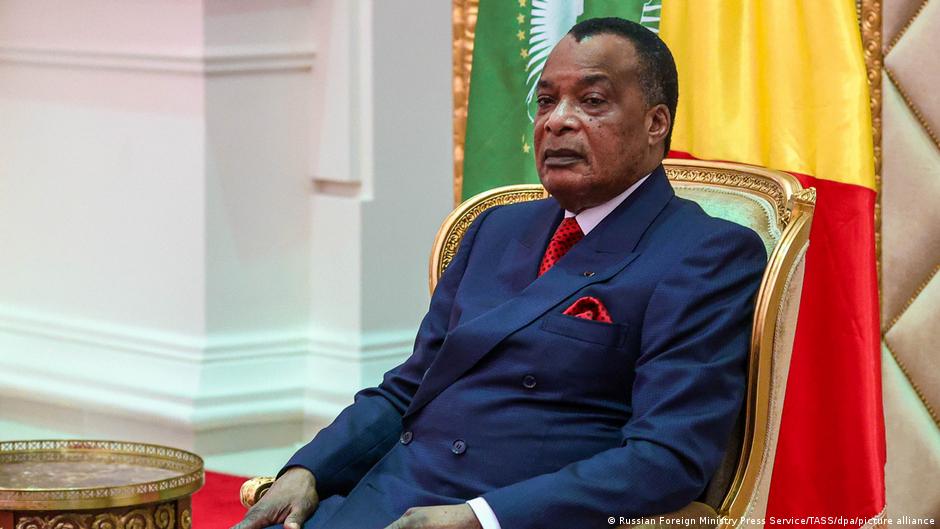
This Sunday, Congolese voters in Brazzaville will cast their votes to choose the next head of state. Political observers widely anticipate that Denis Sassou Nguesso will secure another term as president. A political constant for over four decades, Sassou Nguesso has remained the dominant figure in the nation’s governance. For most of the past 47 years, many citizens have never known a leader other than him. His rise to power began in 1979, after years of influence within the country’s elite political circles.
While the 1990s saw a brief five-year break in his leadership, marked by a violent civil war, the 21st century has brought a sense of equilibrium. Sassou Nguesso has become a symbol of stability in a country where youth demographics are rapidly expanding. Yet, this stability is expected to persist despite the presence of seven notable, yet less familiar, candidates. Analysts suggest none of them are likely to challenge the 82-year-old incumbent.
Supporters of Sassou Nguesso argue that his experience is vital for regional stability. In a volatile region, where nations like Cameroon, the Central African Republic, and the Democratic Republic of the Congo face ongoing conflicts, Brazzaville’s leader is seen as a reliable anchor. His campaign emphasizes his role as a unifying force, particularly in mediating disputes between neighboring states. This reputation, they claim, positions him as a critical figure for the broader African context.
“We must not confuse a long reign with illegitimacy,” said Adrien Poussou, a former Central African Republic communications minister. “In some circles, it is said that it should be illegal to remain in power for too long. But it is not illegal and it’s certainly not illegitimate. The decisive factor here is not the duration, but the stability and continuity of state structures.”
However, Paul Akoa, a Cameroonian geopolitical researcher, challenges this narrative. He contends that a leader’s effectiveness, not just their tenure, matters. “When time passes and key figures such as GDP figures decline, the question arises as to whether it is appropriate to continue with the same person or the same team,” Akoa remarked. Darrin McDonald, a UK-based political scientist, echoed similar concerns. He noted Sassou Nguesso’s economic record as underwhelming, with the country repeatedly accumulating foreign debt and restructuring it within short cycles.
“The Republic of the Congo is one of those nations in a constant cycle of massive debt accumulation, followed by debt reorganization efforts that only rekindle the issue within a few years,” McDonald explained. “This pattern has contributed to widespread youth unemployment, affecting nearly 40% of a population where almost half is under 18.”
Despite these criticisms, McDonald also highlighted Sassou Nguesso’s regional credibility. The octogenarian has long been regarded as a trusted mediator, notably aiding in resolving tensions between the Democratic Republic of the Congo and Rwanda. In 2023, he was among the first African leaders to respond to the Gabonese coup, offering mediation. That year, he also advocated for peace between Russia and Ukraine as part of a collective African effort.
Such a reputation, McDonald suggests, remains a cornerstone of his political legitimacy. In a region prone to upheaval, it underscores his ability to maintain order and foster cooperation. Whether this image translates to tangible change, though, continues to be a subject of debate among analysts and voters alike.
