
Iran war: Houthi restraint driven by domestic priorities
Iran War: Houthi Restraint Driven by Domestic Priorities
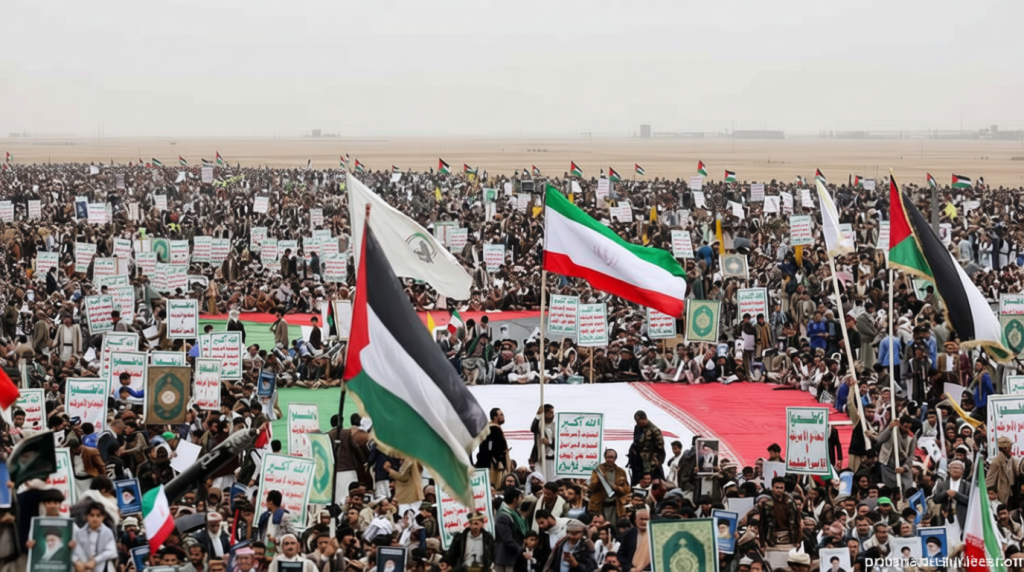
While Iran’s allies have threatened involvement in the conflict, the Houthi militia—backed by Tehran—has shown hesitation in the ongoing war. Analysts suggest this caution stems from a focus on internal challenges rather than external expansion. “Yemen … has its finger on the trigger,” stated Abdullah Sabri, a spokesperson for the Houthi-controlled Ministry of Foreign Affairs, during a recent warning.
“We will take appropriate measures if the war continues, including actions to widen the conflict or introduce foreign forces,” Sabri emphasized.
A week earlier, Abdul-Malik Al-Houthi, the group’s leader, reiterated their stance in a video statement. “We affirm our backing for Iran, Lebanon, and Palestine, and are ready to act militarily as needed,” he said. Yet, unlike the Iran-aligned Hezbollah in Lebanon, the Houthi forces have not yet taken part in the current war.
Previously active in the Gaza conflict, where they targeted Israel and international vessels in the Red Sea, the Houthis now appear to be strategically withdrawing. Luca Nevola, an ACLED analyst, noted that their current inactivity is notable. “So far, there have been no military actions, only symbolic support for Iran,” he explained.
“The Houthis are restrained, almost entirely inactive, due to a calculated risk assessment,” Nevola said.
Philipp Dienstbier, from the Konrad Adenauer Foundation in Amman, highlighted a complex mix of factors. “Multiple considerations influence their behavior, including the intent to escalate pressure later,” he added. This could manifest through renewed attacks on Red Sea shipping or infrastructure, he suggested.
“They may be delaying action to build momentum for a more impactful move,” Dienstbier said.
Dienstbier also noted the shift in regional dynamics. Saudi Arabia, a primary target of Iranian strikes, now holds significant sway in Yemen. Engaging in the war might disrupt internal peace talks, a risk the militia aims to avoid. “Their goal is to protect Yemen’s political progress,” he explained.
Compounding this, the Houthis face internal challenges in the north. Their autonomy from Iran plays a role in decisions, with Dienstbier pointing out that they prioritize self-interest. “They don’t simply follow Tehran’s lead but act independently, focusing on military gains like drone development,” he said.
“This independence means they’re not automatically drawn into every conflict,” Dienstbier emphasized.
According to Nevola, the group’s current vulnerability also shapes their strategy. “They’re weaker than in 2023, due to US strikes, economic sanctions, and Israeli assaults on their leadership,” he observed. A recent US ceasefire and resuming talks with Saudi Arabia further support their restraint.
“Refraining from escalation helps build trust and opens doors for political deals,” Nevola said.
Despite this, the Houthi threat remains. “They’re unpredictable, so a future intervention in the Iran war is possible,” Nevola warned. Dienstbier echoed this, noting their “military resilience” amid heavy attacks. “Their asymmetric capabilities make containment challenging,” he remarked.
While the immediate conflict sees the Houthis holding back, analysts agree their stance could shift. With domestic stability and strategic interests at play, the militia’s next move remains uncertain, though the potential for escalation looms.
