
Greece unveils WWII photo archive documenting Nazi executions of prisoners in Athens
Greece unveils WWII photo archive documenting Nazi executions of prisoners in Athens
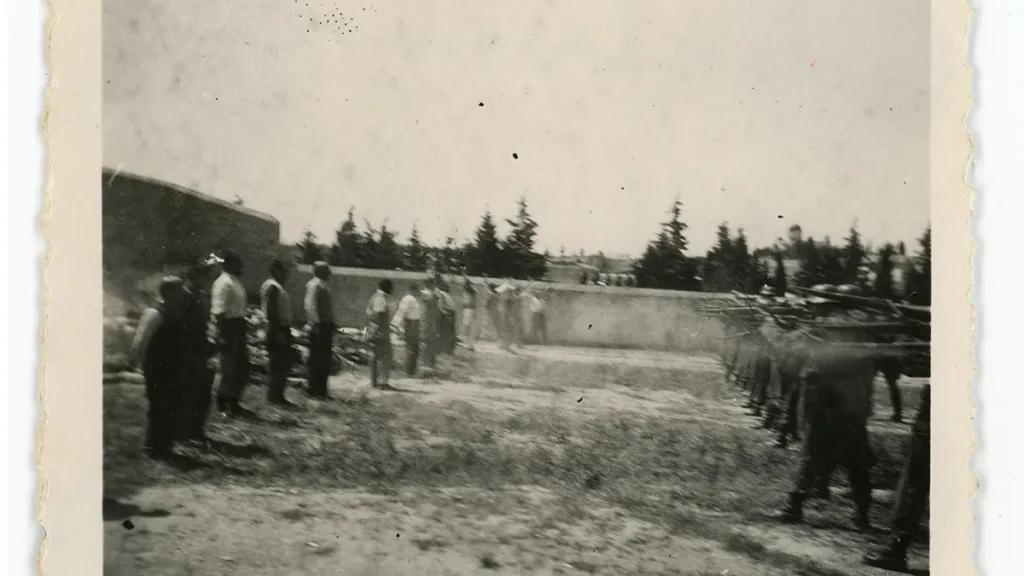
The Greek Culture Ministry has recently unveiled a newly acquired collection of World War II photographs, featuring rare images capturing the execution of 200 Greek communist prisoners by Nazi forces in Athens during 1944. The archive, named the Heuer Collection, consists of 262 photographs, 16 documents, and four historical banknotes from the German occupation era.
Among the photographs, thirteen specifically depict the execution at the Kaisariani firing range on May 1, 1944. This event, a reprisal for the killing of a German general by Greek resistance fighters, became a pivotal moment in the Nazi occupation of Greece. The images were captured by Hermann Heuer, a German Wehrmacht soldier stationed in the country between 1943 and 1944.
Belgian collector Hermann Heuer’s archive was revealed last month after he listed it for sale on an online auction platform. Greece’s Culture Ministry purchased the collection for €100,000, transferring ownership to the national state. Before acquisition, a team of experts conducted two trips to Belgium to authenticate the material and evaluate its historical value.
Prime Minister’s endorsement
Greece’s Prime Minister Kyriakos Mitsotakis highlighted the collection in a social media post, stating that the country now possesses the photographic archive documenting the Kaisariani execution. He emphasized the collection as evidence of Nazi occupation and the resilience of the Greek people during the war.
“The message of those executed at Kaisariani is tied to the defense of a free and democratic Greece,” Mitsotakis said. “The culture ministry acted swiftly to secure the archive before it entered the international market.”
The prime minister also proposed that copies of the photographs could be shared with the families of the victims to integrate them into the nation’s shared historical memory. Alongside the collection, the ministry announced the establishment of a National Photographic Archive.
Expanding historical resources
The new archive will be a dedicated section within the National Archive of Monuments, integrated with the culture ministry’s existing heritage databases. It will include photographs from modern Greek history, such as those from the former royal estate of Tatoi, records of refugee movements throughout the 20th century, and material from the Archaeological Service’s historical archive.
These photographs are now classified as historical monuments. Their management will involve conservation, scientific documentation, and public access. The first phase focuses on preserving the material and digitizing the entire archive, with digital copies potentially available to researchers and institutions later.
Historical research on the collection is being led by the National Hellenic Research Foundation under a government agreement. The project aims to identify individuals, locations, and dates within the images, placing them in the context of Greece’s German occupation. Researchers note that the archive offers significant insight into the presence of Nazi forces during the war, illustrating both military life and the violence of the occupation.
Notably, the photos appear to be part of a personal album by a Wehrmacht soldier, blending scenes of military operations with everyday moments from soldiers’ lives. This aspect is seen as a reflection of the broader Nazi propaganda system, which encouraged documenting daily life and military actions through photography during the conflict.
