North Carolina Senate race between Cooper, Whatley tightens: Poll

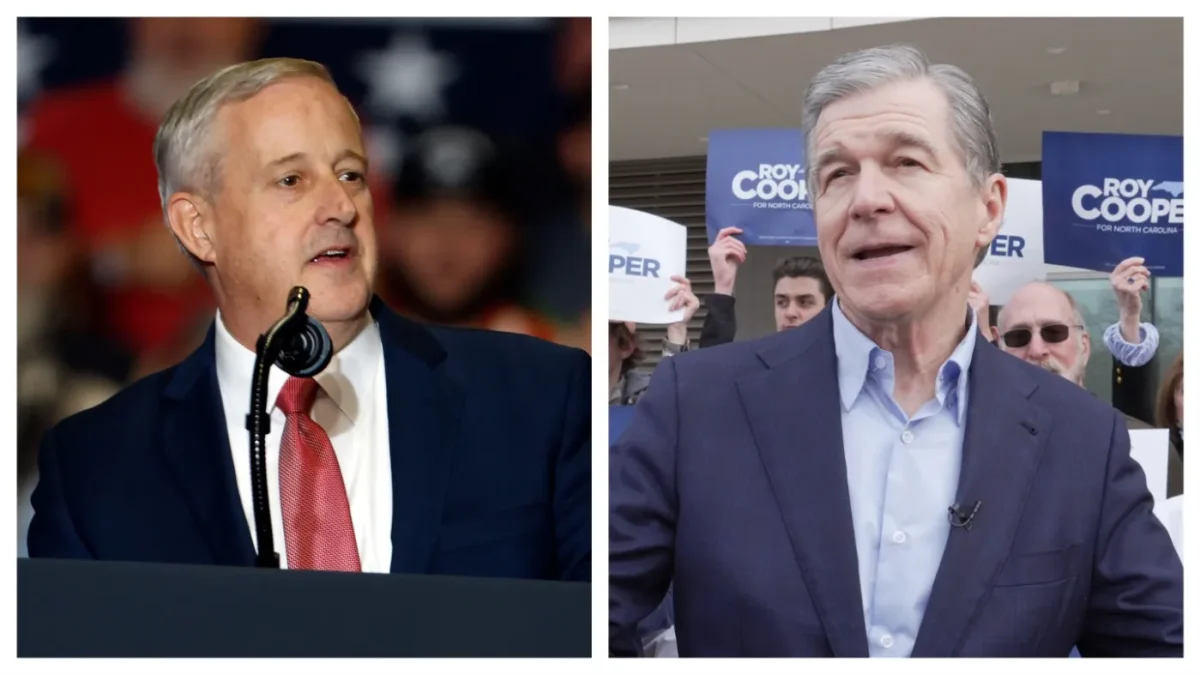
Table of Contents
Cooper Holds Narrow Edge Over Whatley as North Carolina Senate Battle Narrows
Provpnadvice.com – The contest for North Carolina’s open Senate seat has tightened measurably, with former state governor Roy Cooper (D) now holding only a five-point cushion over former Republican National Committee chairman Michael Whatley among likely voters in the Tar Heel State. A new High Point University survey, fielded in early August, places the Democratic candidate at 50 percent and the GOP challenger at 45 percent — a gap small enough to fall within the margin of error and small enough to signal genuine competitive pressure heading into November.
The Senate Math Behind the Race
What is at stake here extends well beyond one state’s ballot. The North Carolina seat, vacated by retiring Republican Senator Thom Tillis, sits among six GOP-held chambers that Democrats are targeting for capture in this cycle. The party currently controls just 47 of 100 Senate seats against the Republicans’ 53. To seize the upper chamber, Democrats must flip at least four of those majority-party positions. North Carolina, with its history of splitting presidential tickets and its growing suburban electorate, represents one of the more plausible paths toward that threshold.
The state’s recent presidential record underscores the razor-thin nature of the contest. North Carolina backed President Trump in each of the last three national elections, but by margins so narrow that a modest shift in suburban turnout or a stronger Democratic performance in the Senate race could alter the state’s partisan alignment for a generation.
How the Race Has Moved
The narrowing gap captured in the High Point survey is not an isolated data point. Earlier this month, a Carolina Forward poll showed Cooper ahead by seven points, while a Carolina Journal survey released just last week put the former governor’s lead at nearly thirteen points, with 52 percent of likely voters favoring him against 39 percent for Whatley. The trajectory across these three instruments — thirteen points, seven points, five points — suggests the Republican candidate is closing distance, even if the Democratic candidate retains the edge in every measurement.
The partisan breakdown in the Carolina Forward data illustrates why the race remains structurally difficult for either side. Ninety-seven percent of Democratic respondents backed Cooper, while 91 percent of Republican respondents favored Whatley. With such near-total loyalty on both flanks, the contest effectively reduces to turnout and persuasion among the roughly one in five voters who identify as independent or lean toward one party without fully committing to the other.
Nonpartisan Observers Track the Shift
The Cook Political Report, widely regarded as the most influential nonpartisan election tracker, reclassified the North Carolina Senate race from a “toss-up” to “leans Democratic” in April. That reclassification followed a sustained run of polling favorable to the former governor during the spring. The latest High Point numbers, however, introduce a question the Cook team will need to weigh: whether the late-summer compression in the gap represents a durable trend or a temporary fluctuation within normal polling noise.
What the Numbers Actually Say
The High Point University poll surveyed 660 likely North Carolina voters between August 3 and 12. Its margin of error stands at approximately 5.2 percentage points. A five-point separation between candidates, measured against that margin, means the two candidates are statistically indistinguishable at the 95 percent confidence level. In practical electoral terms, the race is a coin flip that could resolve either way depending on final-week dynamics, debate performance, and turnout patterns in the state’s fast-growing suburban counties.
For Cooper, the implication is straightforward: the comfortable lead he enjoyed through much of the spring has eroded to the point where a single misstep — a gaffe, a weak debate, or a failure to mobilize suburban Democrats — could hand the seat to Whatley. For Whatley, the narrowing gap validates his strategy of emphasizing economic anxiety, energy costs, and what he frames as Democratic overreach on cultural issues, while attempting to peel off moderate Republicans who may have supported Tillis but feel little enthusiasm for the national GOP brand.
Broader Implications for the November Landscape
If North Carolina ultimately falls to the Democrats, it would represent a significant realignment in a state that has voted Republican in every presidential election since 1988. Combined with potential Democratic pickups in other battleground states, such a result would bring the Senate majority within reach and reshape the balance of power in Washington for the next two years. Conversely, a Whatley victory would preserve the Republican majority at 53-47 and reinforce the argument that suburban growth alone cannot overcome deep partisan loyalty in a state that still votes Republican in most local and statewide races.
With roughly three months remaining before Election Day, both campaigns will likely intensify spending in the state’s suburban counties — Mecklenburg, Wake, Guilford, and Forsyth — where the margin of victory in recent cycles has been measured in single digits. The polling data suggests the contest will be decided not by persuasion of the party base, which remains locked in place, but by the mobilization of the small pool of undecided and independent voters who have yet to commit to either candidate.
Related Reading
Frequently Asked Questions
What is North Carolina Senate race between Cooper?
North Carolina Senate race between Cooper is the main topic of this guide. The article explains the context, practical details, and next steps readers should understand.
Why does North Carolina Senate race between Cooper matter?
North Carolina Senate race between Cooper matters because readers are looking for a useful answer, not just a short summary. Good content should match search intent and help them decide what to do next.