Man dressed as Darth Vader defends Flock cameras to San Diego City Council: ‘This is what the emperor needs’

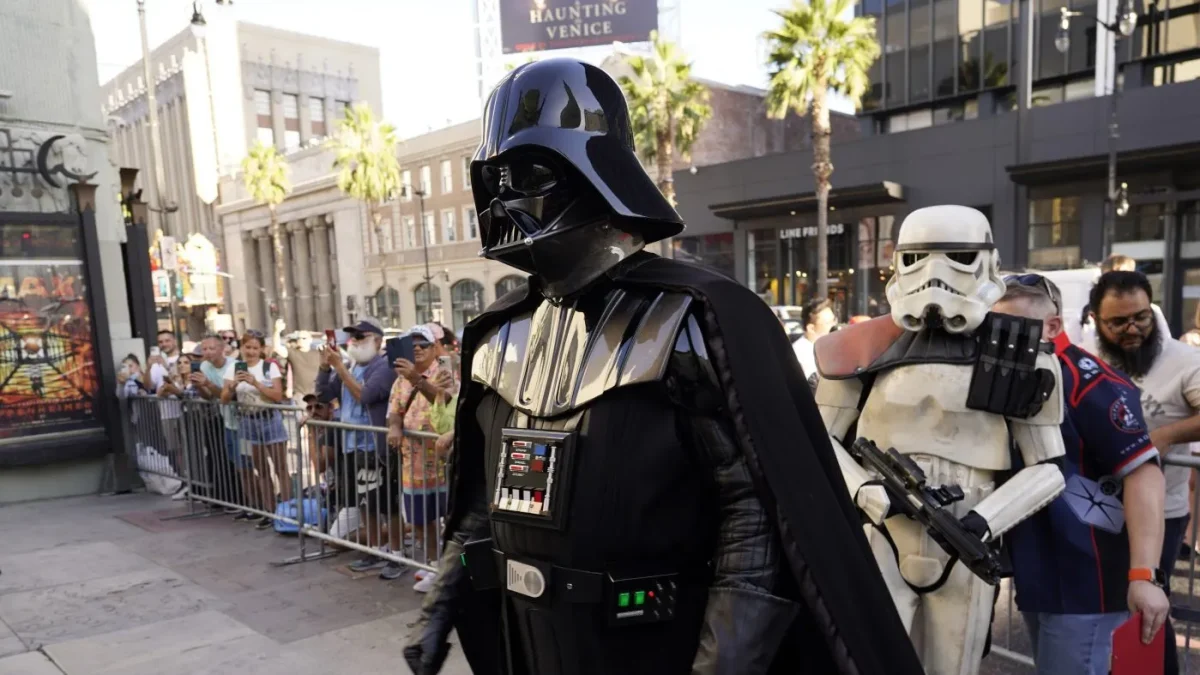
Table of Contents
San Diego’s Surveillance Debate Gets an Unlikely Advocate: A Man in a Darth Vader Costume
Provpnadvice.com – The question of how much a city should watch its own residents has become one of the most contentious issues in American municipal governance. Nowhere is that tension sharper than in San Diego, where a network of more than 550 Flock surveillance cameras blankets the streets, capturing license plates, vehicle details, and even the bumper stickers affixed to passing cars. As public frustration with mass-surveillance infrastructure grows nationwide, the city’s council chamber became the unlikely stage for a costumed intervention that blurred the line between civic protest and pop-culture theater.
A Force User Takes the Podium
On Wednesday, a man clad in the full black armor and helmet of Darth Vader — the most recognizable villain in the “Star Wars” franchise — walked up to the microphone at a Public Safety and Livable Neighborhoods Committee meeting. The council chamber’s audio system picked up the character’s trademark mechanical breathing before he spoke a single word. Council members, clearly amused, addressed him by his fictional name.
His purpose, however, was earnest: to argue in favor of keeping the Flock cameras operational. Channeling the voice of the Galactic Empire’s supreme ruler, he declared:
“This is what the emperor needs. This technology will help us find the rebel scum and the hidden base on Hoth.”
Hoth, of course, is the frozen moon where the Rebel Alliance established a base in “The Empire Strikes Back.” The comparison was deliberate — the cameras, in his framing, were the Empire’s eyes watching for insurgents.
From License Plates to Playgrounds
The costumed speaker pressed his argument further, urging the council to deploy the cameras to track what he called “rebel scum” as they moved through everyday public spaces:
“This technology will help us find the rebel scum as they move from playground to playground, from playground to pool, from pool to gymnasium, because we all know that the Flock cameras are not only following the license plate readers, they are following children.”
The remark underscored a real concern voiced by privacy advocates: that a system designed to read vehicle registration numbers effectively logs the movements of every person in or near those vehicles, including minors heading to school, recreation centers, or neighborhood pools.
The speech then pivoted to municipal budget and social-policy issues. The man argued that the council could use what he called “doublespeak” to describe the police department as humanitarian while simultaneously expanding its surveillance reach. He turned directly to City Council member Jennifer Campbell and delivered a pointed challenge:
“And how will the people trust this City Council when this City Council continues to vote for surveillance technology that imprisons them? Ms. Campbell, you must work on your Jedi mind tricks.”
He then raised his hand in a sweeping gesture toward the audience, adding, “Do it like this,” before delivering his final plea: that the cameras be pointed toward finding “Luke Skywalker as he traverses the universe in his X-wing.” His closing line was unequivocal:
“This technology is a necessary, necessary force.”
What Flock Actually Captures
Beneath the theatrical framing sits a concrete data architecture. Flock operates a combined system of license-plate readers, fixed and mobile video cameras, and audio-detection sensors. When a vehicle passes a reader, the system records the plate number and cross-references it with registration databases to pull the owner’s name, vehicle make, model, and color. Some installations have been shown to capture fine visual detail — including text on bumper stickers — effectively creating a searchable archive of every car that traverses a monitored corridor.
In late last year, San Diego officials signed a yearlong agreement granting the San Diego Police Department access to “open source intelligence” and data shared by other law-enforcement agencies, broadening the pool of information available to officers beyond what the city’s own cameras collect. That arrangement, combined with the existing camera network, means a resident’s movements can be triangulated across municipal, county, and state databases.
Privacy Adjustments and the ACLU’s Response
Facing mounting criticism from local activists and a growing number of city officials who have called for alternatives or tighter restrictions, Flock announced changes to its privacy and data-retention policies. The company said it would shorten its recommended default retention window from 30 days to seven days, reducing the period during which captured imagery and plate data remain in its systems. Law-enforcement agencies would receive a case code required to query the database, adding a procedural gate before records are pulled.
The American Civil Liberties Union, which maintains several pending lawsuits against Flock and has been among the company’s most vocal critics, dismissed the adjustments as a “thinly-veiled PR attempt.” For the ACLU and allied privacy groups, the core problem is not how long data sits in a server but whether a private corporation should be collecting, storing, and sharing granular location data about millions of drivers in the first place.
Why the Debate Matters Beyond San Diego
San Diego’s situation is a microcosm of a national reckoning. Dozens of cities have installed Flock or similar automated-plate-reader networks, often through short-term pilot contracts that renew automatically unless a council votes to terminate them. Critics argue that the default-to-surveillance model inverts the presumption of liberty: residents are watched continuously, and the burden of proving a camera is unnecessary falls on the public rather than the vendor.
The Darth Vader appearance, for all its humor, crystallized that inversion. The character’s entire mythology rests on an empire that surveils, categorizes, and controls its population through technology. That the man chose to defend the cameras while wearing the uniform of that empire — and that council members laughed rather than object — suggests the public discourse around municipal surveillance still has a long way to go before it treats the stakes with the seriousness they warrant.
Related Reading
Frequently Asked Questions
What is Man dressed as Darth Vader defends?
Man dressed as Darth Vader defends is the main topic of this guide. The article explains the context, practical details, and next steps readers should understand.
Why does Man dressed as Darth Vader defends matter?
Man dressed as Darth Vader defends matters because readers are looking for a useful answer, not just a short summary. Good content should match search intent and help them decide what to do next.